


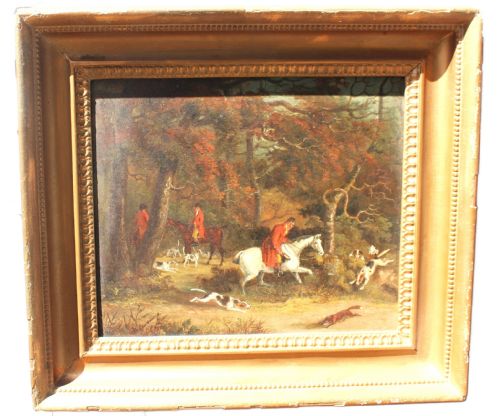

Georgian Country Scene
A georgian country scene brings rural life, farmyards and sporting pursuits into the interior through period oil paintings, watercolours and engravings.
Georgian Country Scene
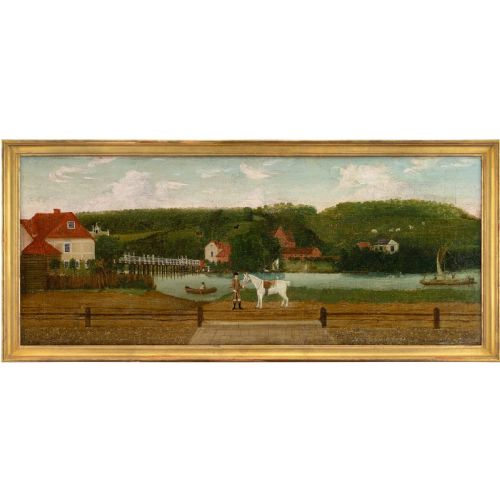
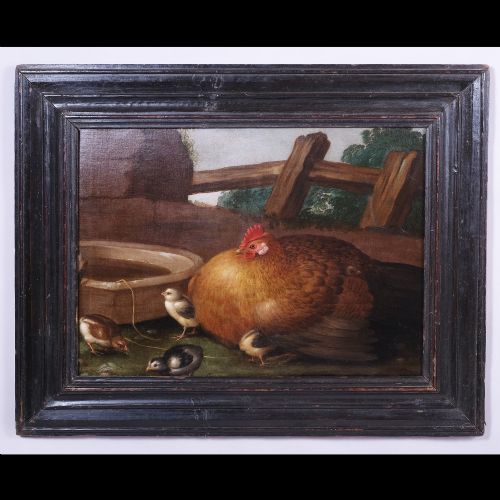
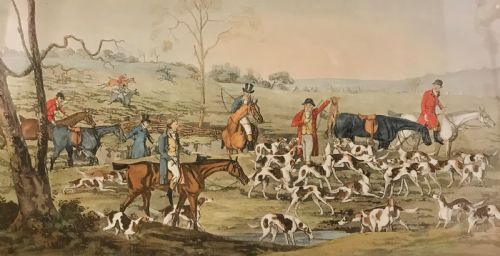
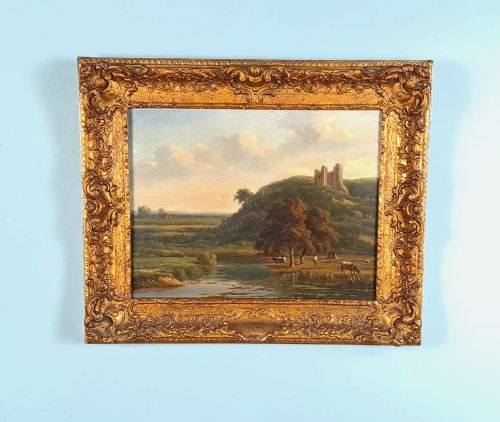
A georgian country scene encompasses rural vistas, agricultural settings, and sporting pursuits created during the eighteenth and nineteenth centuries. The evidence shows these compositions range from expansive farmyards and riverside estates to intimate depictions of milkmaids, coaches, and hunting parties.
Most examples found in this category take the form of oil paintings on canvas or wood panel, alongside watercolours, hand-coloured engravings, and lithographs. The selection includes both English and French pastoral subjects spanning the Georgian and Regency periods.
Rural landscapes frequently incorporate domestic animals, working horses, cattle, and figures engaged in country life. These works capture the topography and agrarian routines of the period through the eyes of regional British and European schools.
Materials and technique
Oil paint applied to canvas or wood panel forms the primary medium for these landscape and sporting subjects. Artists built up their compositions using traditional pigments, often framing the finished works in heavy giltwood moulding with gesso detail.
Works on paper rely on watercolour, gouache, or lithographic printing techniques. Engravings and prints received hand colouring, while specific decorative items utilise transfer printing on pottery or papier mâché construction.
Listings feature oil paintings, watercolours, and engravings spanning the eighteenth and nineteenth centuries, executed on canvas, wood, and paper.
Judging execution and preservation
Quality rests upon the artist's handling of light, anatomical precision in human and animal figures, and depth within the landscape. Works by documented painters or established regional schools demonstrate superior brushwork and compositional balance.
The integrity of the original support, whether canvas, wood panel, or paper, dictates the physical condition of the piece. Surviving frames, particularly period giltwood examples, contribute significantly to the visual completeness of oil paintings.
T C Hofland·George Morland·Julius Caesar Ibbetson·Samuel Henry Alken·John Inigo Richards·John Vine of Colchester·James Ward·Samuel John Egbert Jones·Dean Wolstenholme
The Georgian Country Scene Glossary
- Giltwood
- Wood carved and coated with gold leaf or metallic paint. This finish appears frequently on heavy frames surrounding large landscape paintings.
- Gesso
- A plaster-like mixture applied to wood frames before gilding. It provides a smooth base for intricate moulded decoration.
- Transfer printing
- A method of applying designs to pottery using engraved copper plates and tissue paper. This technique produced blue and white patterned plates depicting rural subjects.
- Pastoral
- Artistic work depicting rural life and idealized country settings. These scenes often feature shepherds, milkmaids, and farm animals.
- Gouache
- An opaque water-based paint used to achieve solid blocks of colour and fine detail on paper.
Georgian Country Scene: Frequently Asked Questions
What subjects appear in these works?
The compositions depict rural life, farmyards, coaching scenes, and sporting pursuits such as fox hunting and shooting. Figures include milkmaids, sportsmen, and farm workers situated near cottages, rivers, and estates.
Animals feature prominently, with horses, cattle, dogs, and farm fowl integrated into the landscapes. These subjects reflect agrarian routines and rural pastimes of the period.
Which materials were used?
Painters utilised oil on canvas or wood panels, while works on paper include watercolours, gouache, and engravings. Decorative items comprise transfer-printed pottery plates and papier mâché trays.
Frames are commonly constructed from wood featuring giltwood surfaces and gesso enrichment. These traditional materials define the physical character of the pieces.
How do I date a piece?
Dating relies on stylistic indicators, costume details, framing, and recorded artist lifespans. The periods represented span the eighteenth century, the Georgian era, and the nineteenth century up to the eighteen-eighties.
Inscribed dates on canvases, paper margins, or plate backs provide direct chronological evidence. Comparative analysis of regional school techniques also aids attribution.
How should I display them?
Oil paintings in heavy giltwood frames suit traditional wall spaces, while smaller watercolours and engravings require careful positioning away from direct sunlight. Pottery plates and trays function as decorative display objects.
Maintaining stable room humidity protects both canvas supports and paper works from environmental damage. Proper lighting enhances the detail within the painted scenes.