



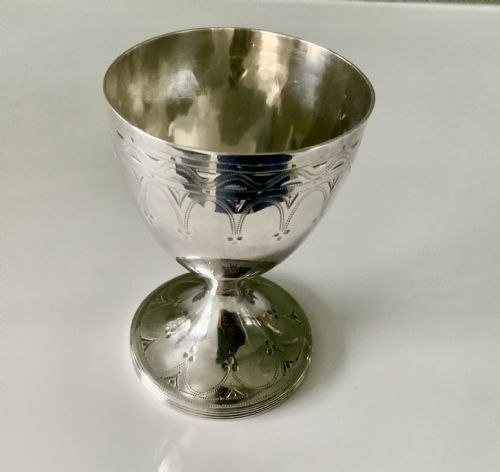
Georgian Communion Chalice
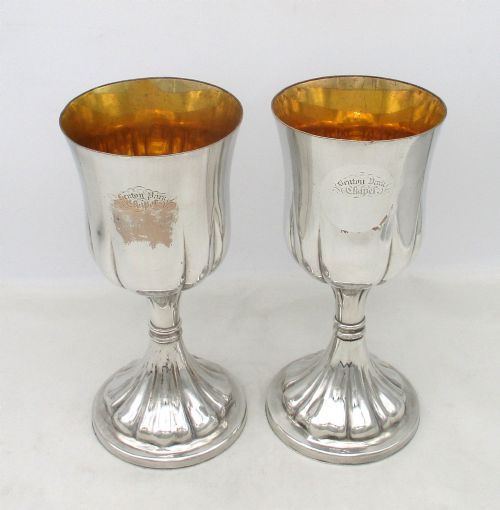
These Georgian communion chalice pieces are solid vessels of sterling silver, pewter, and Old Sheffield plate crafted for sacred use, prized for their solemn presence and enduring weight.
Georgian Communion Chalice
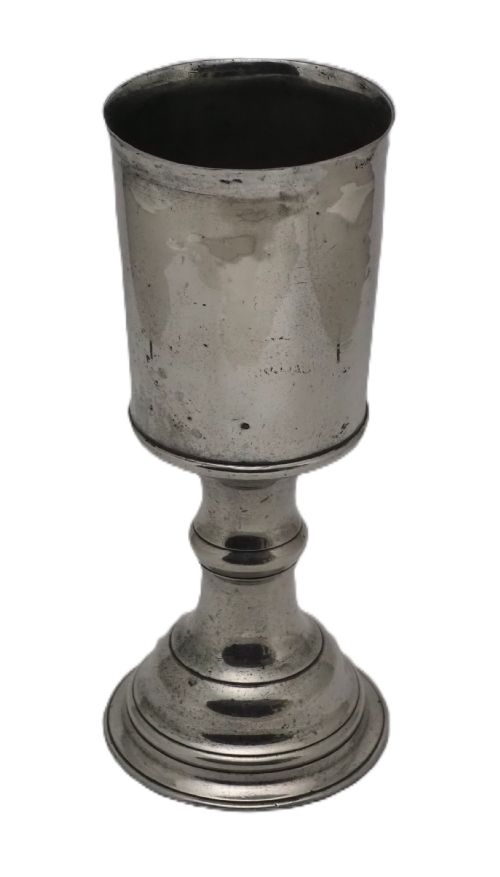
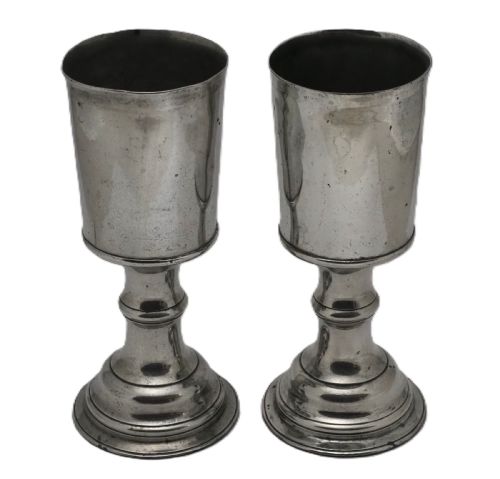
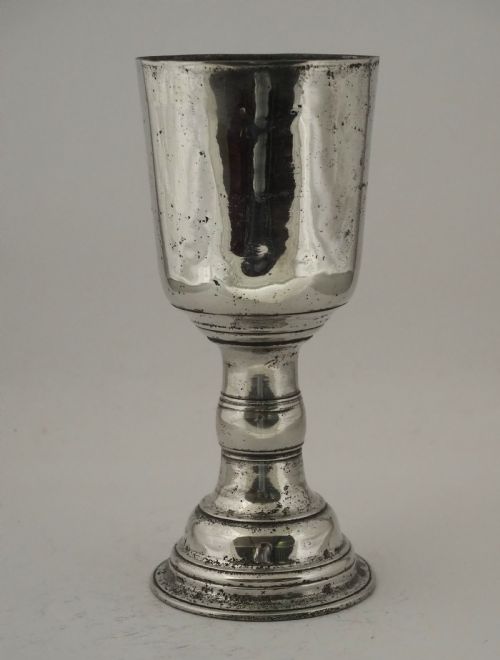
A georgian communion chalice represents the traditional sacred vessel used during church services, alongside domestic forms such as loving cups and goblets. Most examples on this page date from the eighteenth and nineteenth centuries, taking the form of deep bowls raised on knopped stems and domed feet.
The selection ranges from Irish pewter chalices holding a full pint to sterling silver presentation pieces and Old Sheffield plated examples. Collectors encounter single vessels and matched pairs, often bearing the simple, austere lines appropriate to ecclesiastical use rather than secular display.
How they were made
Makers shaped these vessels from sterling silver, pewter, and copper fused with silver through the Old Sheffield plating technique, frequently enhancing the interior or the entire surface with gold gilding. Pewter versions relied on traditional casting methods to achieve thick walls and stable, wide feet.
Silver and plated examples utilised spinning, hammering, and soldering techniques to construct the vase-shaped bodies and stems. Decoration remains restrained, occasionally featuring bright-cut engraving or simple bands rather than heavy ornamentation.
Georgian Communion Chalice Retail Price Guide 2026
Typical asking prices for georgian communion chalice among the pieces listed under this phrase on Sellingantiques today, from the lower quarter to the upper quarter. They describe what is for sale here now, not the wider market.
Several Irish pewter chalices hold precisely one pint, ensuring proper ecclesiastical rationing.
What varies in quality
Quality rests in the integrity of the metal and the crispness of form, distinguishing heavy, well-balanced casting from thinner, distorted vessels. Sterling silver examples demonstrate superior durability, while finer Old Sheffield plate shows minimal copper bleed through the worn silver layer.
Proportion and the retention of original form dictate value, with unaltered domed feet and unpolished bowls marking the superior end of the range. Maker marks, where present, add clear attribution to the weight of craftsmanship.
James Deakin & Sons
The Georgian Communion Chalice Glossary
- Pewter
- A malleable alloy primarily of tin, used historically for practical ecclesiastical and domestic vessels. It yields a soft, grey patina over time.
- Old Sheffield Plate
- An early method of fusing a thin sheet of silver to a thicker copper base. This technique produces distinct edges where the base metal shows.
- Domed foot
- A circular, upward-sloping base that supports the stem and bowl. This shape provides necessary stability for a tall vessel.
- Bright-cut engraving
- A faceted surface decoration carved with a sharp graving tool. It reflects light brightly from the shallow angled cuts.
- Gilding
- A thin layer of gold applied to the interior or exterior surface of the metal. This process protects reactive metals like silver and pewter from wine.
Georgian Communion Chalice: Frequently Asked Questions
Are these chalices safe for use?
Most antique chalices serve primarily as decorative or collectible objects due to their age and historical composition. Pewter and silver pieces require careful consideration before holding liquids.
Silver-gilt interiors offer better resistance to acidic contents, but modern use is generally discouraged to preserve the antique surfaces.
How do I clean a silver chalice?
Gentle washing with warm water and mild soap removes dust without damaging the metal. Avoid abrasive cloths that strip thin plating or early finishes.
Professional silver polish should be used sparingly, keeping away from engraved recesses where residue accumulates.
How can I tell pewter from silver?
Pewter has a duller grey tone and feels softer and heavier for its size compared to silver. It lacks the bright, reflective gleam characteristic of sterling silver.
Silver displays distinct hallmarks or stamps, whereas older pewter often carries touchmarks from the founding guild.
What is Old Sheffield plate?
Old Sheffield plate is an early fusing technique where a thin layer of sterling silver is bonded to a copper core under heat and pressure. It differs from later electroplate by showing subtle lines of copper along the edges.
This material bridges the gap between solid silver and plated base metals in nineteenth-century vessels.