

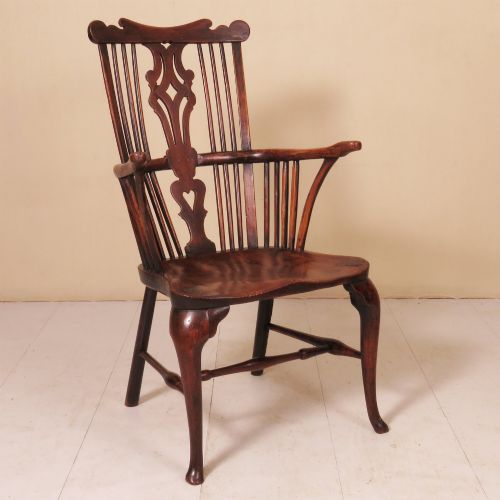
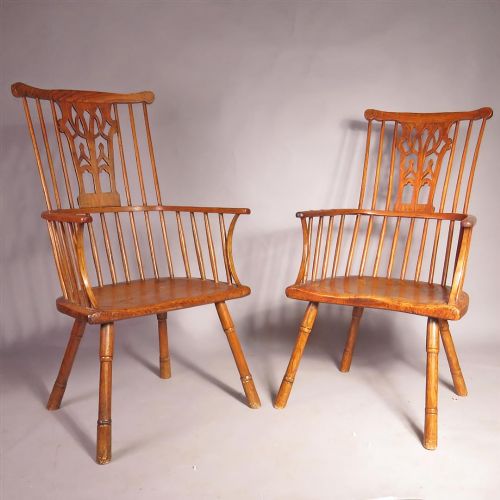
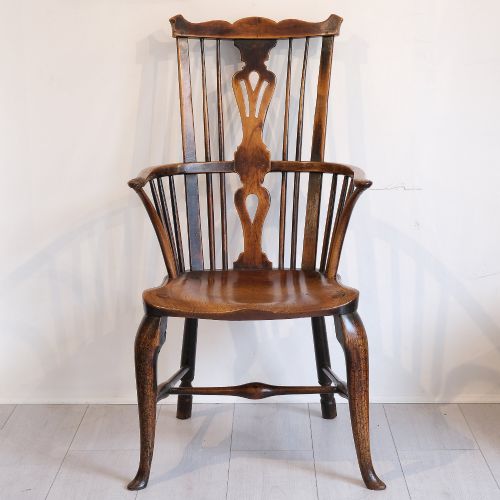
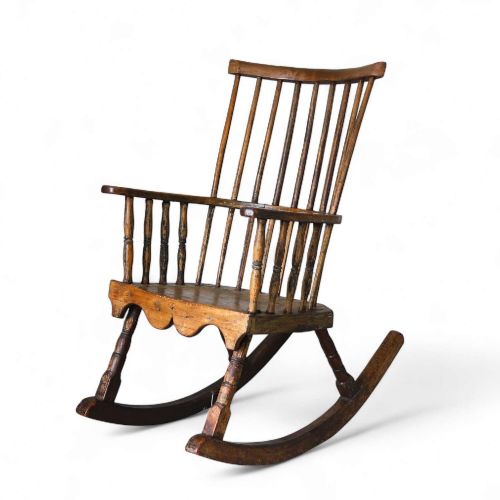


Georgian Comb Back Armchair
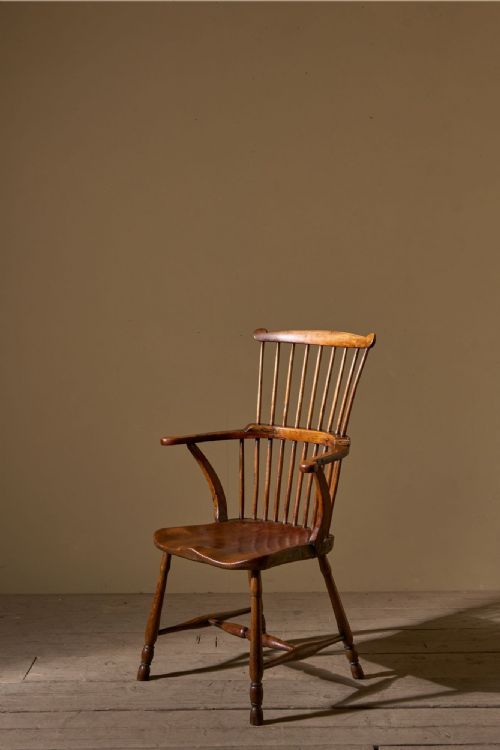
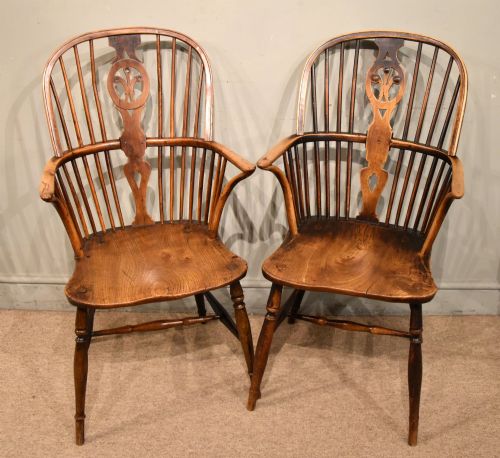
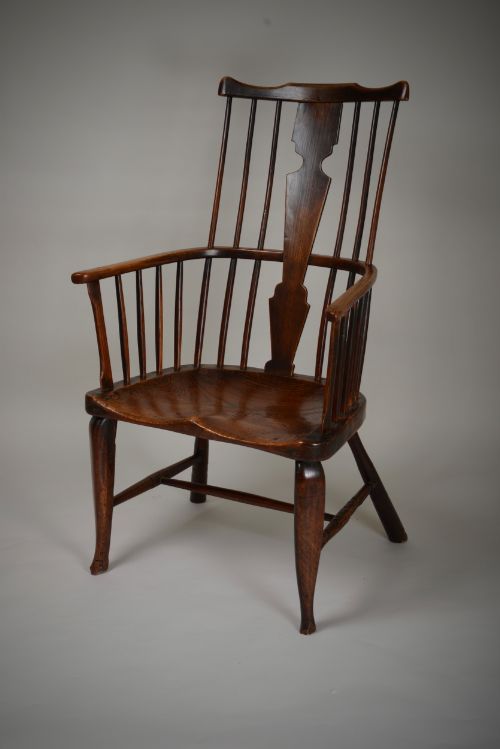
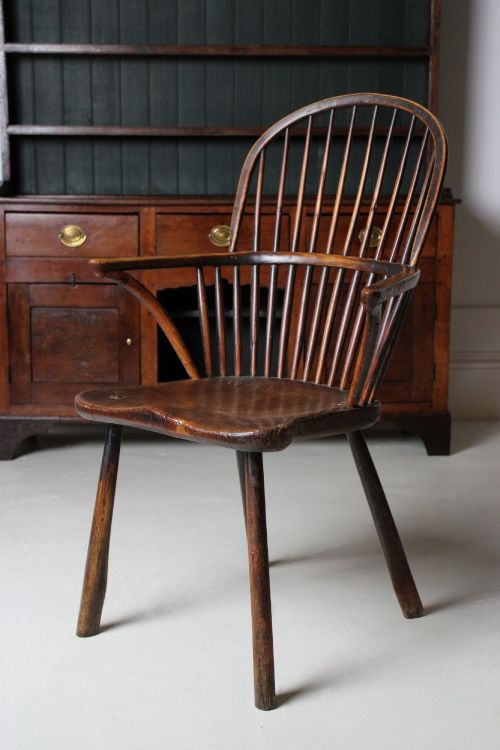
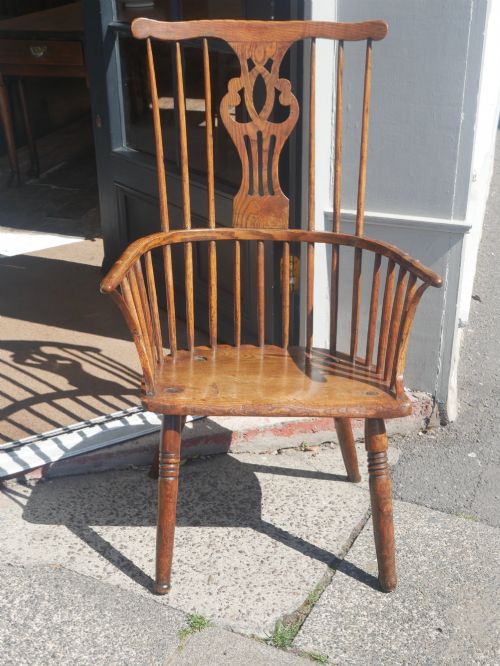
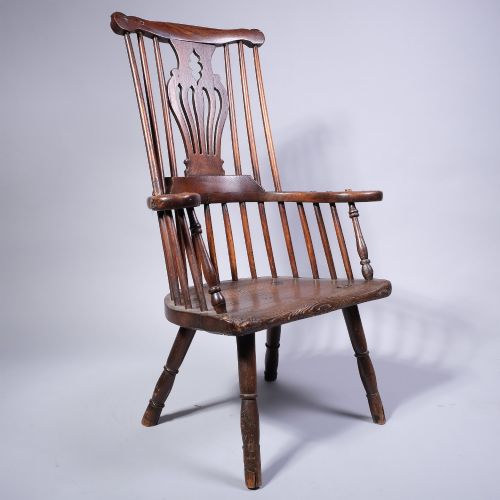
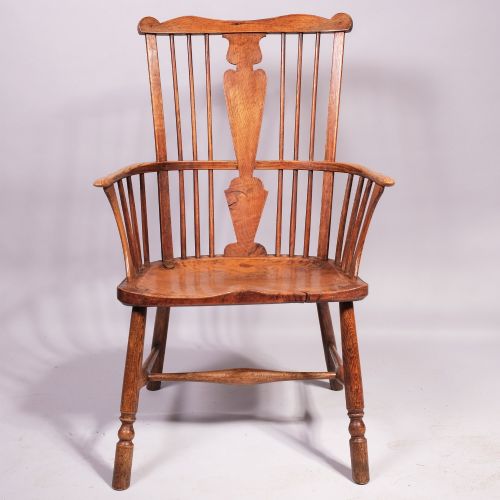
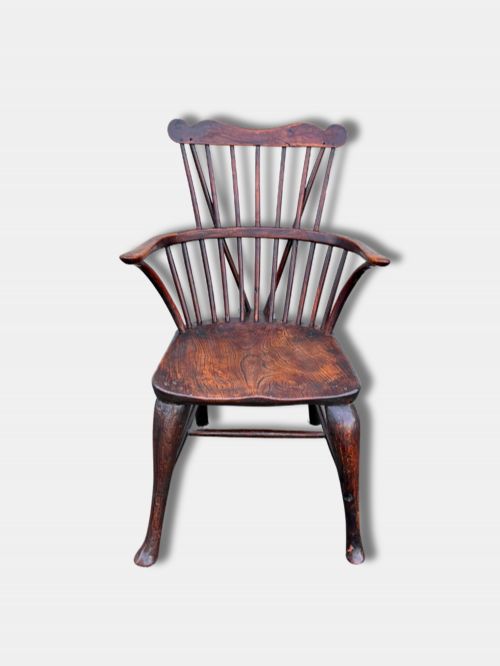
A georgian comb back armchair offers robust regional character, combining timber framework and high spindles for steadfast support.
Georgian Comb Back Armchair
The selections on this page span styles from Thames Valley to Welsh vernacular and primitive country variants. Armchairs and occasional rocking chairs form the core of these listings, reflecting historical domestic use.
How they were made
Chair makers utilised mixed timbers, frequently pairing ash frames with elm seats and yew or fruitwood accents. This combination provided structural rigidity for slender spindles alongside durability for solid saddle seats.
Components were shaped using traditional green woodworking techniques, turning spindles on pole lathes and boring legs directly into thick plank seats.
Certain chairs include carved snake head details on the arm terminals, adding a playful touch of folk art.
What varies in quality
Quality rests upon the grace of the crest rail curve and the proportion of the spindle arrangement. Superior examples exhibit balanced, flowing lines rather than stiff or heavy construction.
Timber selection and surface preservation dictate the character of each piece. Retaining original patination on native woods distinguishes finer regional work from altered or heavily restored items.
The Georgian Comb Back Armchair Glossary
- Comb back
- A Windsor chair variation where the vertical spindles extend upward to support a separate horizontal crest rail resembling a traditional hair comb.
- Vernacular
- Localized furniture building traditions utilising native materials and regional designs rather than formal metropolitan styles.
- Saddle seat
- A thick plank of timber, often elm, scooped into a comfortable concave shape for the user.
- Spindle
- A slender turned wooden rod supporting the back rail of the chair.
Georgian Comb Back Armchair: Frequently Asked Questions
What is a comb back armchair?
A comb back armchair is a traditional Windsor chair featuring a high back where vertical spindles rise to form a headrest or comb rail.
These pieces emerged from regional British craft traditions, utilising bentwood and spindle-making techniques to achieve sturdy domestic seating.
How were these armchairs used historically?
Households placed these sturdy wooden seats beside hearths, in kitchens, or across parlours for everyday utility.
Their robust construction made them reliable working chairs for farmhouses and country cottages alike.
Where do these chairs originate?
Craftsmen built these chairs across various English and Welsh regions, including the Thames Valley and Welsh valleys.
Local timber availability and distinct regional turning styles shaped the appearance of chairs from specific areas.
How do I care for antique timber?
Protect the wood by maintaining stable indoor humidity and avoiding direct placement near heat sources.
Apply occasional microcrystalline wax to nourish the surface without building up heavy chemical residues.