

Georgian Clothing Press
A georgian clothing press brings architectural dignity to domestic storage, combining deep timber drawers with generous hanging space.
Georgian Clothing Press
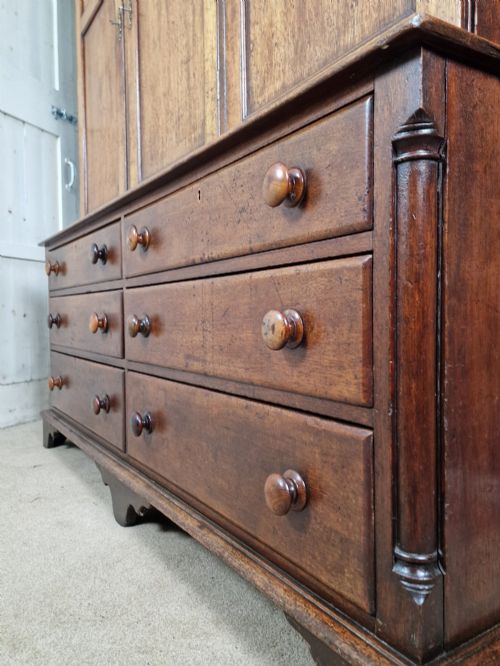
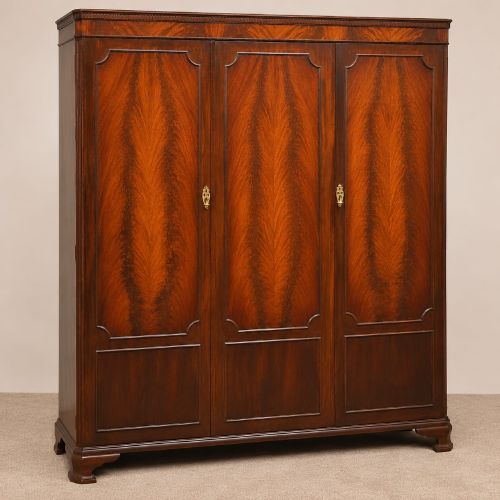
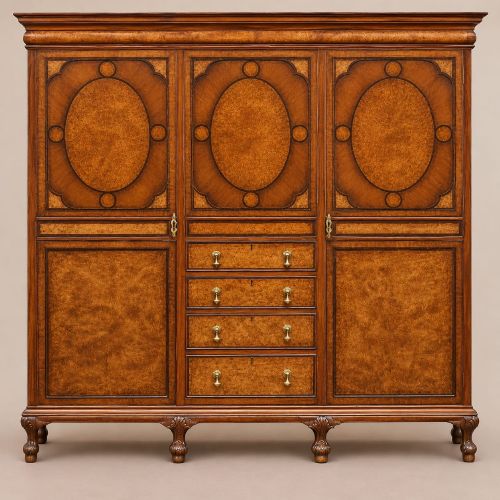
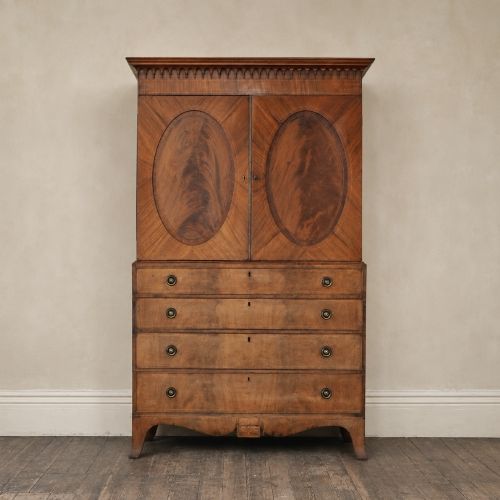
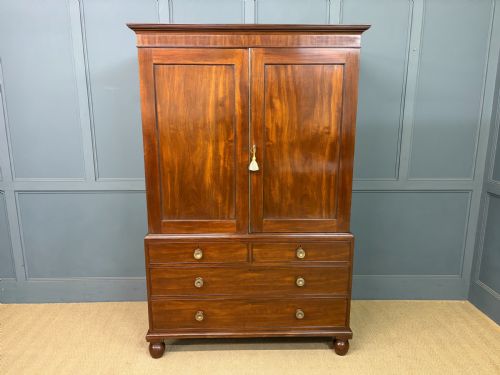
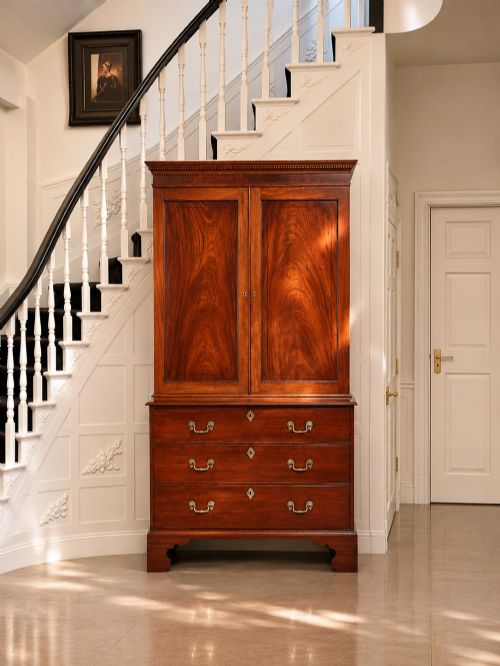
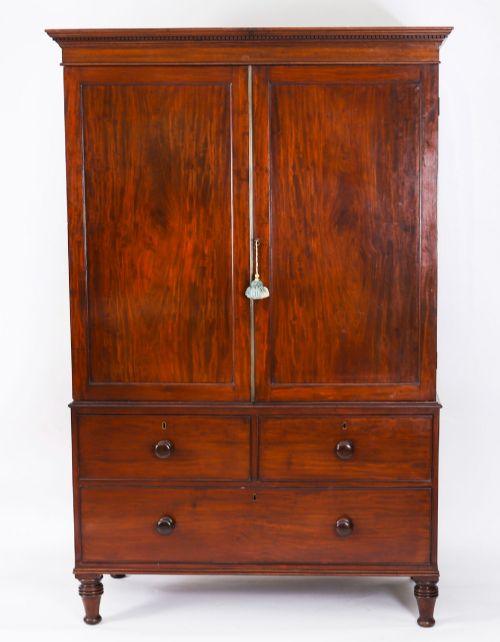
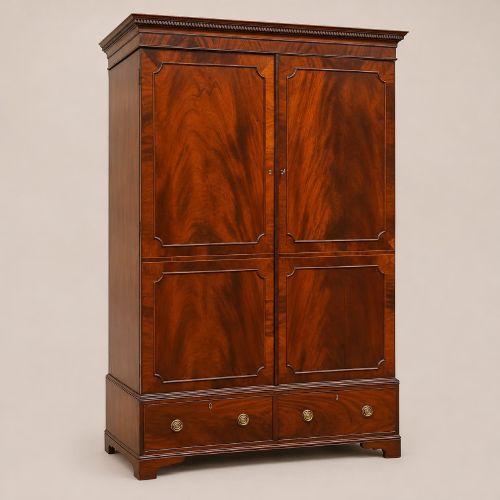
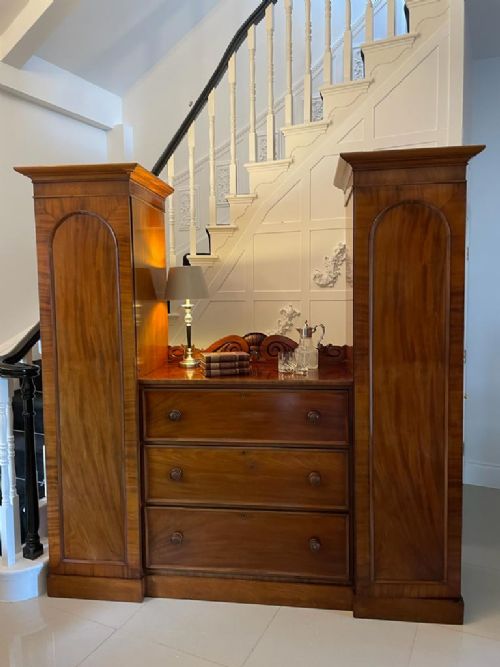
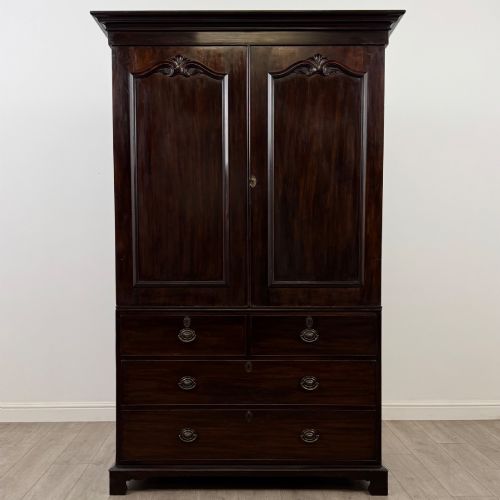
A georgian clothing press search reveals substantial case furniture designed to store garments and household linen across the eighteenth and nineteenth centuries. These pieces appear as tall linen presses, gentlemen's wardrobes, housekeeper's cupboards, and compactums, originating from periods spanning the Georgian era, Regency, William IV, and Victorian years.
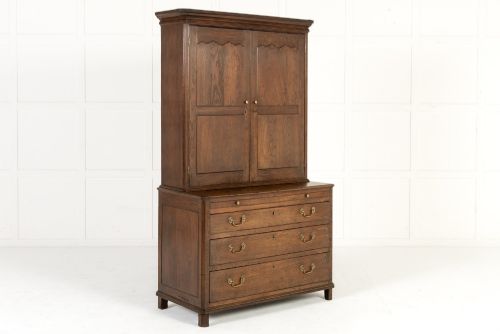
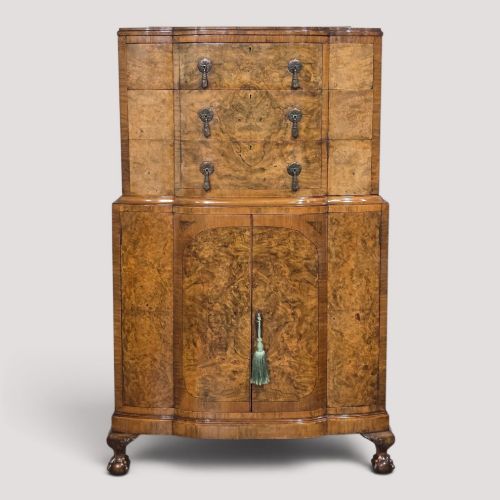
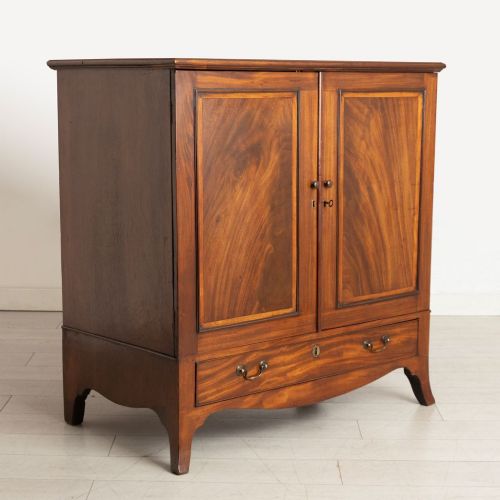
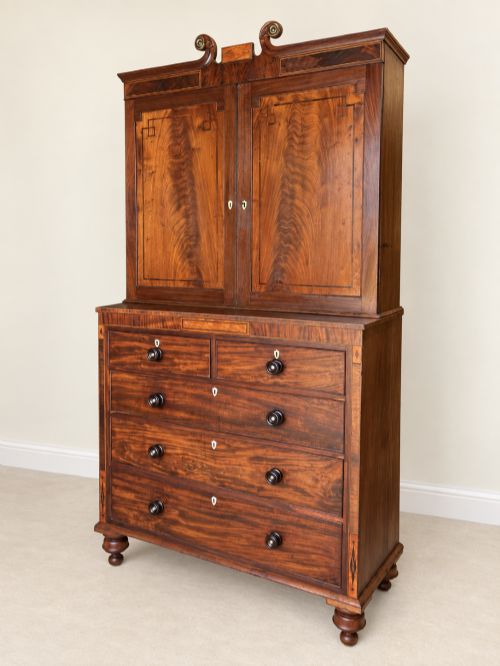
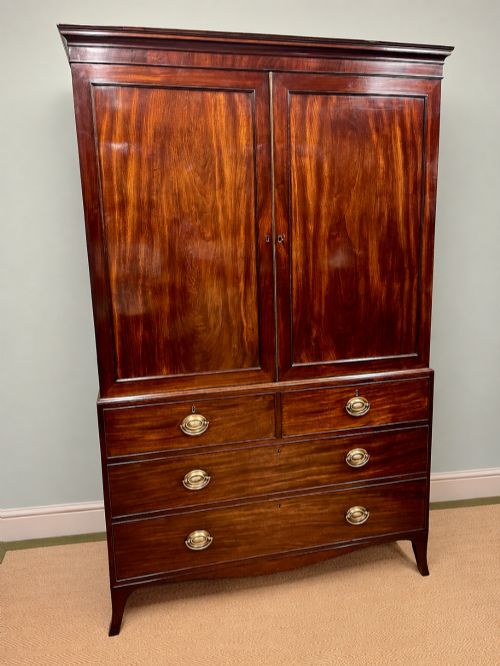
Buyers are most likely to encounter mahogany and oak constructions reflecting George III styling or regional country traditions. Examples range from large structural oak kitchen and tack cupboards to refined flame mahogany pieces featuring satinwood inlay and bowfront profiles.
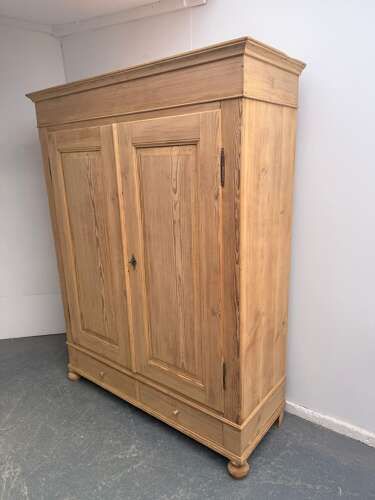
Regional workshops produced utilitarian pine and oak country pieces alongside urban mahogany cabinets intended for formal bedchambers. Lower cottage variants and knockdown wardrobes sit alongside towering double door cupboards with blind fretwork cornices.
Materials and Construction
Cabinet makers utilised dense native and imported timbers, pairing solid oak and pine carcases with figured mahogany, flame mahogany veneer, and rosewood for primary surfaces. Secondary structural elements relied on sturdy local woods while decorative detailing incorporated boxwood inlay and ebonised highlights.
Joinery techniques combined heavy frame and panel construction with dovetailed drawer boxes and pinned cornices. Brass hardware, including drop handles and escutcheons, secured doors and drawers built to withstand centuries of domestic use.
Georgian Clothing Press Retail Price Guide 2026
Typical asking prices for georgian clothing press among the pieces listed under this phrase on Sellingantiques today, from the lower quarter to the upper quarter. They describe what is for sale here now, not the wider market.
Listings feature robust construction woods including solid oak, pine, and mahogany, alongside decorative flame mahogany veneer and satinwood inlay.
Quality Indicators
Excellence in a georgian clothing press rests upon the selection of timber figures and the crispness of inlaid details such as boxwood stringing. Superior cabinet work shows in the balanced grain matching across large panel doors and drawer fronts rather than standard plank repetition.
Proportion and structural integrity define the upper tier, where cornices remain well-defined and doors hang true without sagging on original brass hinges. Lesser examples display heavy timber modifications or simplified carcases lacking internal shelf and drawer configurations.
The Georgian Clothing Press Glossary
- Linen press
- A large storage cabinet featuring upper sliding trays or shelves enclosed by doors, positioned above a chest of base drawers. These pieces were originally built to store folded household linens and garments.
- Gentleman's wardrobe
- A tall storage piece designed specifically for male attire, typically containing hanging compartments paired with sliding trays or internal drawers. They emerged as standard bedroom furniture during the Georgian period.
- Flame mahogany
- A decorative wood veneer harvested from the fork of the mahogany tree where branches join the trunk. Cabinet makers arranged these dramatic grain patterns to create symmetrical flame-like visual effects on door panels.
- Blind fretwork
- Carved geometric or interlaced ornamentation applied to a solid wooden surface without piercing through to the background. This decorative technique frequently ornamented cornices and friezes on mid-eighteenth-century case pieces.
- Compactum
- A multi-functional fitted wardrobe combining hanging space, shoe lockers, and sliding drawers within a single carcass. Regency and Victorian makers produced these items to maximise storage efficiency in smaller chambers.
Georgian Clothing Press: Frequently Asked Questions
How do I use a clothing press today?
These tall cabinets provide exceptional volume for modern bedrooms as primary wardrobes or linen storage. Internal sliding trays accommodate folded garments and bedding while lower drawers organise smaller items.
Larger configurations also adapt well to hallways and dressing rooms for coats and seasonal wear. Proper placement requires allowing adequate clearance for wide opening doors.
What is the difference between a press and a wardrobe?
A traditional press incorporates internal sliding shelves or trays in the upper section intended for flat textiles. Wardrobes focus primarily on vertical hanging space for garments suspended on rails or pegs.
Many antique examples combine both functions by providing hanging compartments alongside internal linen slides.
How do I identify a Georgian piece?
Georgian furniture displays classical proportions, restrained ornamentation, and solid timber construction methods typical of the eighteenth century. Look for hand-cut dovetails, pegged joints, and secondary woods like oak or pine behind primary mahogany facades.
Stylistic markers include bracket feet, ogee cornices, and subtle string inlay rather than heavy Victorian mouldings.
Are these cabinets difficult to move?
Most large antique presses and wardrobes are heavy multi-part constructions designed to separate into upper and lower sections for transport. Some regional country pieces feature knockdown carcases built with pegged joints for easier relocation.
Professional removal ensures that original cornices and delicate mahogany veneers sustain no damage during transit.