


Georgian Circular Centre Table
A georgian circular centre table brings architectural proportion and rich timber grain to a room, functioning as a freestanding focal point.
Georgian Circular Centre Table
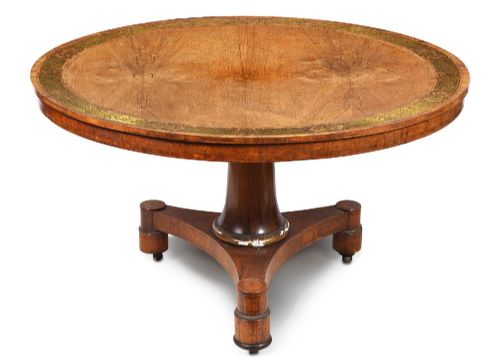
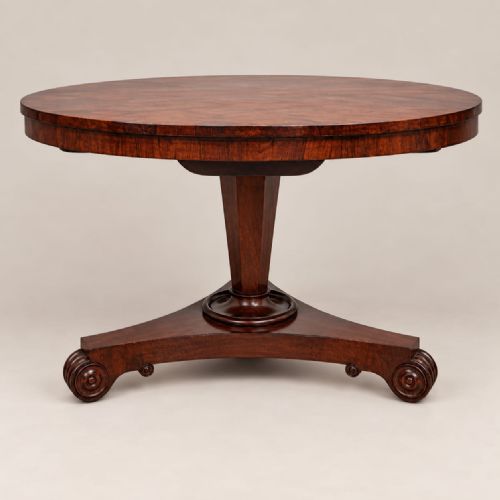
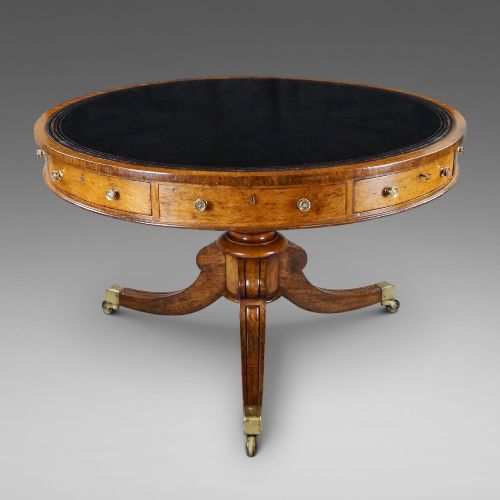
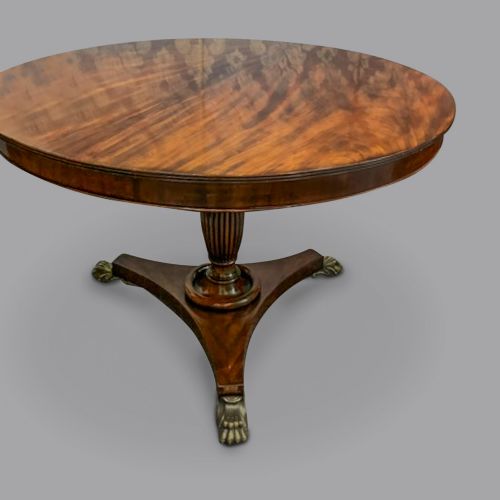
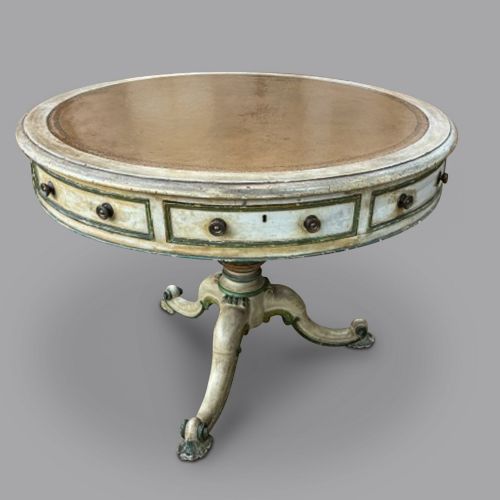
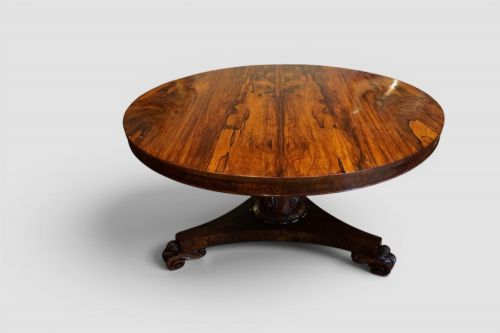
When you search for a georgian circular centre table, you encounter freestanding tables designed to sit in the middle of a room rather than against a wall. The selections span George III, Regency, and William IV eras, alongside later revivals stretching into the twentieth century. Forms range from breakfast tables and tilt-top designs to drum tables fitted with frieze drawers.
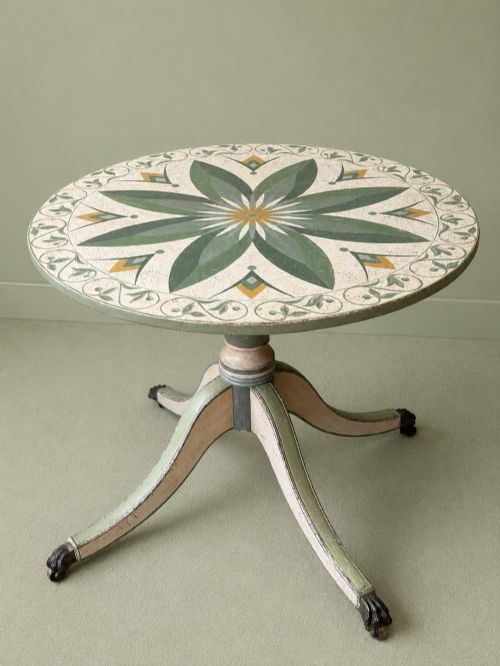
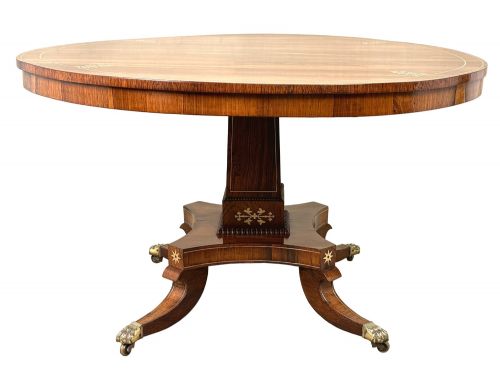
Mahogany and rosewood dominate the material record, frequently decorated with brass inlay, parcel gilt, or marquetry. Bases vary from pillar and tripod configurations to heavy triform pedestals and drum pedestals resting on brass castors. You also find walnut, oak, satinwood, and occasional marble tops among the pieces recorded.
Materials and construction
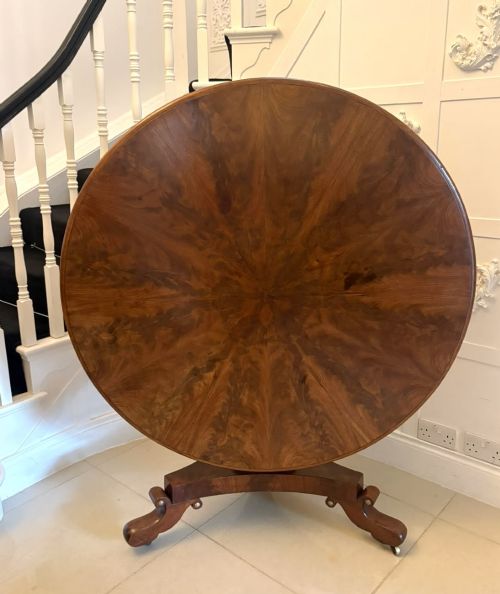
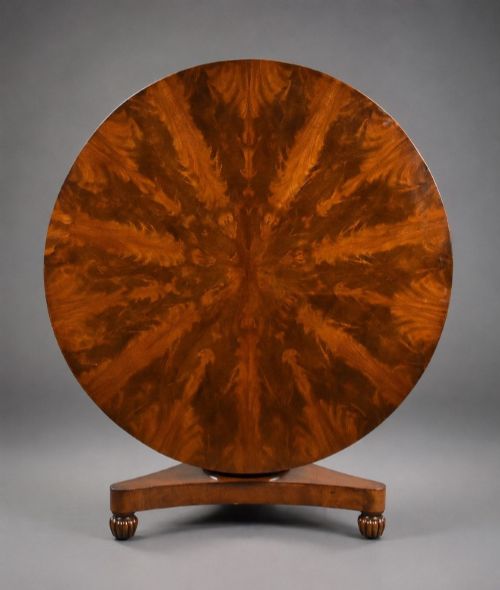
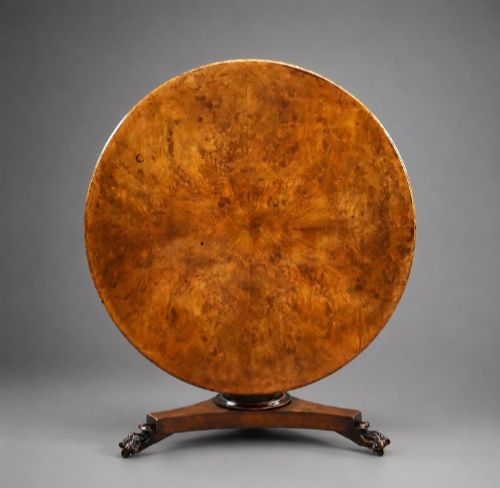
Cabinet makers utilised dense tropical hardwoods like mahogany and rosewood, often selecting figured veneers such as flame mahogany, burr elm, and plum pudding mahogany to cover primary surfaces. These timbers were laid over stable secondary woods and secured with traditional joinery. Brass mounts, stringing, and gilt accents were integrated into the framing of Regency and William IV examples.
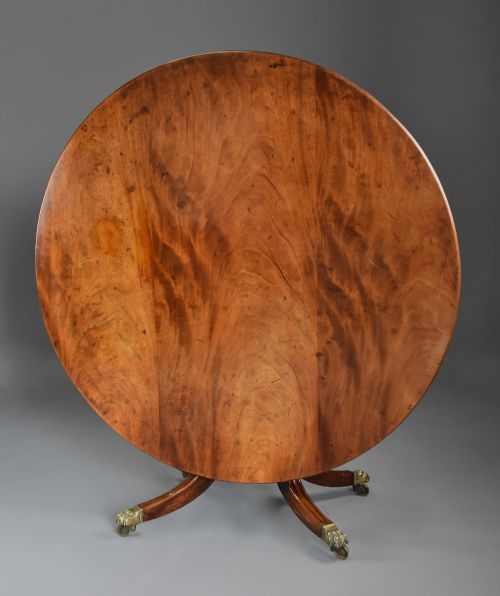
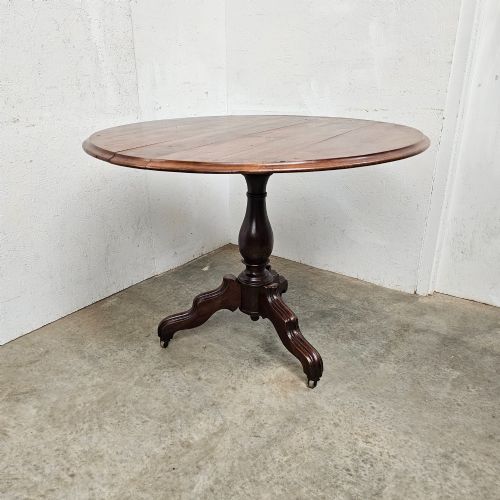
Tilt-top mechanisms relied on robust walnut or mahogany pivot blocks and brass catches that allowed the circular top to fold flat when not in use. Pedestal bases employed central turned pillars supported by three or four splayed legs, frequently terminating in brass paw castors. Drum tables incorporated internal oak framing to support heavy leather-lined writing surfaces and multiple drawers.
The inventory records dining tables, occasional tables, drum tables, and coffee tables with tilt-top and pedestal bases.
Distinctions in craftsmanship
The choice of timber veneer sets the baseline for visual impact, with symmetrical flame mahogany or figured rosewood indicating superior selection at the workbench. Grain continuity across a single-piece top and the precision of brass inlay reflect the time invested by the original maker. Faded patination developed through age adds depth that modern staining cannot replicate.
Structural integrity rests on the rigidity of the pedestal joint and the smoothness of any tilt-top or pivoting mechanism. Heavy triform bases and drum cabinets require robust internal framing to support the weight of solid stone or thick timber tops without shifting. Subtle carving on pillar collars and feet distinguishes workshop output from standard production.
Walker-Lancaster·Gillows·George Bullock
The Georgian Circular Centre Table Glossary
- Tilt-top
- A hinged table top that rotates to a vertical position when not in use. This mechanism saved floor space in period drawing rooms.
- Drum table
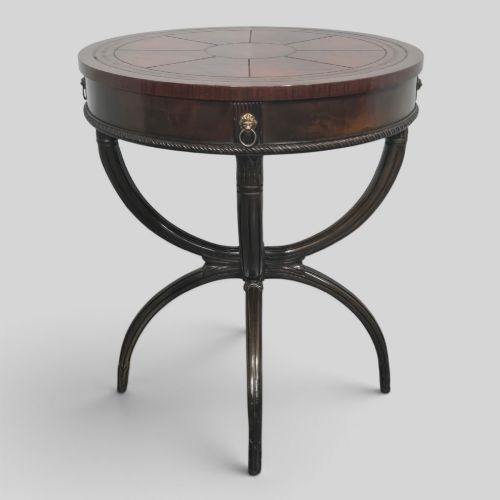
- A circular library table with a deep frieze containing drawers, usually supported on a central pillar. These tables often featured inset leather writing surfaces.
- Triform base
- A three-sided pedestal base supporting the central column. It provides stability for heavy rosewood or mahogany breakfast tables.
- Flame mahogany
- Timber cut from the fork of the mahogany tree to produce a flickering, flame-like grain pattern. Cabinet makers reserved this veneer for primary surfaces.
- Marquetry
- Decorative inlay using various woods to create pictorial or geometric patterns. It appears on the top surfaces of finer Regency pieces.
Georgian Circular Centre Table: Frequently Asked Questions
Where should a centre table go?
These tables are built to stand in the middle of a room rather than against a wall. They function as surfaces for lamps, books, or floral arrangements while anchoring the furniture layout.
Ensure there is enough clearance around the perimeter for movement. Placing one beneath a central ceiling rose or chandelier enhances the symmetry of the space.
How do I use a tilt-top table?
The hinged mechanism allows the circular top to be unlocked and swivelled upright. This made it simple to store the furniture against a wall when the room was needed for dancing or other activities.
When returning the top to the horizontal position, ensure the brass catch locks securely into the block. Avoid leaving heavy items on the surface while the leaf is tilted.
What is a drum table used for?
Drum tables were designed as library or writing tables, featuring a deep frieze fitted with functional drawers. The circular format allowed readers to access stored papers from any seated position around the perimeter.
Many examples include leather or roan skin inserts on the top surface. The drawers often rotated or corresponded to specific compartments inside the drum.
How do I tell Regency from Victorian pieces?
Regency pieces, dating from the early nineteenth century, favour classical restraint, brass inlay, and dark figured mahogany or rosewood. The lines remain sharp, drawing inspiration from ancient Greek and Roman forms. Nineteeth-century Victorian and William IV pieces often display heavier proportions, bolder pedestal bases, and darker finishes. Revival styles from later decades frequently mix elements from multiple earlier reigns.