

Georgian Chiffonier
A georgian chiffonier offers low storage and display surface, bridging the functional gap between sideboard and bookcase in period interiors.
Georgian Chiffonier
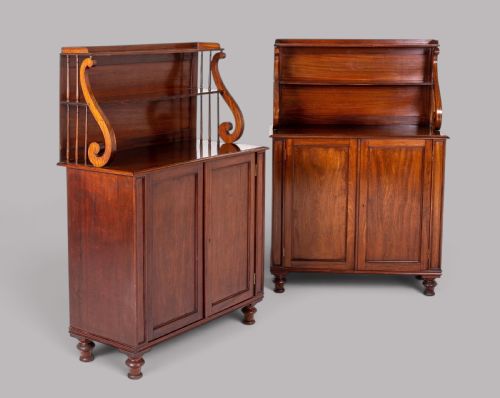
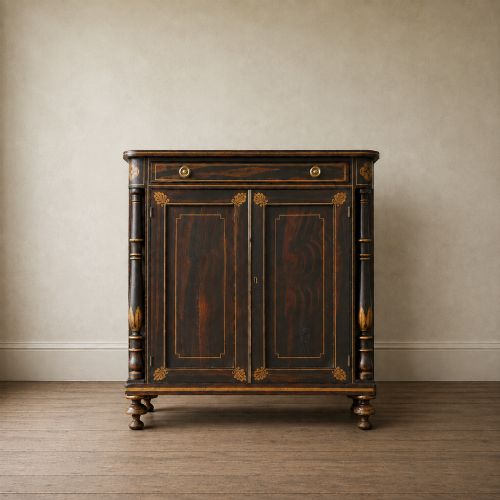
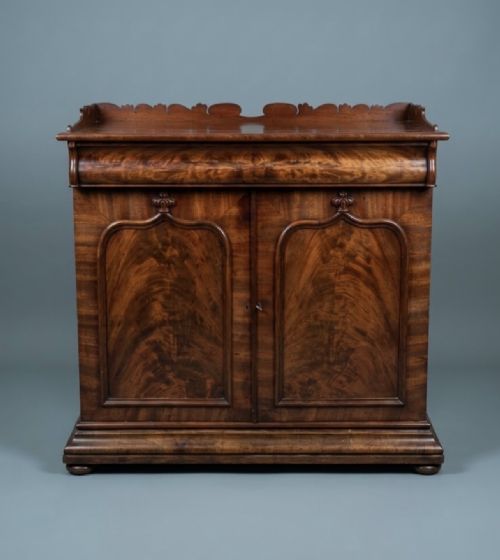
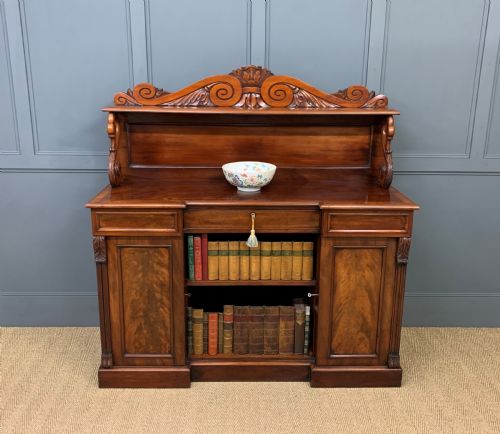
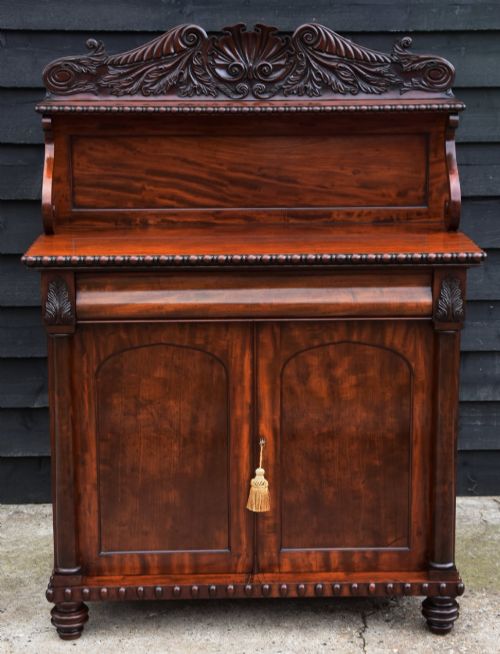
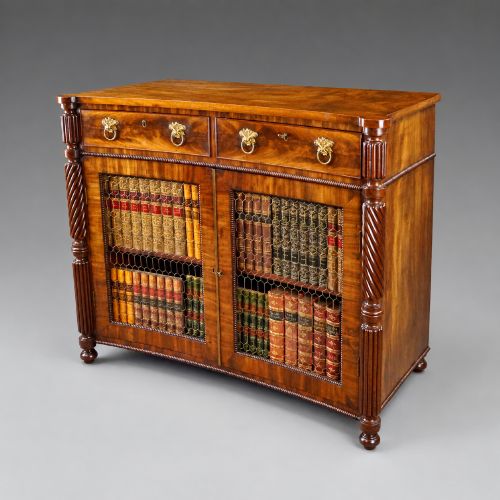
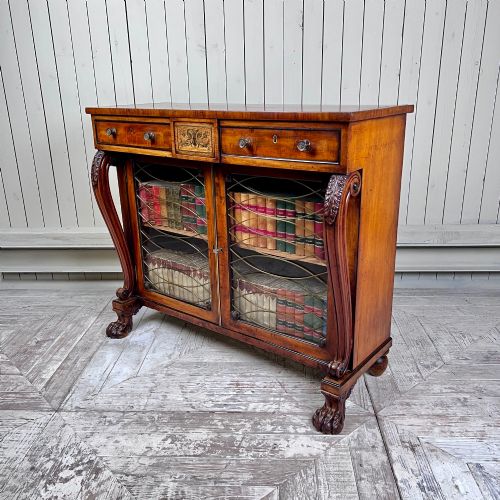
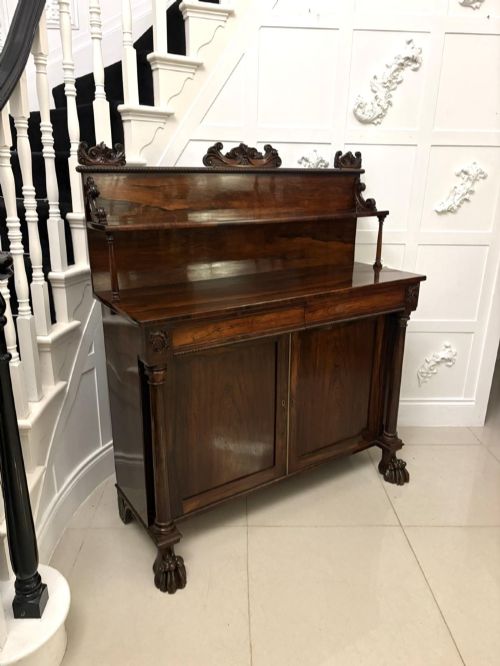
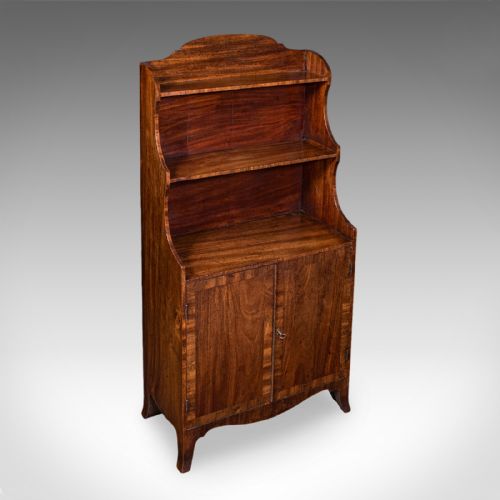
A georgian chiffonier is a low cabinet designed for the dining room or parlour, often incorporating shelves above enclosed lower cupboards. The pieces seen here span the Georgian, Regency, and William IV eras, stretching into the early nineteenth century.
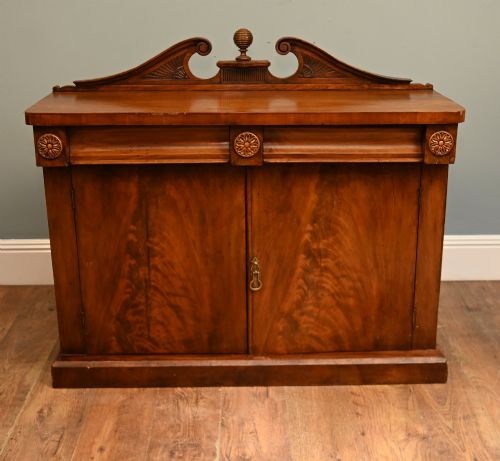
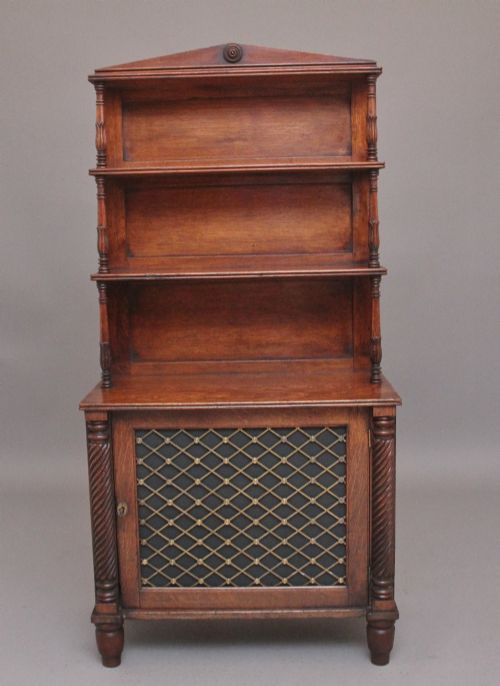
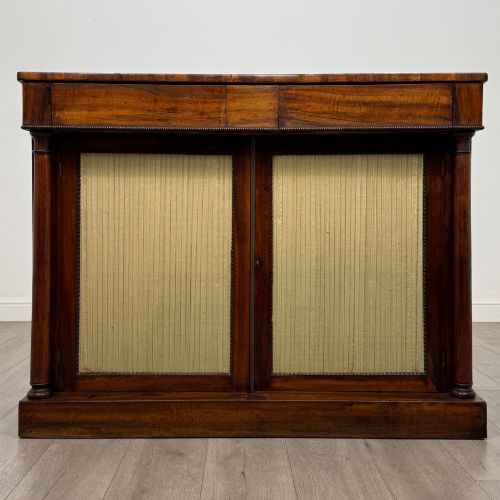
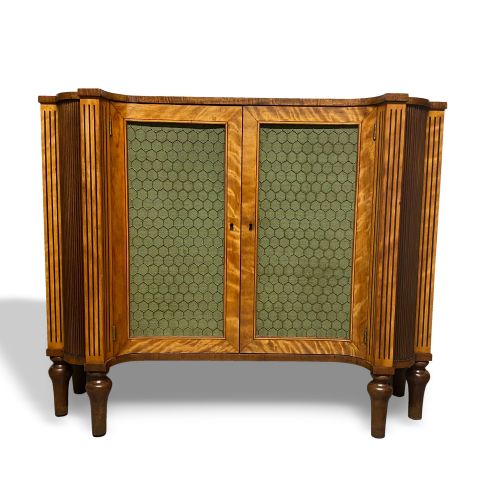
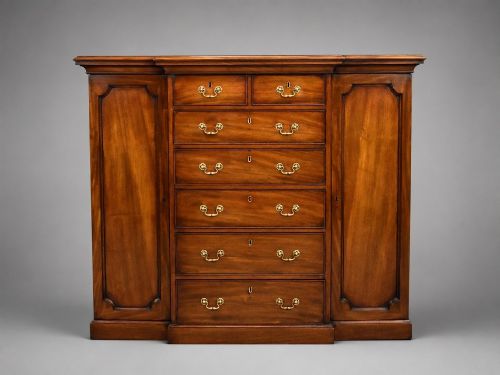
Makers built these pieces in mahogany, flame mahogany veneer, and rosewood, alongside simulated rosewood and satinwood. Forms range from compact waterfall bookcases to breakfront side cabinets and brass-grilled enclosures.
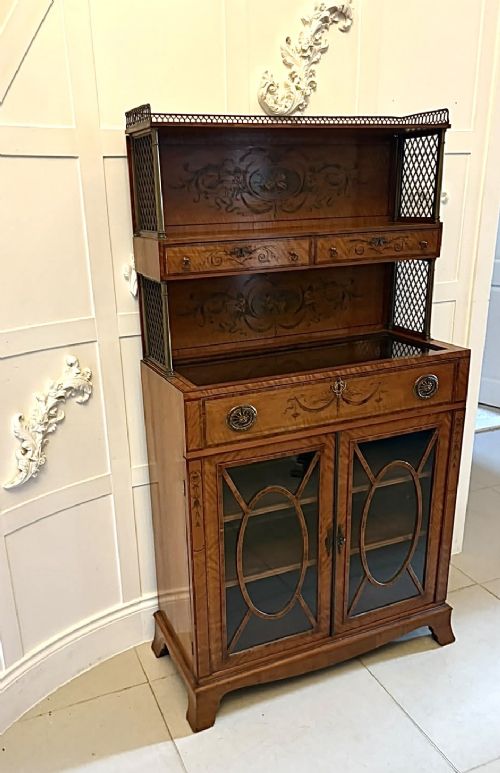
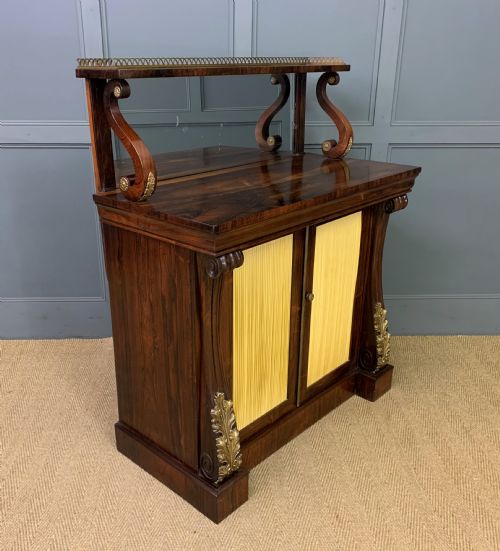
Buyers will most frequently encounter Regency mahogany iterations featuring brass inlay and silk-panelled doors. These items combine a lower tier of cupboards with open or shelved upper structures for books and ornaments.
Materials and Construction
Cabinet makers constructed carcass frames in solid timbers like oak and pine, applying figured veneers such as flame mahogany and rosewood to the visible exterior surfaces. These surfaces often display brass inlay, giltwood mounts, and delicate satinwood stringing.
Doors frequently incorporate pleated fabric panels, glazed glass panes, or brass wire grilles behind timber frames. Turning, pen-work decoration, and painted finishes complete the surface treatment on specific Regency and George III examples.
Georgian Chiffonier Retail Price Guide 2026
Typical asking prices for georgian chiffonier among the pieces listed under this phrase on Sellingantiques today, from the lower quarter to the upper quarter. They describe what is for sale here now, not the wider market.
Materials range from solid mahogany and oak to exotic rosewood, satinwood, and flame mahogany veneer.
Distinguishing Quality
Quality rests on the selection of timber veneers and the precision of brass inlay work set into the wood. Dense flame figures and carefully matched grains indicate superior material selection.
Proportion and execution of secondary details, such as turned columns, brass grilles, and silk-backed door panels, elevate the standing of a piece. Better examples maintain crisp joinery and retain original mounts without modern replacement.
The Georgian Chiffonier Glossary
- Chiffonier
- A low sideboard or cabinet, typically featuring enclosed lower cupboards and sometimes shelving above. It emerged in the early nineteenth century as a versatile room furnishing.
- Flame Mahogany
- Timber cut from the branch junction of the mahogany tree to create a distinctive, flickering grain pattern. Cabinet makers used veneers of this wood on prominent drawer fronts and doors.
- Breakfront
- A piece of furniture whose central section projects forward from the flanking wings. This architectural arrangement creates depth and visual rhythm in side cabinets.
- Giltwood
- Wood carved and coated with gold leaf or a gold-coloured finish. It appears on decorative mouldings and mounts of the Regency period.
Georgian Chiffonier: Frequently Asked Questions
What is a georgian chiffonier used for?
These cabinets served to store dining silver, linens, or books while providing a surface for serving or display. Upper shelves held volumes or decorative ceramics in parlours and libraries.
In modern rooms, they function well as media consoles, side tables, or statement storage pieces in hallways and living spaces.
How do I date a chiffonier?
Dating relies on timber choice, hardware, and stylistic markers recorded across the Georgian, Regency, and William IV periods. Heavy brass inlay and rosewood point firmly to the Regency era.
Simpler lines and satinwood or painted surfaces often indicate earlier George III origins, while later nineteenth-century pieces adopt heavier Victorian proportions.
What is the difference between a chiffonier and a sideboard?
A sideboard is generally longer and taller, designed primarily for dining room service and storage. A chiffonier is more compact and frequently includes upper shelves or a bookcase section.
Chiffoniers also lean towards domestic parlour use, whereas traditional sideboards remained anchored to the formal dining room.
How do I care for antique veneer?
Protect antique veneers by keeping cabinets away from direct sunlight and sudden temperature shifts that cause wood to dry and crack. Dust regularly with a soft, dry cloth rather than modern chemical polishes.
Maintain stable indoor humidity to prevent the underlying timber and delicate brass stringing from warping or lifting over time.