



Georgian Ceramic Sauce Tureen
A georgian ceramic sauce tureen brings nineteenth-century dining tables to life with rich transfer-printed patterns and delicate porcelain forms.
Georgian Ceramic Sauce Tureen
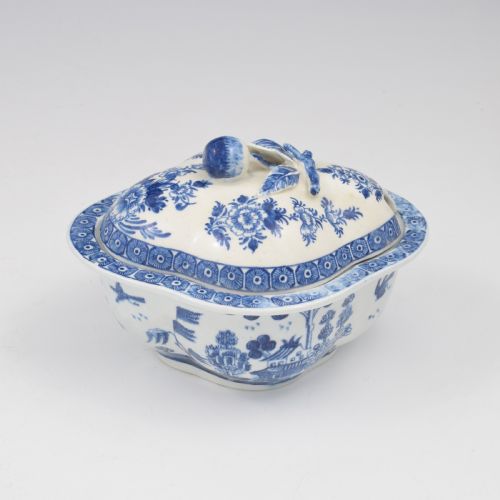
A georgian ceramic sauce tureen is a small covered vessel designed for serving gravies and sauces at the formal dinner table. The pieces found here span the eighteenth century, the Regency era, and the early nineteenth century, reflecting the shifting tastes of dining culture during those periods.
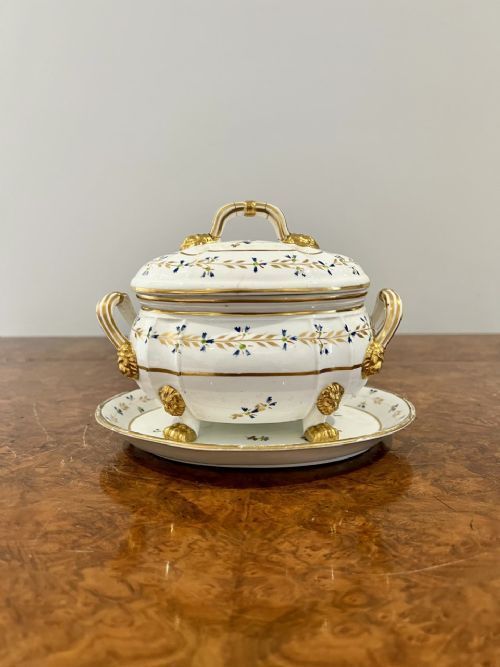
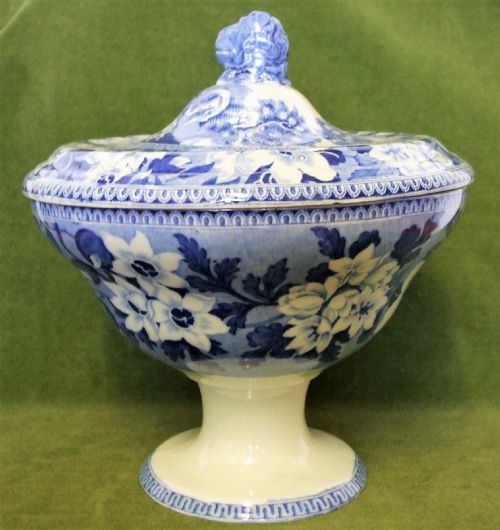
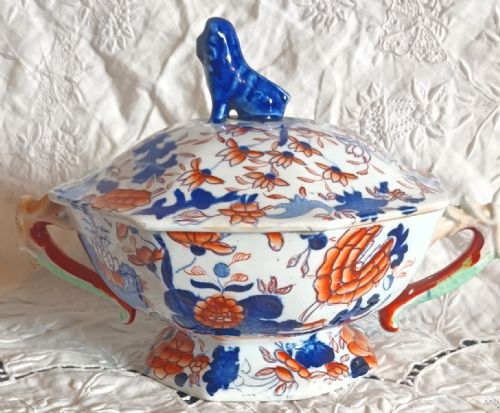
Most examples survive with their original matching covers, while some also retain their accompanying stands or platters. The forms range from quatrefoil shapes and animal-topped designs to botanical and architectural transfer-printed patterns produced by notable English factories.
How They Were Made
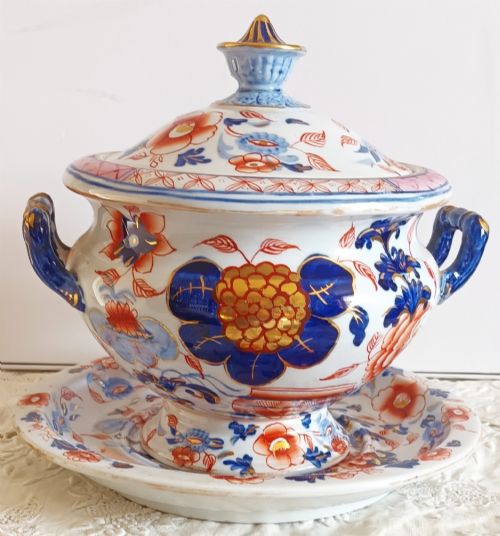
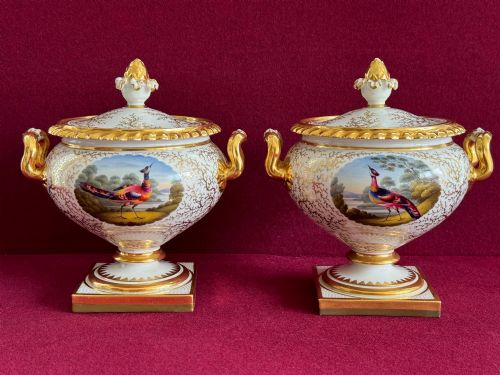
Potters utilised various ceramic bodies for these vessels, including refined soft-paste porcelain, pearlware, earthenware, and heavy-duty ironstone. Decoration relied on hand-painted botanical or polychrome schemes, alongside complex blue and white transfer printing.
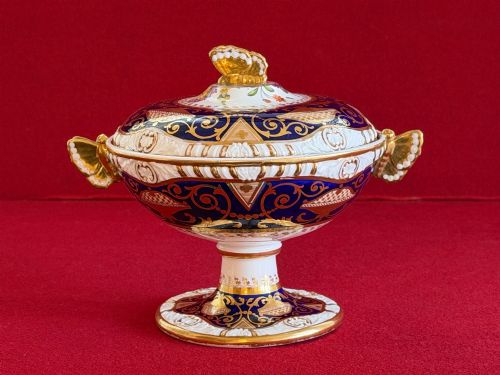
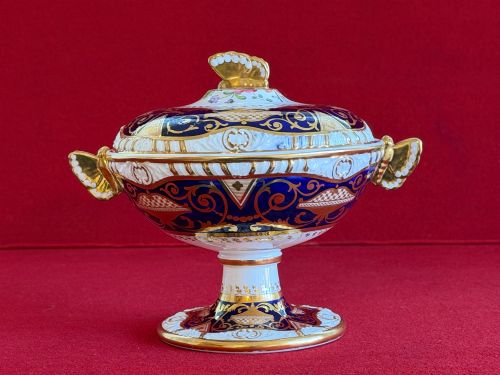
Makers finished many porcelain and ironstone pieces with rich gilding, particularly on handles and rims, using gold leaf to elevate the presentation of the tableware.
Georgian Ceramic Sauce Tureen Retail Price Guide 2026
Typical asking prices for georgian ceramic sauce tureen among the pieces listed under this phrase on Sellingantiques today, from the lower quarter to the upper quarter. They describe what is for sale here now, not the wider market.
Partridge-shaped tureens bring feathered plumage and domestic fowl directly to the formal dining table.
What Varies in Quality
The distinction between standard tableware and finer display pieces rests in the execution of the decoration, from crisp transfer printing to intricate hand-painted polychrome details. Superior vessels often feature sculptural elements such as lion-head covers or gilded handles that require advanced modelling skill.
The choice of ceramic body also dictates the tier of the piece, with delicate soft-paste porcelain sitting at a different level of refinement compared to sturdy utilitarian ironstone.
Derby Porcelain·Swansea Pearlware·Mason's Ironstone·John Rogers and Son·Flight Barr and Barr·Spode·Chamberlain Worcester·Coalbrookdale
The Georgian Ceramic Sauce Tureen Glossary
- Pearlware
- A refined earthenware body developed in the late eighteenth century featuring a faint bluish glaze that pooled in crevices. It served as a popular canvas for blue and white transfer-printed tableware.
- Ironstone
- A dense, durable type of earthenware patented in the early nineteenth century to resist chipping. It provided a robust alternative to porcelain for heavy dining use.
- Transfer printing
- A method of decorating ceramics by engraving a design onto a copper plate, pulling it on tissue paper, and pressing it onto the biscuit ware before glazing. This technique allowed intricate patterns like botanical studies and scenic landscapes to be replicated consistently.
- Soft-paste porcelain
- A ceramic composition fired at lower temperatures than hard-paste porcelain, resulting in a slightly warmer tone and a softer glaze. Eighteenth-century English factories utilised this body extensively before true porcelain formulas became widespread.
Georgian Ceramic Sauce Tureen: Frequently Asked Questions
What were sauce tureens used for?
These vessels held hot gravies, melted butter, and spiced sauces to accompany meat and fish courses at formal dinners. Their matching covers kept the contents warm between the kitchen and the dining table.
They sat centrally on the dining table or upon sideboards, often paired with matching platters and ladles to complete the service.
How do I display a tureen?
Tureens sit well on open shelving, dining sideboards, or inside glass-fronted cabinets where both the body and cover remain visible. Keeping the cover slightly offset can hint at the vessel's original function.
Pairing a tureen with its matching stand creates a balanced display that highlights the scale and proportions of the piece.
How do I tell Regency pieces apart?
Regency and early nineteenth-century pieces often display bolder geometric or classical motifs alongside vibrant Imari palettes and heavy gilding. The ceramic bodies from this era lean towards ironstone or refined earthenware alongside improved porcelain formulas.
Earlier eighteenth-century examples tend to feature organic quatrefoil shapes, delicate hand-painted botanical studies, or softer blue and white transfer prints.
Are these tureens dishwasher safe?
Historic ceramics require gentle hand washing in lukewarm water with mild soap to protect the glaze, hand-painted details, and gold leaf. Modern dishwashers subject antique bodies and fragile handles to thermal shock and harsh detergents.
Using soft cloths prevents scratching the historic surfaces of pearlware, ironstone, and porcelain.