



Georgian Carved Ring
These georgian carved ring pieces are miniature stone and metal works of art carrying centuries of portraiture and heraldry on the hand.
Georgian Carved Ring
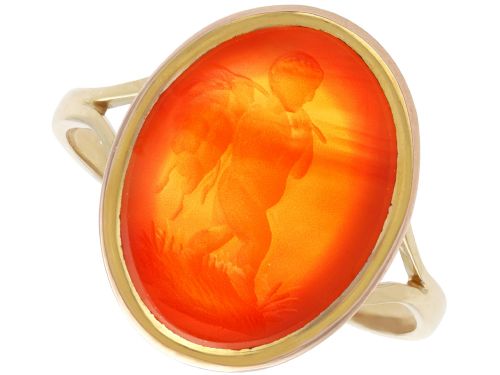
When you search for a georgian carved ring, you are looking at small-scale wearable sculptures executed in hardstone, carnelian, agate, and rock crystal, often mounted in gold.
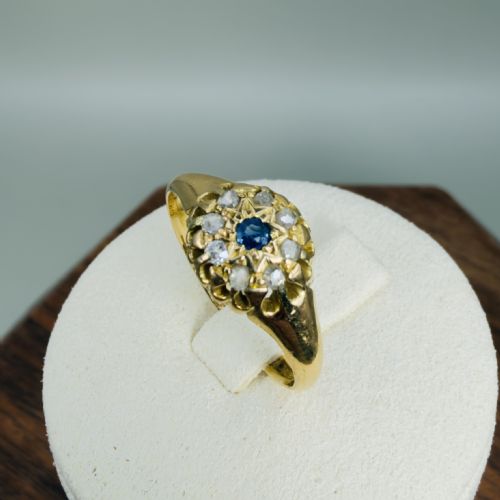
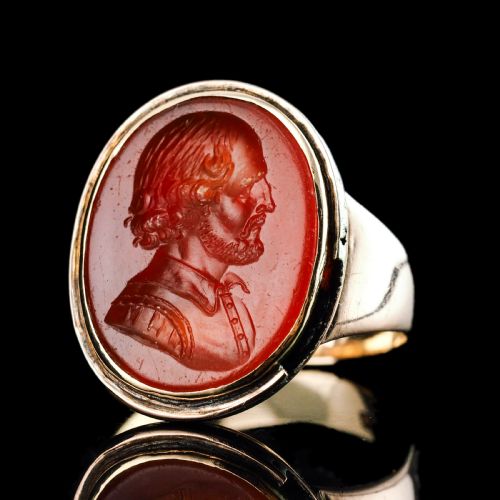
The versions you are most likely to meet on this page range from eighteenth-century intaglio rings bearing classical figures or historical portraits to nineteenth-century cluster rings set with sapphires and diamonds.
Many of these jewels double as fob seals or devotional rings, reflecting the varied personal and public functions of eighteenth and nineteenth-century jewellery.
Materials and construction
The makers of a georgian carved ring relied on precious metals like yellow gold, shaping bands to hold intricate stones securely in closed or open-backed settings.
Carving required immense precision on hard materials such as carnelian, agate, and rock crystal, utilising abrasive powders and hand-drilling techniques to achieve deep intaglio or cameo relief.
Gemstones including sapphires and old mined cut diamonds were hand-faceted and set alongside carved stones, combining refractive brilliance with miniature sculptural detail.
Georgian Carved Ring Retail Price Guide 2026
Typical asking prices for georgian carved ring among the pieces listed under this phrase on Sellingantiques today, from the lower quarter to the upper quarter. They describe what is for sale here now, not the wider market.
Some rings double as functional writing implements, allowing the wearer to seal secret correspondence with the turn of a finger.
Judging quality
Metalwork quality shows in the delicacy and strength of the gold settings, with hand-wrought details that integrate seamlessly with the central carved motif rather than overpowering it.
The choice and clarity of accompanying materials, such as well-matched sapphires or high-grade old mined cut diamonds, elevate the overall stature of the piece.
The Georgian Carved Ring Glossary
- Intaglio
- A gem or stone carved in reverse so that the design creates a raised impression when pressed into sealing wax. This technique was widely used for personal seals and signet rings.
- Hardstone
- A term used by jewellers and collectors to describe semi-precious stones harder than ordinary glass, including agate, carnelian, and jasper, which are suitable for fine carving.
- Fob seal
- A small decorative weight, often mounted as a ring, featuring a carved matrix at the base used for sealing letters and documents.
- Old mined cut
- An early diamond cutting style characterised by a cushion shape, high crown, small table, and deep pavilion, designed to catch candlelight.
- Cameo
- A method of carving where the subject is raised in relief against a contrasting background colour, usually executed on layered stones or shells.
Georgian Carved Ring: Frequently Asked Questions
What is a georgian carved ring?
A georgian carved ring is an antique piece of finger jewellery featuring a gemstone or hardstone carved with a cameo or intaglio motif, mounted in gold.
These pieces were produced during the eighteenth and early nineteenth centuries, serving both decorative and practical purposes such as sealing wax documents.
How were intaglio rings used?
Intaglio rings were primarily functional items used to press personal coats of arms, portraits, or initials into hot wax to seal letters and legal documents.
Over time, their practical use diminished, and they became treasured purely as portraits of classical figures, deities, or historical personages worn for display.
How do I care for a carved ring?
These antique rings require gentle handling because softer hardstones like carnelian and agate can scratch or chip if struck against hard surfaces.
Clean them with a soft cloth and mild soapy water, avoiding harsh ultrasonic cleaners or chemical dips that might damage the ancient settings or the stones.
How do I tell periods apart?
Differentiating periods relies on examining the mounting style, gold alloy colour, and the specific cutting characteristics of the stones or surrounding diamonds.
Earlier eighteenth-century examples often feature foiled backs and simpler closed settings, while later Victorian adaptations introduce cluster designs and brighter yellow gold tones.