
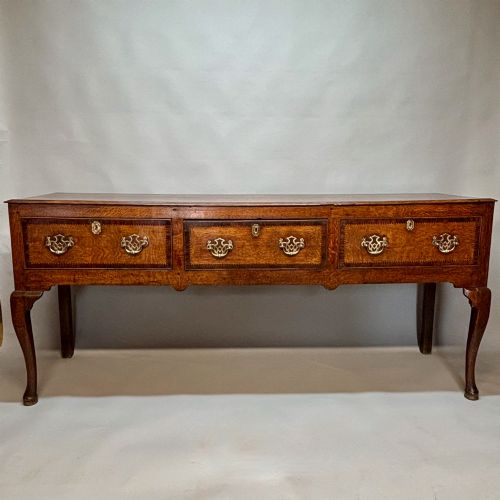
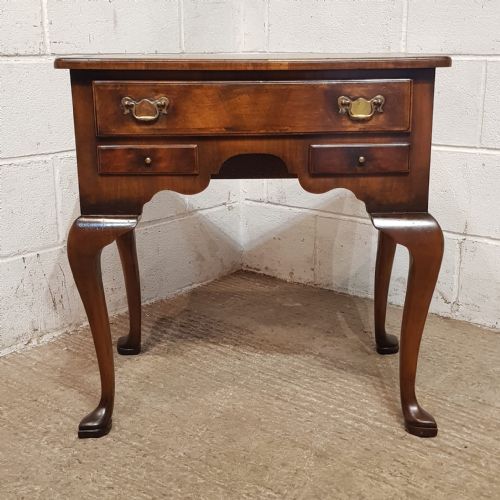
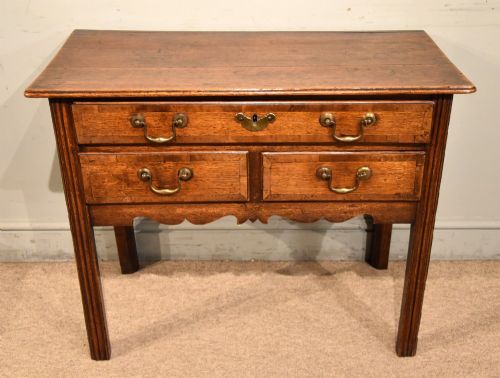
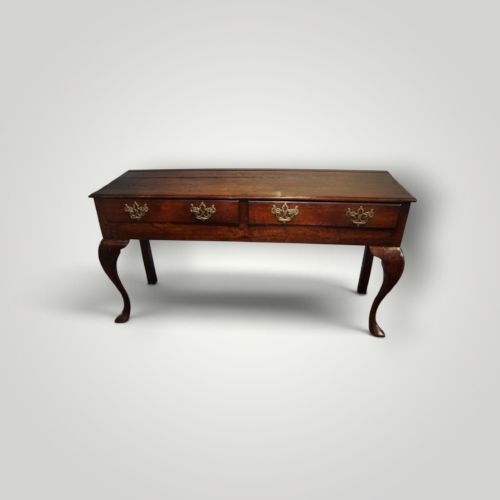
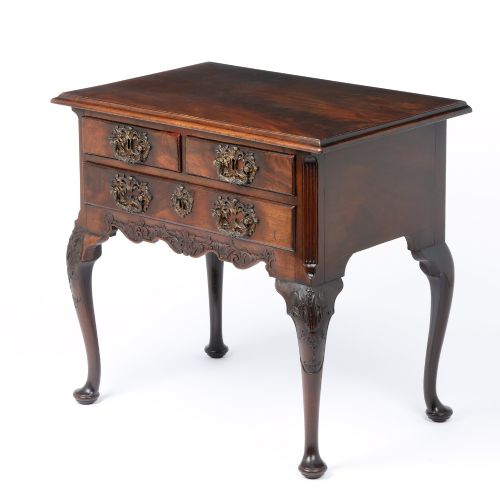
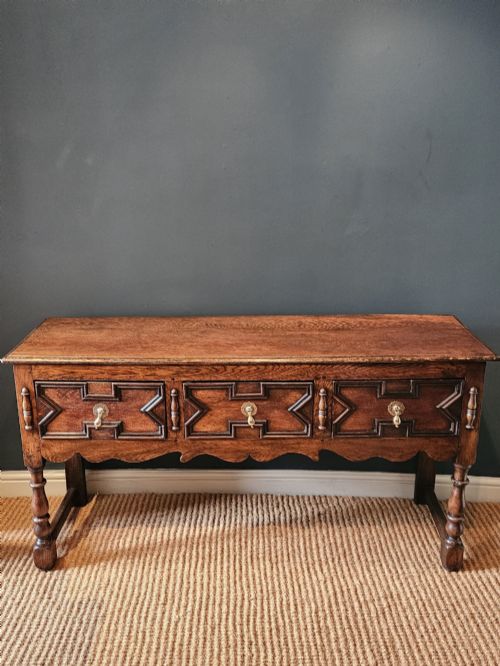
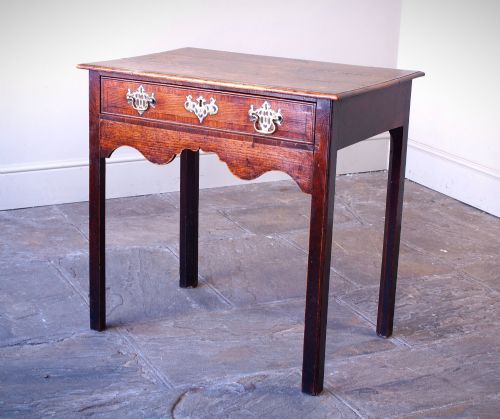
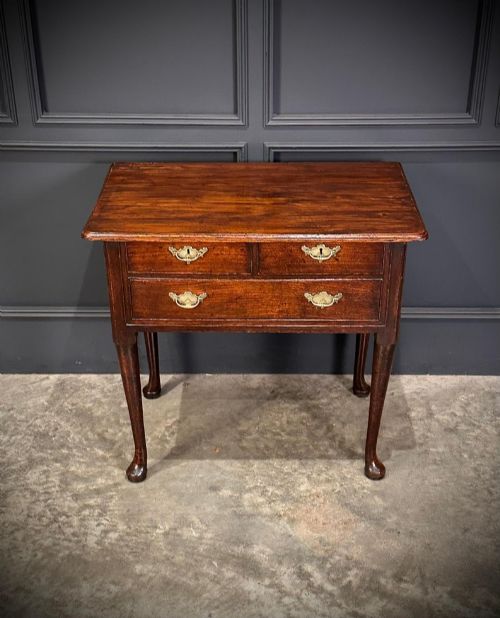
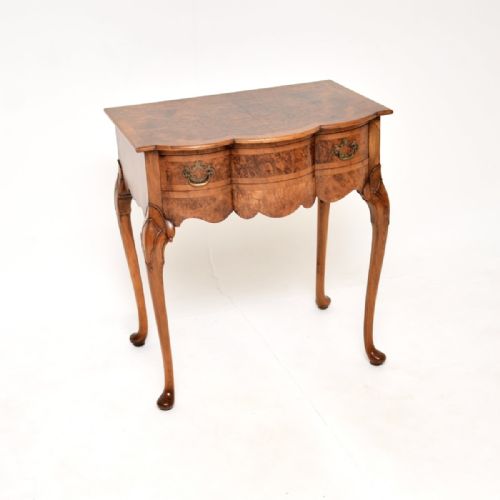
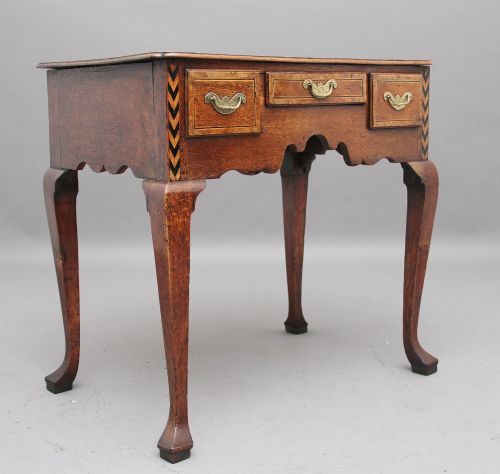
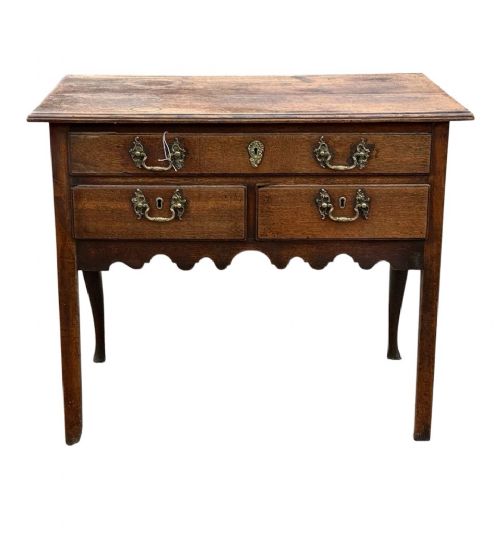

Georgian Carved Lowboy Table
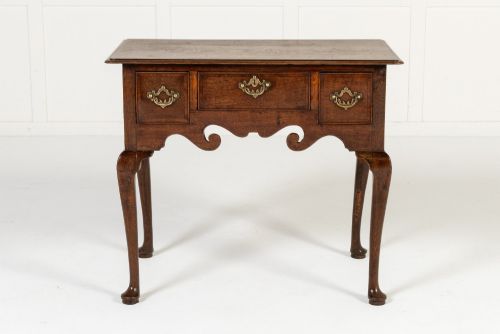
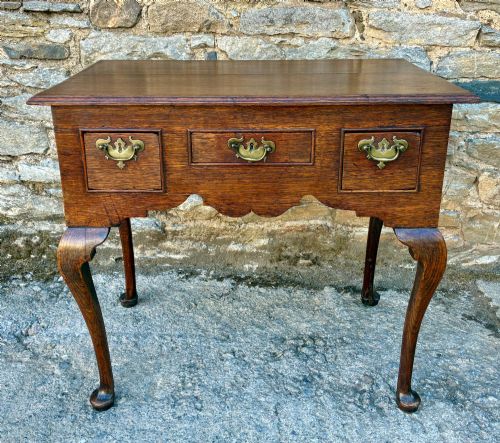
A georgian carved lowboy table is a low, multi-drawer occasional piece designed for domestic storage and dressing, prized for its classic proportions.
Georgian Carved Lowboy Table
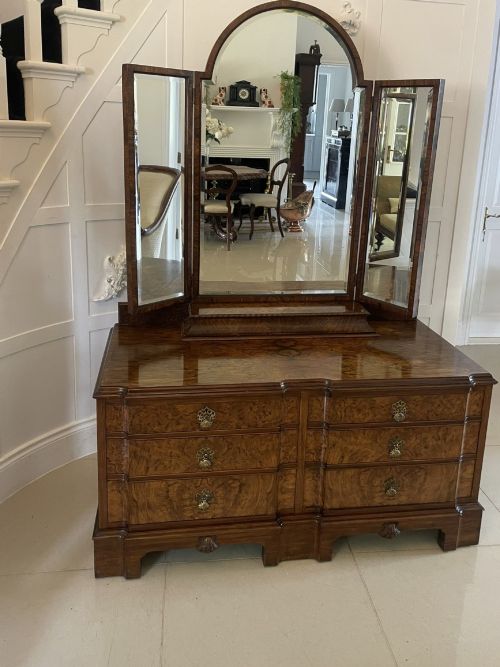
A georgian carved lowboy table functions primarily as a compact side table, dressing table, or small dresser base equipped with one to three drawers. These pieces emerge predominantly from the eighteenth century alongside later revival periods up to the twentieth century.
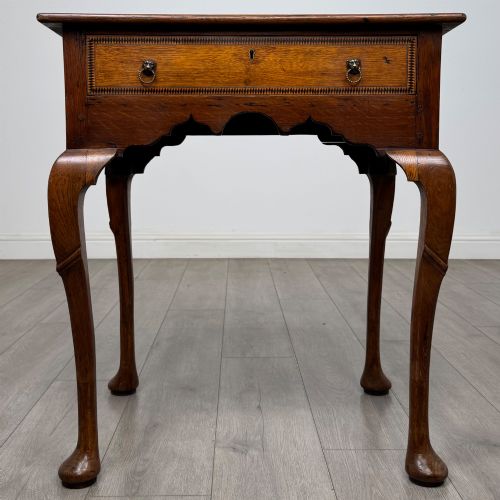
The version most commonly met on this page is the oak or walnut lowboy featuring cabriole legs and origins spanning English country workshops to formal Georgian households.
Makers recorded in the evidence include Muirhead Moffat & Co and Elkington & Co, reflecting both specialist cabinetmakers and associated silver firms of later revival periods.
Materials and Construction
Cabinetmakers constructed these tables using native and decorative timbers, chiefly oak, walnut, burr walnut veneer, elm, and fruitwood, often supported by brass handles and escutcheons.
Surfaces frequently display carved detailing, geometric mouldings, and grain patterns inherent to burr walnut and quarter-sawn oak, mounted on cabriole or straight legs.
Listings span the eighteenth century, the Georgian period, and twentieth-century revivals, utilising oak, walnut, burr walnut veneer, brass, elm, and fruitwood.
Evaluating Quality
Quality rests upon the crispness of the timber carving, the depth of the wood grain, and the integrity of the period drawer construction rather than surface finish alone.
Examples at the upper end exhibit refined proportions, original brass hardware, and well-figured burr walnut or substantial eighteenth-century oak, whereas later revival pieces rely on stylistic mimicry.
Muirhead Moffat & Co·Elkington & Co
The Georgian Carved Lowboy Table Glossary
- Lowboy
- A small, low table with drawers, typically used as a dressing table or side table in eighteenth-century interiors. These pieces often feature cabriole legs and a shaped apron.
- Cabriole leg
- A furniture leg that curves out and then in, resembling the leg of an animal. This form became popular during the Queen Anne and Georgian periods.
- Dresser base
- A low cabinet or table with drawers, originally used in kitchens or dining rooms for food preparation and storage. They share close structural similarities with lowboys.
- Burr walnut
- A veneer or solid timber cut from walnut tree growths, producing intricate, swirling grain patterns. It was heavily utilised on high-status tables and consoles.
- Geometric moulding
- Raised wooden profiling applied in rectilinear or geometric patterns to drawer fronts and framing. This technique is characteristic of early eighteenth-century case furniture.
Georgian Carved Lowboy Table: Frequently Asked Questions
What is a lowboy table used for?
Historically, these low tables served multiple domestic duties, functioning as dressing tables for grooming or as side tables for serving and storage.
Today, they fit easily into hallways, bedrooms, or living spaces as compact writing desks or display surfaces.
How do I tell an 18th century lowboy from a revival piece?
Eighteenth-century examples show authentic timber ageing, hand-cut joinery, and period-appropriate wear within the drawer linings and secondary woods.
Revival pieces, such as those from the Edwardian era or the 1920s, often display standardised machine-cut elements and cleaner internal construction.
Did lowboys always have drawers?
Most lowboys incorporate one, two, or three drawers arranged beneath the tabletop, though configurations vary from single drawer designs to three-drawer dresser bases.
The drawer layout often dictates whether the piece functioned primarily for dressing or general side table use.
What woods were used to make lowboys?
Oak and walnut represent the primary timbers found across these listings, alongside elm and fruitwood in regional country pieces.
Later revival items frequently utilise burr walnut veneer to replicate high-status earlier aesthetics.