

Georgian Carved Lamp Tables
Georgian carved lamp tables bring compact historical utility to a room, offering sturdy surfaces shaped by centuries of woodworking tradition.
Georgian Carved Lamp Tables
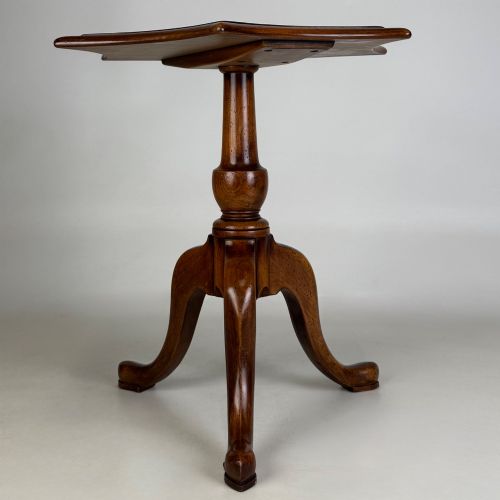
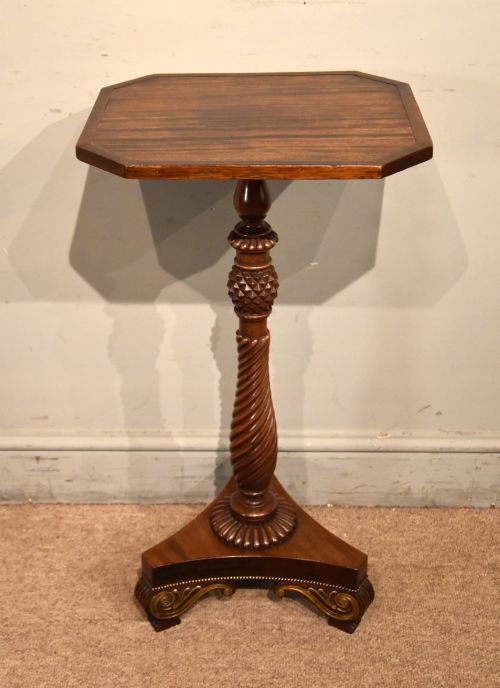
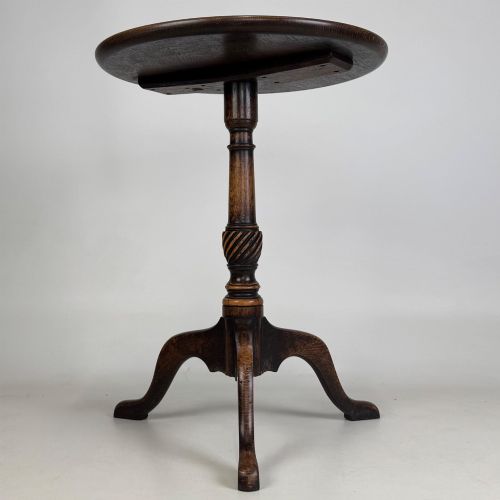
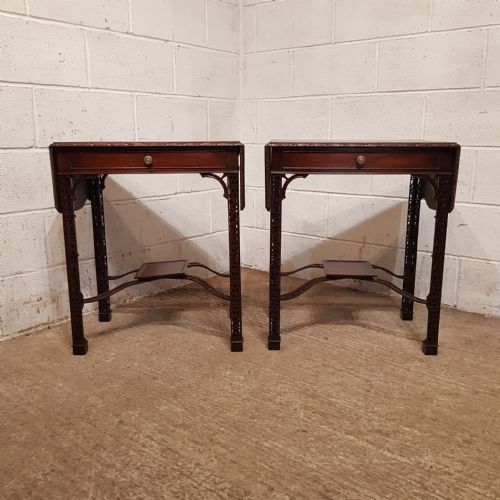
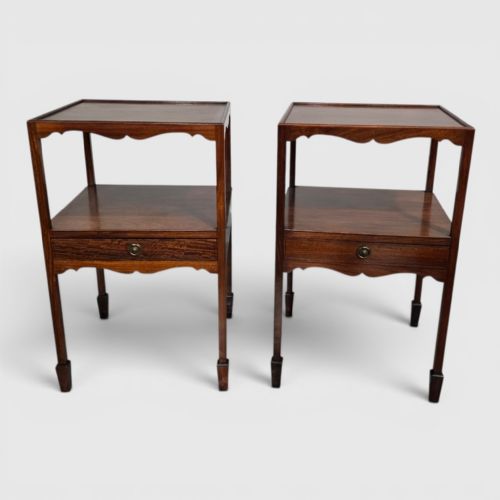
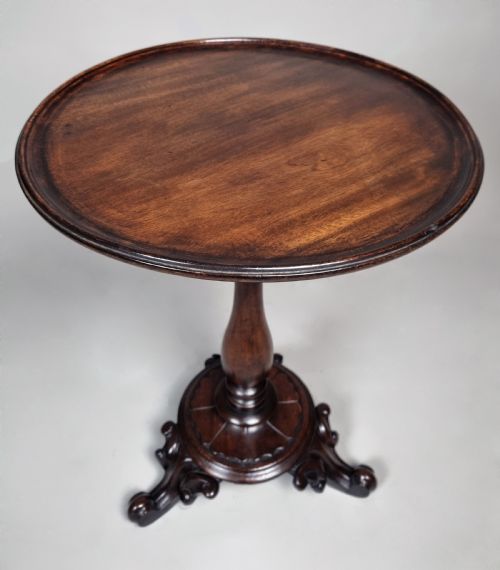
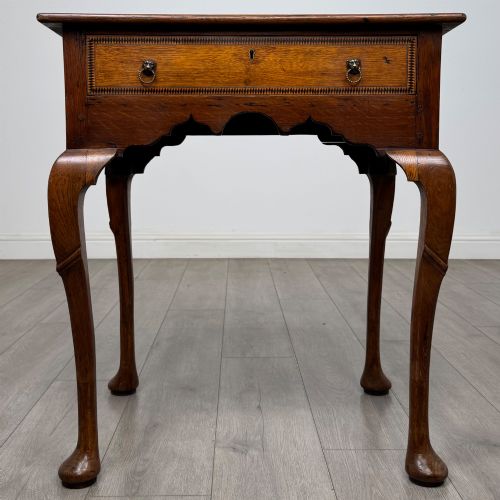
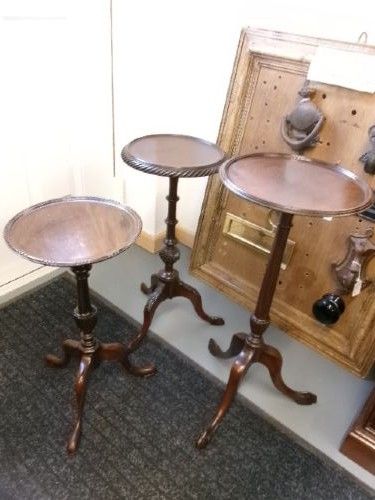
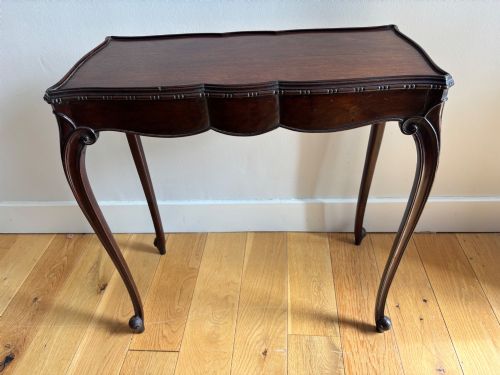
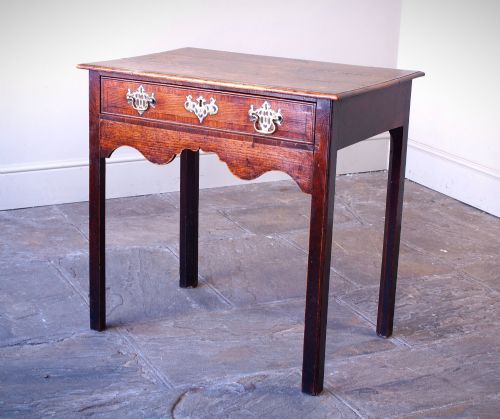
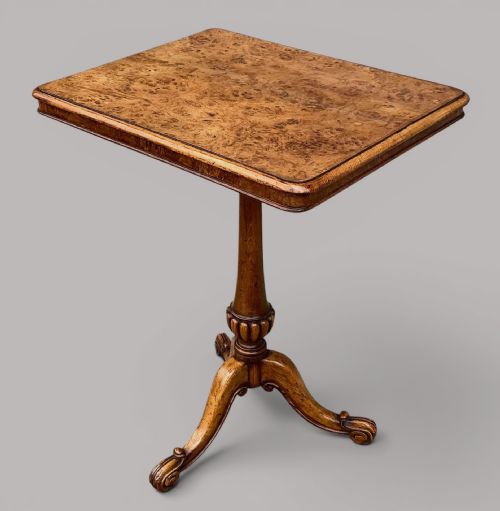
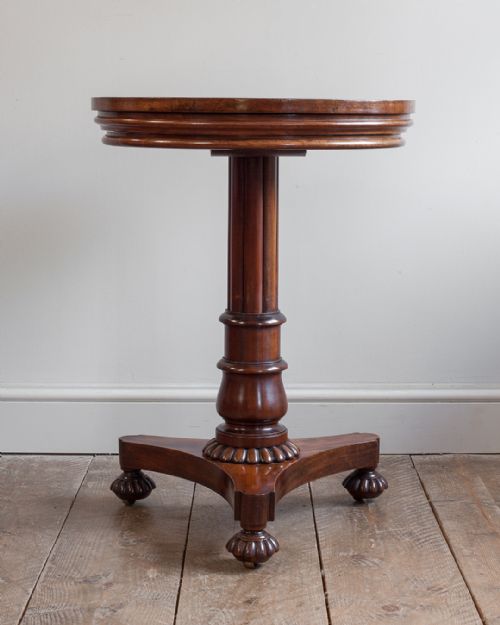
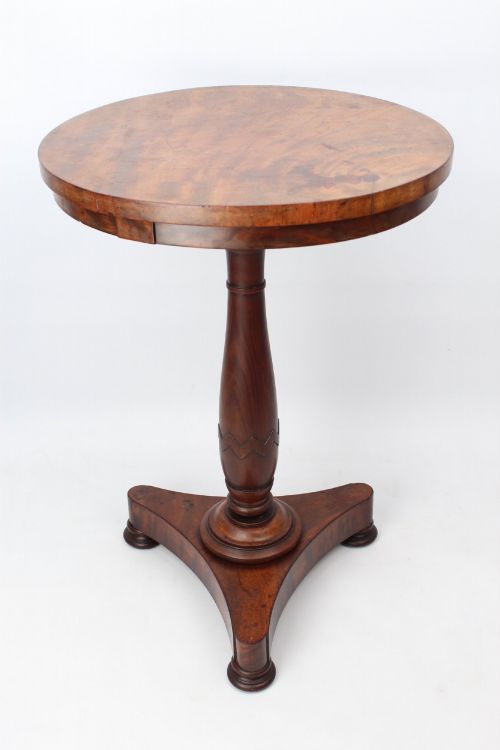
Georgian carved lamp tables encompass small occasional furniture designed to hold illumination or small objects within living spaces. Buyers encounter various forms on this page, including tripod tables, wine tables, side tables, and lowboys originating from the Georgian period through to later revival eras.
The selection includes pieces spanning the eighteenth and nineteenth centuries, alongside Edwardian and twentieth-century interpretations of earlier designs. Mahogany and oak dominate the selection, frequently taking the form of round occasional surfaces, drop-leaf configurations, or tilt-top tables.
How they were made
Cabinetmakers utilised solid timbers such as mahogany and oak, frequently applying flame mahogany veneer, burr walnut, or rosewood to upper surfaces for visual depth. Brass fittings and boxwood stringing occasionally appear as decorative accents on tops and borders.
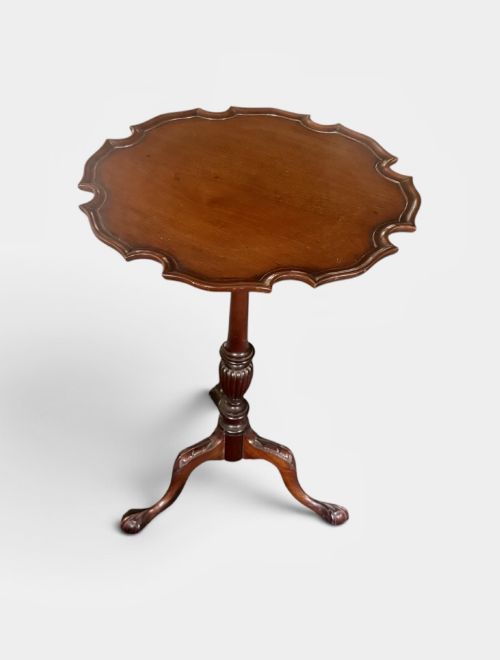
Construction techniques involve traditional joinery, turning for tripod pedestals, and carved details on rims or legs, such as pie crust edges and shaped borders. Tables often utilise tilt mechanisms, drop leaves, or multiple tiers supported by central columns or slender legs.
Listings feature pieces spanning the 18th century, 19th century, Edwardian era, and 1920s, constructed primarily from mahogany, oak, and walnut.
What varies in quality
Quality rests upon the selection of timber figures and the crispness of carved details, such as shaped pie crust rims or turned tripod bases. Grain alignment in veneers and the integration of secondary woods indicate the level of care taken during construction.
Proportion and stability distinguish finer examples from standard utility items, particularly in the balance of tripod bases and the seamless operation of tilt-top mechanisms or drop leaves.
The Georgian Carved Lamp Tables Glossary
- Lowboy
- A small oak or mahogany side table featuring one or more drawers, originating in the eighteenth century. These low tables typically served multiple domestic functions in bedrooms and parlours.
- Tripod table
- A small occasional table supported by a central pillar resting on three legs. This form gained popularity during the Georgian period for ease of movement.
- Pie crust rim
- A raised, decoratively carved edge shaped to resemble pastry crusts on round table tops. This feature demands precise hand-carving skill from the cabinetmaker.
- Tilt-top table
- An occasional table featuring a mechanism that allows the surface to pivot vertically when not in use. This design saved space in smaller historic rooms.
- Wine table
- A small, tall occasional table designed specifically to hold glasses and bottles near seating areas. They often feature dishtop or circular wooden surfaces on slender pedestals.
Georgian Carved Lamp Tables: Frequently Asked Questions
What is a Georgian carved lamp table?
These pieces are small historic tables originally used for holding lighting devices, drinks, or small personal items. They combine functional surfaces with decorative woodwork suited to domestic sitting rooms.
Buyers find forms ranging from tripod wine tables to lowboys and side tables, constructed in timber like mahogany, oak, and walnut across various centuries.
How do I identify a Georgian style table?
Identification relies on examining the timber species, construction methods, and characteristic decorative details such as tripod bases or dished tops. Cabinetmakers of the period favoured solid mahogany and oak with traditional joinery.
Later revival pieces from the Edwardian era or the twentieth century often emulate these eighteenth-century proportions and stylistic elements, requiring careful inspection of the wood's age and wear.
Where should I place a lamp table?
These tables suit placement beside sofas, armchairs, or in corners where a small surface is required for a lamp or decorative object. Their compact footprints allow them to fit into narrow spaces without cluttering a room.
Consider matching the timber tone, such as mahogany or walnut, with existing furniture in the space to maintain a cohesive interior arrangement.
Are these tables sturdy enough for daily use?
Historic occasional tables provide stable surfaces for lightweight items such as table lamps, books, and cups. Their solid timber construction has survived decades or centuries of domestic life.
Care should be taken with tilt-top mechanisms and slender tripod legs to ensure balanced weight distribution and prevent accidental tipping.