




Georgian Carnelian Seal
A georgian carnelian seal is a small piece of functional desk equipment or personal ornamentation, valued for its carved intaglio and bright stone.
Georgian Carnelian Seal
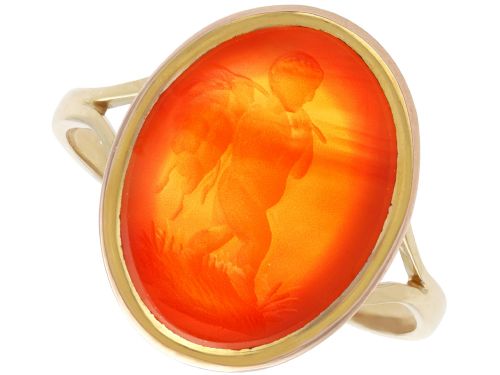
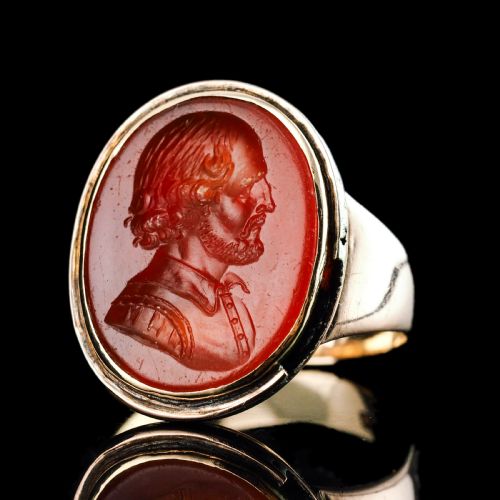
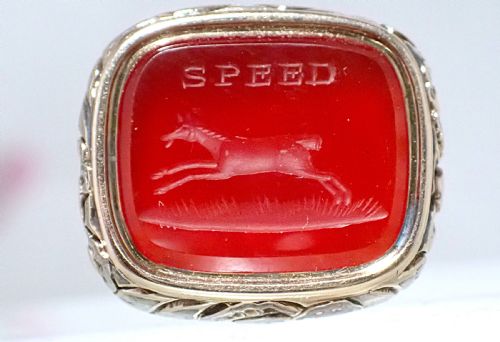
A georgian carnelian seal appears in various forms on this page, most commonly as fob seals designed to be suspended from a chain or mounted as a pendant. These items served a practical purpose in correspondence, pressing into hot wax to secure letters and documents with a personal signet.
The selection includes rings and swivel pendants, shifting between Georgian origins and later Victorian interpretations. Many pieces feature intaglio carvings depicting classical figures, portraits, animals, or inscriptions like names and mottoes.
How they were made
Metals span gold, 9ct gold, 18ct gold, gold cased metal, and gilt metal, providing solid structures or protective surface layers for the mounts and rings. Jewellers and metalworkers set the stones securely within these bezels, often incorporating swivel mechanisms to allow the seal to rotate.
The carnelian stone, sometimes referenced as cornelian, is shaped and polished before being hand-carved with intaglio details. Artisans utilised sharp cutting tools to sink portraits, symbols, and text into the surface of the quartz.
Georgian Carnelian Seal Retail Price Guide 2026
Typical asking prices for georgian carnelian seal among the pieces listed under this phrase on Sellingantiques today, from the lower quarter to the upper quarter. They describe what is for sale here now, not the wider market.
Materials recorded across these listings include carnelian, gold, 9ct gold, gilt metal, gold cased metal, 18ct gold, cornelian, and agate.
What varies in quality
The choice of mount metal also distinguishes pieces, ranging from base gilt metal and gold cased versions to solid 9ct and 18ct gold settings. Heavier metalwork and robust swivel mounts reflect higher initial expenditure.
The Georgian Carnelian Seal Glossary
- Intaglio
- A design carved into the surface of a stone so that an impression pressed in wax raises in relief. This technique formed the primary function of a seal.
- Fob seal
- A small pendant designed to hang from a pocket watch chain or ribbon. It carries a matrix at the base for stamping wax.
- Cornelian
- An alternative spelling for carnelian, a brownish-red variety of the mineral chalcedony used for gemstone carvings. It takes a high polish.
- Gold cased
- A method of bonding a layer of gold to a base metal core. This provided the appearance and durability of solid gold at a lower cost.
- Swivel pendant
- A mounting that allows the seal to turn on an axis. This design often displayed two different carved faces or a stone on one side and a blank shield on the other.
Georgian Carnelian Seal: Frequently Asked Questions
How did people use a georgian carnelian seal?
These seals were pressed into heated sealing wax to close letters and secure confidential documents. The carved intaglio left a raised impression that authenticated the sender.
Many examples were carried daily on watch chains as fobs or worn on finger rings for immediate access during writing.
What is the difference between a fob and a ring?
A fob seal is a pendant meant for a chain or chatelaine, featuring a loop at the top for suspension. It hangs downward when not in use.
An intaglio ring is sized to be worn directly on the finger, serving both as decorative jewellery and a personal stamp.
How can I tell the period of a seal?
Dating relies on stylistic clues in the mount design and the subject matter of the carving, such as Neoclassical motifs or Georgian lettering. Hallmarks on gold components also offer specific clues to the date of manufacture.
Items span the eighteenth and nineteenth centuries, reflecting shifts from Georgian craftsmanship into Victorian production methods.
What does a widows lozenge mean?
A lozenge shape on a seal or ring traditionally indicated that the owner was an unmarried woman or a widow. Heraldic and personal carvings on these specific diamond-shaped matrices followed strict social conventions.
This form provides insight into the original owner's social status and personal circumstances during the Georgian era.