





Georgian Candelabra Pair
These georgian candelabra pair selections bring refined illumination and period symmetry to a dining table.
Georgian Candelabra Pair
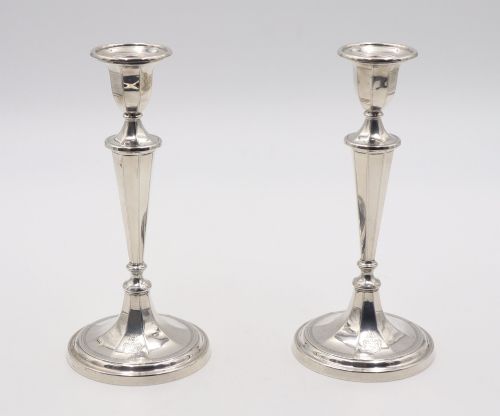
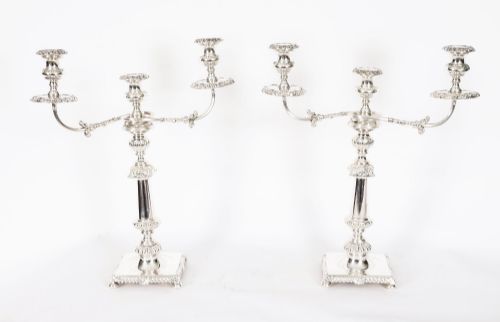
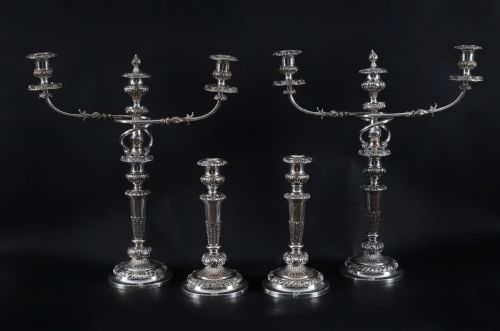
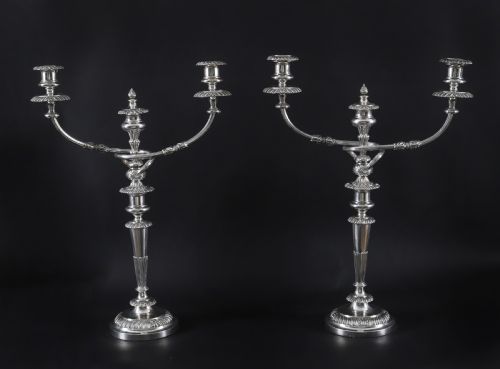
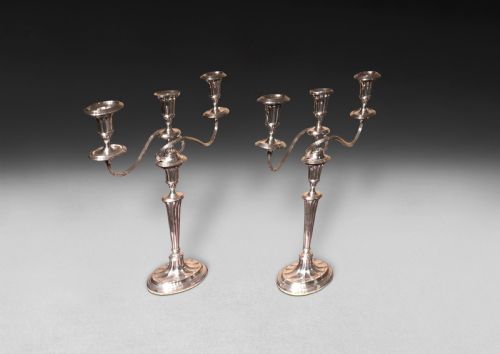
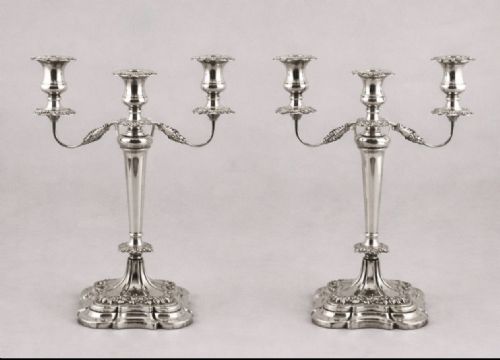
A georgian candelabra pair comprises matched branch-light candleholders designed to balance a dining table or sideboard. These pieces provide twin points of illumination through branched arms rising from a central stem.
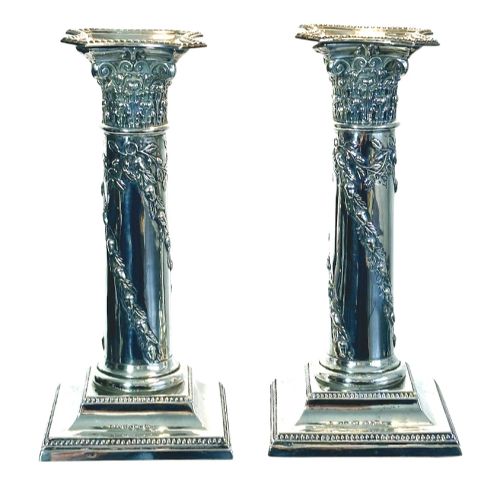
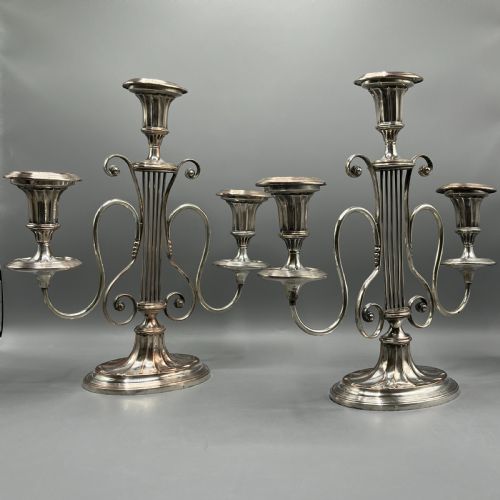
Most examples found here date from the eighteenth century or the Regency period, though later revivals also appear. The forms span multi-light branches, lyre-shaped designs, and circular bases holding sterling silver or Old Sheffield Plate.
How they were made
Silversmiths constructed early pieces using sterling silver or through the Old Sheffield Plate technique, fusing a thin layer of silver onto a copper base. Artisans shaped these metals by hand, often incorporating cast decorative details along the drip pans and socles.
Gilt bronze and ormolu also feature in the material record, frequently combined with porcelain figures such as Meissen musicians. These components required specialised casting, chasing, and fire-gilding methods common to high-end workshops.
Georgian Candelabra Pair Retail Price Guide 2026
Typical asking prices for georgian candelabra pair among the pieces listed under this phrase on Sellingantiques today, from the lower quarter to the upper quarter. They describe what is for sale here now, not the wider market.
Some candelabra incorporate porcelain musicians that serenade the room in absolute silence.
What varies in quality
Quality rests upon the crispness of the chased decoration and the structural integrity of the branched arms. Pieces with heavy gauge silver or thick Old Sheffield Plate display sharper detail along the cast borders and retain their original plating without excessive copper bleed.
Maker attribution elevates desirability, particularly when works originate from notable workshops such as Matthew Boulton. The weight of the base and the balance of the removable branches further distinguish superior examples from standard production.
Matthew Boulton·Blagden Hodgson And Co·Meissen
The Georgian Candelabra Pair Glossary
- Old Sheffield Plate
- A composite material made by fusing a thin sheet of silver to a thicker copper ingot. This technique was widely utilised before the invention of electroplating.
- Ormolu
- Finely ground high-carat gold applied to a bronze base using a mercury amalgamation process. The method produces a rich, matte yellow finish characteristic of luxury decorative arts.
- Socle
- A short plinth or pedestal supporting the main shaft of the candleholder. It provides stability and visual weight to the lower section.
- Drip Pan
- A small circular tray fitted beneath the candle nozzle to catch melting wax. It protects the arms and stem below from damage.
Georgian Candelabra Pair: Frequently Asked Questions
What is a georgian candelabra pair?
A georgian candelabra pair consists of two matching multi-light candleholders made during the Georgian era or later periods in that specific style. They feature branched arms designed to hold multiple candles simultaneously.
These items served as prominent decorative centerpieces for dining rooms and drawing rooms, providing both practical illumination and formal symmetry.
How do I clean Old Sheffield Plate?
Old Sheffield Plate requires gentle cleaning with a soft cloth and a specialised silver polish formulated for plated items. Vigorous rubbing must be avoided to prevent exposing the underlying copper base through the thin silver layer.
Routine dusting and minimal polishing preserve the historic surface and the subtle warmth of the dual-metal construction.
Are these candelabras safe for daily use?
These candelabras can hold lit candles provided they are placed on stable, level surfaces away from draughts. Drip pans catch the majority of melted wax during normal burning.
Careful handling during placement and extinguishing protects the historical joints and plated surfaces from accidental knocks.
How can I tell Regency from earlier pieces?
Regency designs typically incorporate bolder Neoclassical motifs, darker patination, and combinations of bronze and ormolu. Earlier George III examples lean toward rococo curves or lighter silver forms.
Examining the construction methods, base weights, and decorative motifs helps identify the distinct aesthetic shifts between periods.