



Georgian Camel Back Settee
A georgian camel back settee brings sweeping architectural line and deep comfort into a room.
Georgian Camel Back Settee
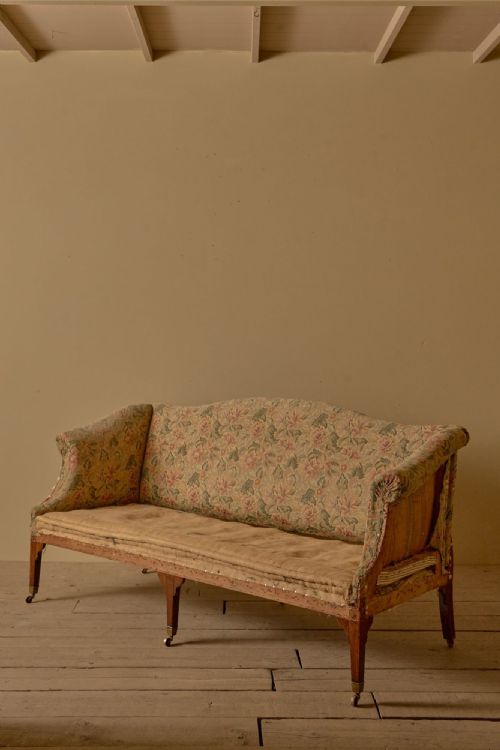
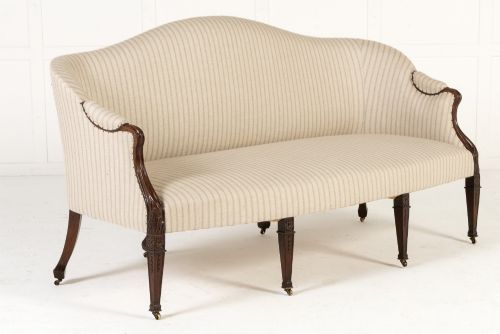
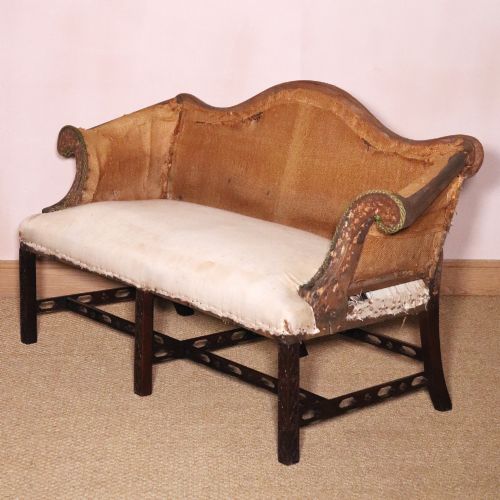
A georgian camel back settee is a formal upholstered seat defined by the undulating arched crest rail that mimics the hump of a camel. Pieces on this page span from mid-eighteenth-century origins through nineteenth-century revivals and later twentieth-century interpretations.
The dominant forms employ serpentine fronts and exposed mahogany framing, drawing heavily upon Chippendale and Hepplewhite vocabulary. Both authentic eighteenth-century examples and later revival pieces sit side by side in the current selection.
Makers working in the Georgian style prioritized fluid silhouette and structural restraint over excessive carving. This balance gives the form its enduring architectural presence in both period and traditional interiors.
Materials and construction
Timbers are predominantly mahogany, selected for its dense grain and strength which allowed makers to shape slender legs and supporting rails. Brass accents appear selectively on castors or structural hardware.
Upholstery relies on foundational coverings such as Hessian and calico beneath top layers of damask, velvet fabric, and general upholstery fabric. Traditional stuffing and webbing methods dictated the tautness of the serpentine back.
Georgian Camel Back Settee Retail Price Guide 2026
Typical asking prices for georgian camel back settee among the pieces listed under this phrase on Sellingantiques today, from the lower quarter to the upper quarter. They describe what is for sale here now, not the wider market.
Listings span from seventeen-fifty through the nineteenth century and into nineteen-forty, predominantly featuring mahogany and various upholstery fabrics.
Assessing quality and proportion
Quality rests primarily in the harmony of the serpentine sweep across the crest rail and the crispness of the timber framing. Superior examples maintain tension in the upholstery line that accentuates the distinct camel profile without appearing overly padded.
The integrity of the mahogany frame dictates longevity, with finer pieces showing seamless joinery and balanced proportions. Revival pieces vary according to how closely they adhere to the lighter, refined dimensions of the original eighteenth-century aesthetic.
The Georgian Camel Back Settee Glossary
- Camel back
- An upholstered sofa or settee featuring a distinctive arched crest rail with a continuous undulating curve. This contour mimics the anatomical hump of a camel and distributes visual weight evenly across the back.
- Serpentine front
- A furniture front configuration that curves outward in the centre and recesses inward towards the ends in a continuous wave. It requires precise woodworking to align with the upholstery.
- Hepplewhite style
- A late eighteenth-century design movement characterised by lightness, elegance, and shield or camel back forms. Named after cabinet maker George Hepplewhite, it often incorporates tapering legs.
- Chippendale style
- A mid-eighteenth-century aesthetic known for solid proportions, carved mahogany details, and subtle ogee curves. Pieces in this tradition frequently feature robust cabriole or square-chamfered legs.
- Hessian
- A coarse woven fabric typically utilised as a strong foundation layer beneath finer decorative textiles in traditional upholstery. It provides essential structural support for tensioned springs and stuffing.
Georgian Camel Back Settee: Frequently Asked Questions
What is a camel back settee?
A camel back settee is an upholstered seat characterised by a distinctive undulating arched backrest. The profile rises and falls in gentle curves resembling a camel's back.
First popularized in the eighteenth century, the form pairs deep cushioning with exposed wooden legs and rails. It functions as a formal yet comfortable seating choice for drawing rooms.
How do I date a camel back sofa?
Dating relies on examining the timber species, leg architecture, and the tightness of the upholstery curves. Eighteenth-century examples display hand-shaped mahogany frames and specific joinery traits.
Revival pieces from the nineteenth and twentieth centuries often adopt heavier framing or machine-made components while imitating earlier Chippendale or Hepplewhite styles.
Where should I place a settee?
These settees suit formal living spaces, large reception halls, or placed symmetrically opposite a fireplace. Their sculptural backs look striking when viewed from the centre of a room.
Ensure adequate clearance around the piece so the serpentine lines and exposed mahogany legs remain fully visible.
What fabrics work best on these?
Traditional coverings include damask, velvet, and heavy woven upholstery fabrics that complement historic interiors. These textiles hold tension well across the sweeping crest rail.
Plain or subtly patterned cloth allows the dramatic architectural silhouette of the camel back to remain the primary focus.