

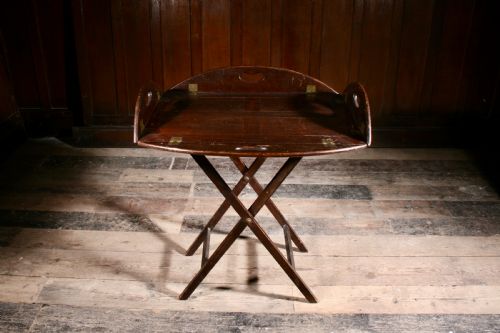
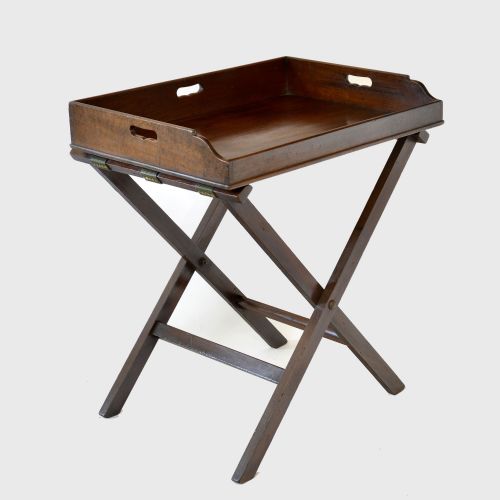
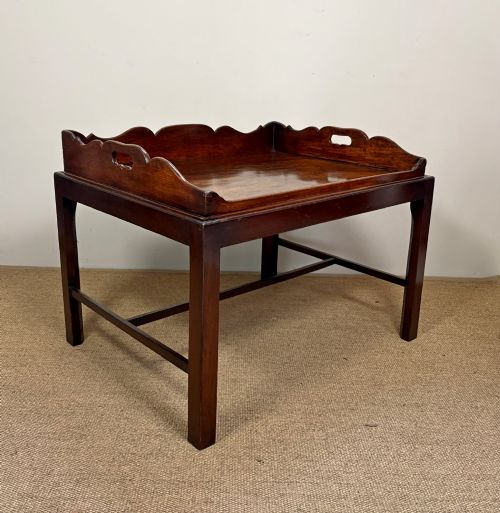
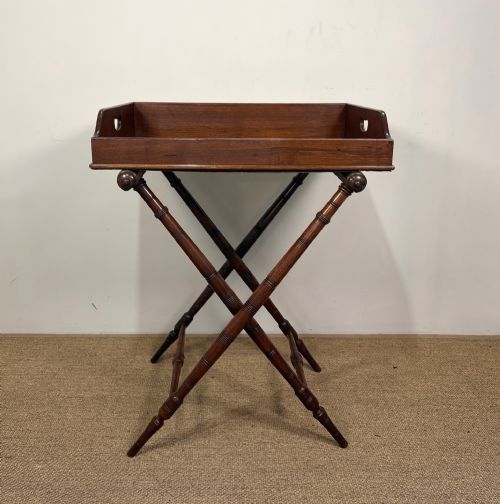
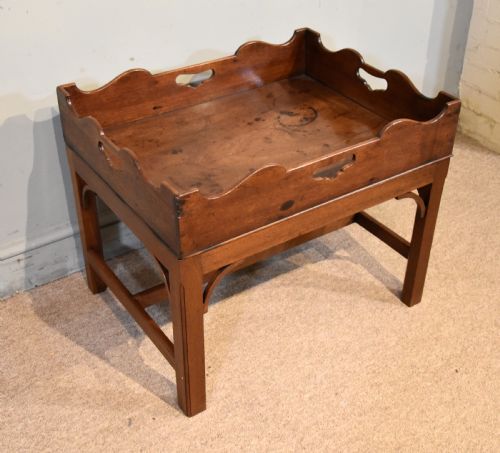


Georgian Butler Tray Stand
A georgian butler tray stand pairs a removable serving surface with a folding wooden base, designed for portable domestic service.
Georgian Butler Tray Stand
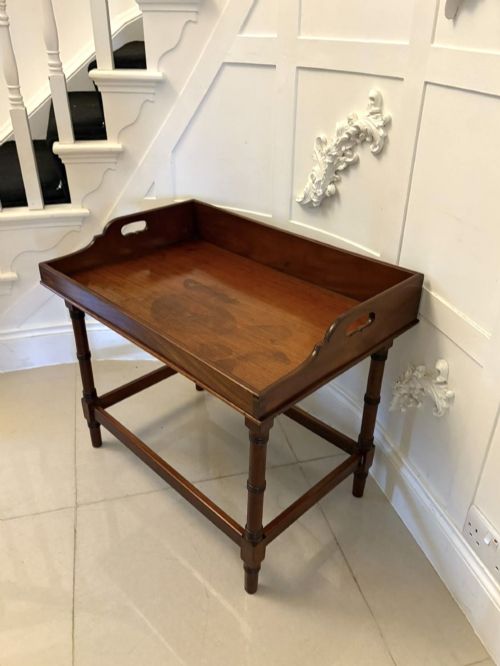
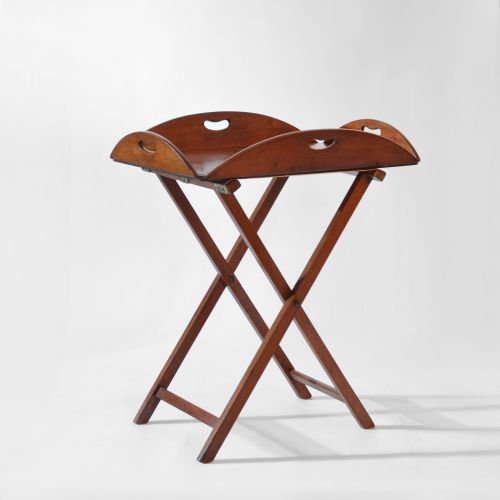
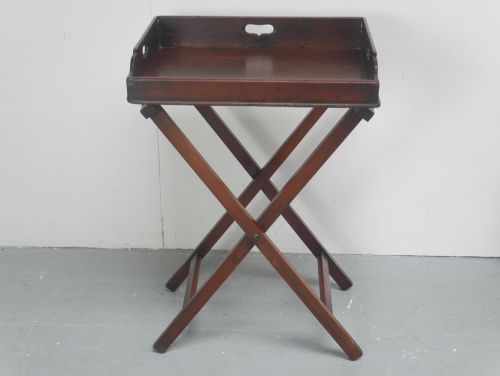
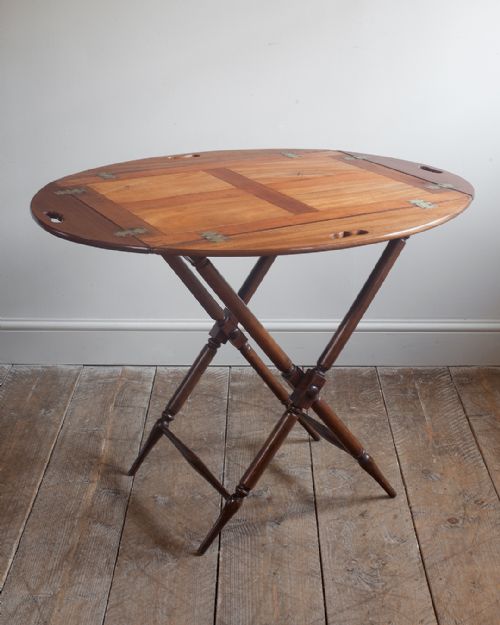
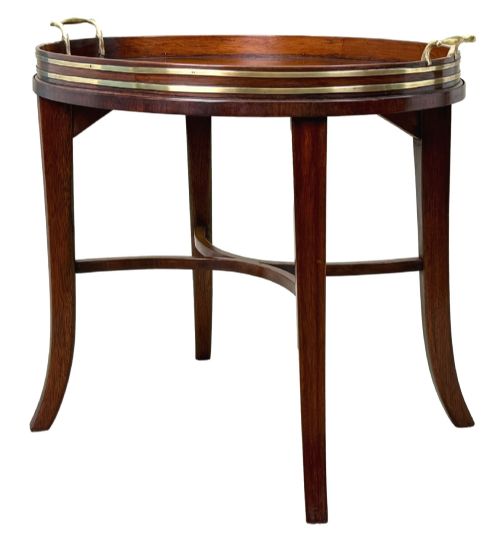
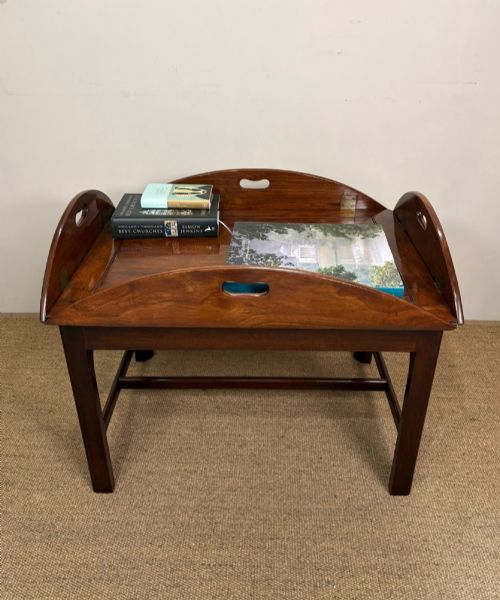
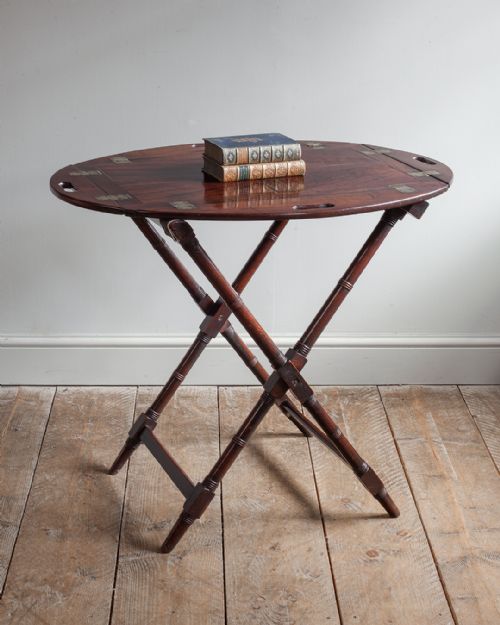
A georgian butler tray stand brings together a deep-sided wooden tray and a matching support, serving as a flexible occasional table or coffee table. The form originates in the eighteenth and nineteenth centuries, intended originally for moving silver, glassware, or tea wares between rooms.
Most examples found here date from the Georgian, Regency, and nineteenth-century periods, constructed predominantly in mahogany with rectangular or oval outlines. Many retain their original folding stands, though some trays appear paired with later bases or adapted as side tables.
How They Were Made
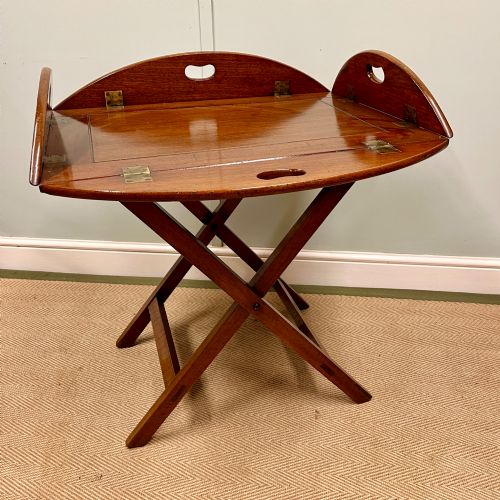
Makers constructed the trays primarily from mahogany, including Cuban varieties, using solid timber panels often shaped with hinged or pierced carrying handles along the rims. Some iterations incorporate brass bound decoration, bone detailing, or marquetry satinwood enrichment depending on the period.
The supporting frames operate as folding scissor stands or fixed occasional tables, occasionally utilising fabric webbing, canvas webbing, or bamboo-effect turnings to secure the structure when open.
Listings feature mahogany predominantly, alongside accents of brass, bone, and canvas webbing across Georgian, Regency, and Edwardian periods.
What Varies in Quality
The distinction between ordinary and exceptional pieces rests upon timber selection and the retention of original elements. Trays fashioned from dense Cuban mahogany with finely figured grain command attention, particularly when united with their matching original stands rather than later replacements.
Detailing elevates certain examples above others, such as crisp brass bound edges, well-carved handles, and structurally sound folding mechanisms that operate smoothly without excess movement.
The Georgian Butler Tray Stand Glossary
- Butler tray
- A portable wooden tray featuring raised sides, often with hinged flaps or cut-out handles for lifting. These trays lift off their supports entirely.
- Stand
- The folding or rigid base designed to hold a tray at serving height. Many fold flat for storage when not in use.
- Brass bound
- The application of brass edging or corner brackets to protect the timber rim and strengthen the tray construction. This detail appears on select Georgian examples.
- Cuban mahogany
- A dense, richly figured hardwood imported from the Caribbean during the eighteenth and early nineteenth centuries. Cabinet makers favoured it for superior tables and trays.
- Webbing
- Strong fabric strips woven to support the tray or hinge the folding frame components. Surviving early webbing adds interest to original stands.
Georgian Butler Tray Stand: Frequently Asked Questions
How were butler trays used originally?
Servants used these trays to carry food, tea, and drinks from the kitchens to the dining room or drawing room. Once delivered, the tray rested upon its folding stand to serve as a temporary table.
Afterwards, the tray and stand separated so the wooden base could be folded away and stored out of sight until the next meal.
Are the stands usually original to the trays?
Many trays retain their original stands dating from the Georgian or Regency eras, while others have been paired with later bases over the centuries. Because trays and stands separated easily during use, combinations of older trays and replacement stands occur frequently.
Checking the timber patina, wear patterns, and fit helps determine whether a tray and its stand have spent their lives together.
How do I care for a mahogany tray stand?
Keep the wood polished with traditional beeswax to nourish the dry timber and protect the surface from moisture marks. Avoid placing hot cups or damp glasses directly onto antique polish without a protective coaster.
Inspect the folding hinges and webbing periodically to ensure the base remains stable and supports the weight of the tray safely.
Can I use a butler tray stand as a coffee table?
These pieces suit modern living rooms well when deployed as low coffee tables or side tables. Their standard height and portable nature allow them to fit easily beside sofas or armchairs.
The raised edges prevent items from sliding off, making them practical for daily use while maintaining period character.