


Georgian Burr Walnut Drawers
When you search for georgian burr walnut drawers, you enter a world of richly figured wooden furniture spanning original eighteenth-century craftsmanship and later twentieth-century revivals.

Georgian Burr Walnut Drawers
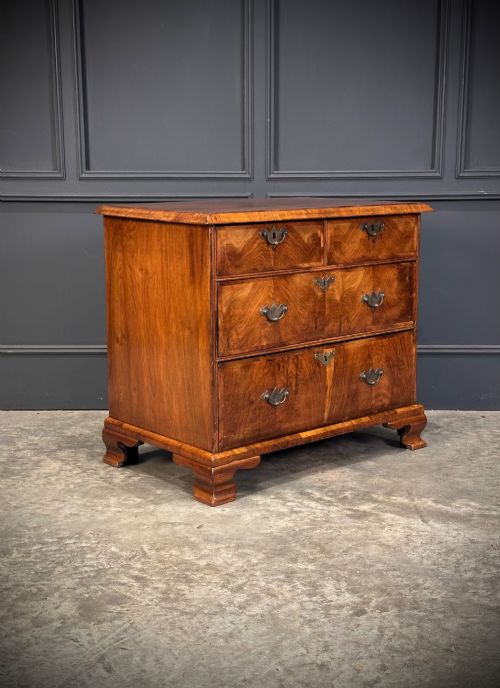
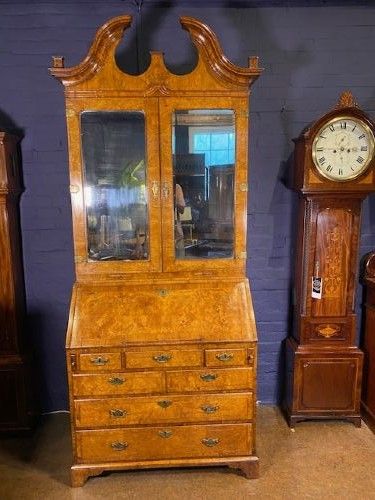
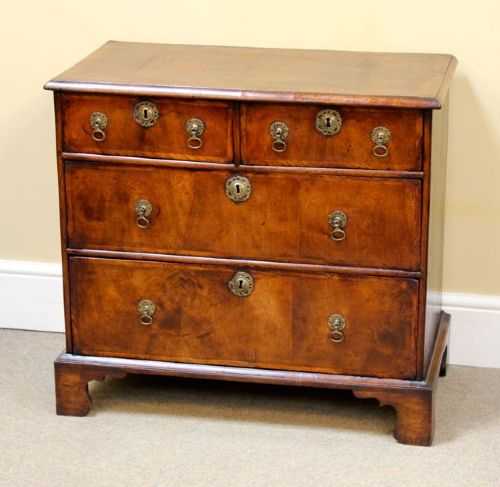
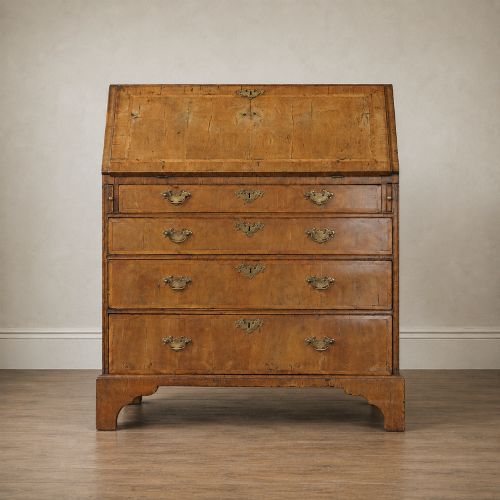
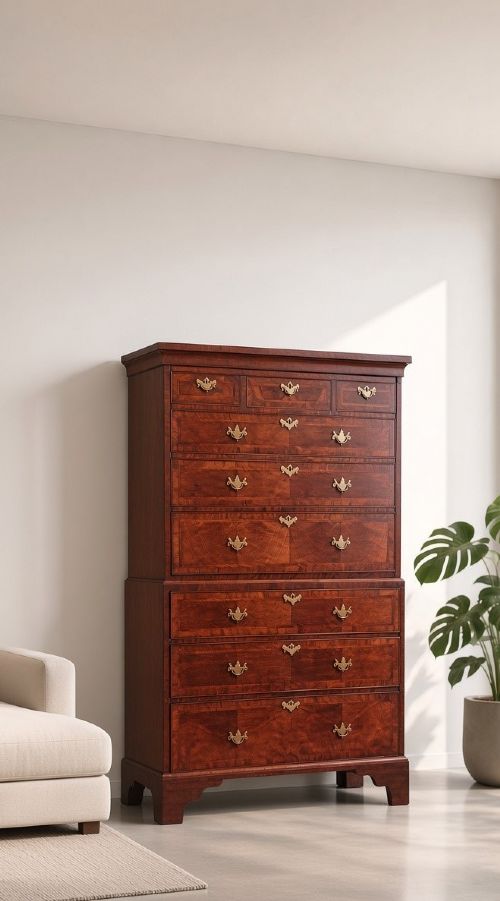
When searching for georgian burr walnut drawers, buyers encounter a diverse selection of storage furniture rooted primarily in the eighteenth century alongside twentieth-century revivals. The inventory spans straightforward chests of drawers, tallboys, chests on stands, lowboys, and specialised writing pieces like bureaus and desks.
Original pieces date back across the seventeenth and eighteenth centuries, reflecting periods such as the reigns of Queen Anne and George I and George II. Alongside these genuine antiques, many listings feature pieces from the 1920s and 1930s executed in a Georgian style, utilising traditional forms and decorative veneers.
What varies in quality
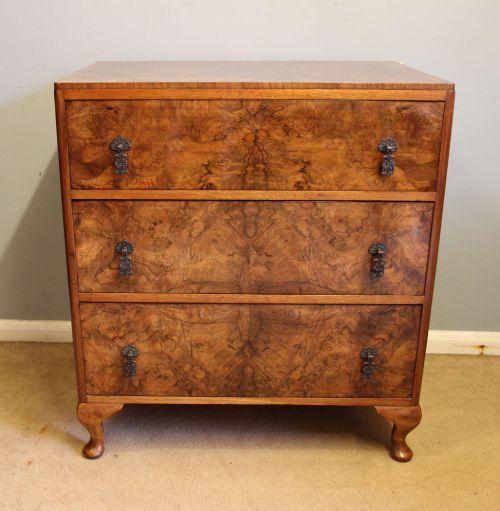
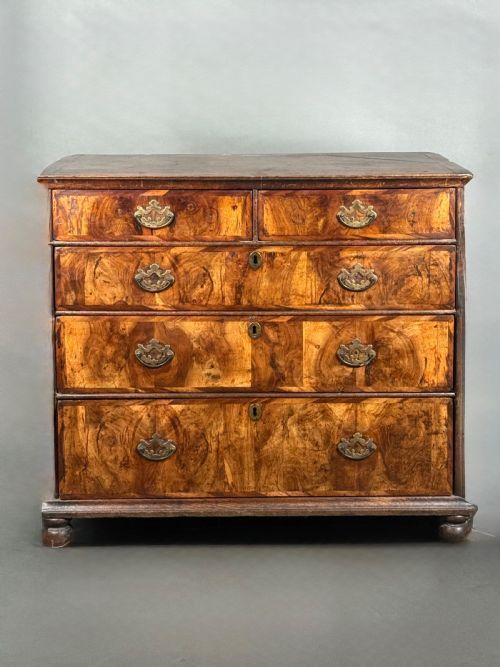
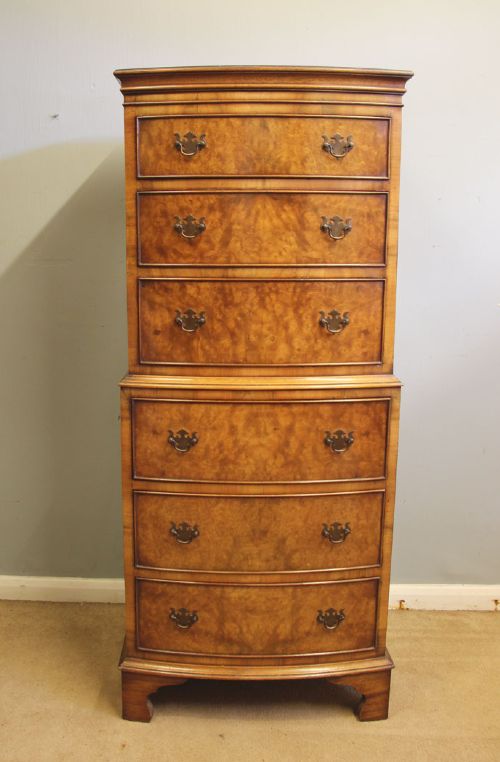
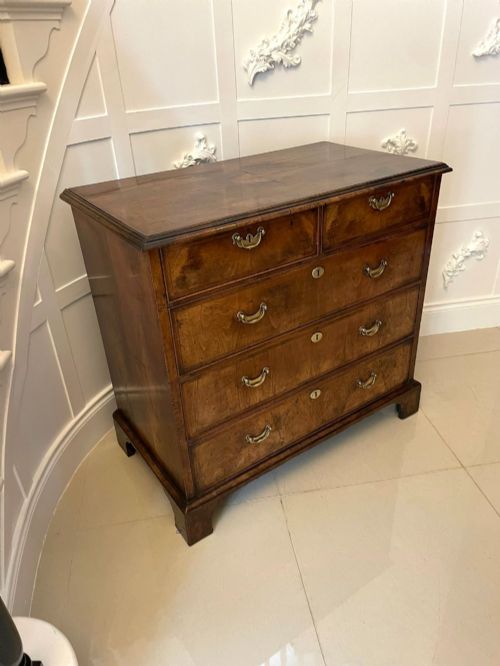
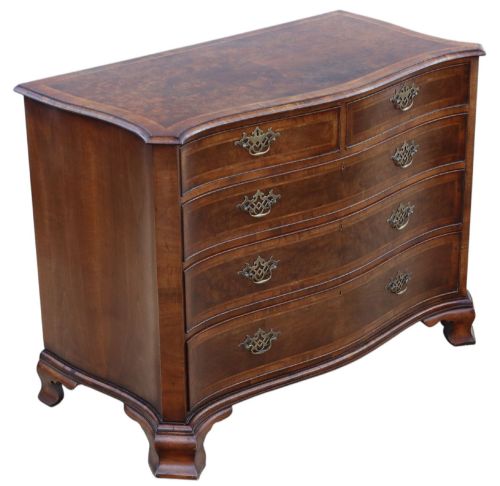
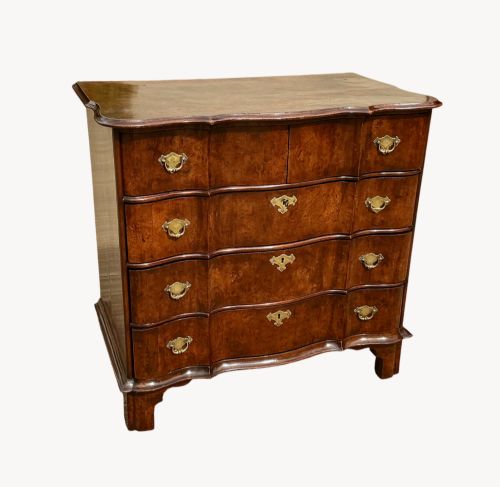
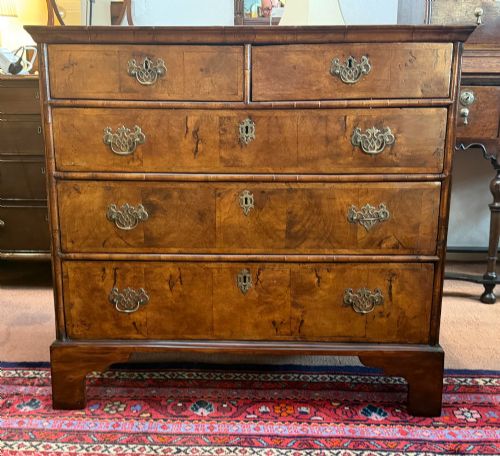
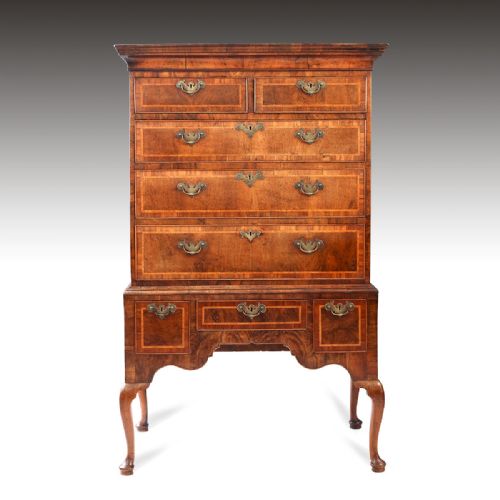
The visual impact of the wood grain establishes much of the distinction across these pieces, with intensely figured burr walnut commanding particular attention. The precision of the veneer matching and the subtlety of crossbanding demonstrate the skill applied by the cabinetmaker.
Proportion and execution define the higher tier of the range, whether dealing with an eighteenth-century original or a twentieth-century revival. Well-executed secondary framing, retention of original brass fittings, and crisp mouldings separate standard production from exceptional examples.
Listings span seventeenth-century origins through the Georgian era, extending into Edwardian pieces and 1930s revivals.
Heals of London
The Georgian Burr Walnut Drawers Glossary
- Burr walnut
- A specialised wood cut from the abnormal growths on walnut trees, yielding highly figured, swirling grain patterns. It was prized by cabinetmakers for decorative veneering.
- Chest on chest
- A tall storage unit comprising one chest stacked directly on top of another, often referred to as a tallboy. This form maximised vertical storage space while maintaining a commanding presence.
- Crossbanding
- A narrow strip of veneer applied perpendicularly to the surrounding grain along the borders of drawer fronts or tabletops. It created a defined visual frame.
- Lowboy
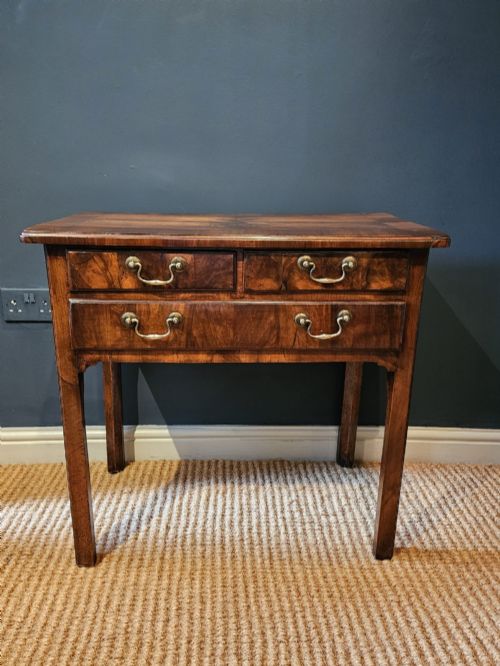
- A small side table or dressing table featuring one or more rows of drawers beneath the work surface. These pieces typically stand on slender cabriole legs.
- Bureau bookcase
- A dual-purpose cabinet combining a sloping desk flap that opens for writing above storage drawers, surmounted by a glazed or panelled upper bookcase section.
Georgian Burr Walnut Drawers: Frequently Asked Questions
How do I date a walnut chest?
Dating relies on examining construction methods, timber choices for secondary woods like oak or pine, and stylistic details. Hardware fixings and drawer linings also offer clear chronological clues.
Original eighteenth-century examples display hand-cut dovetails and specific framing traits that evolved through the reigns of Queen Anne and the Georges, whereas later twentieth-century revivals show different internal milling.
What is the difference between walnut and burr walnut?
Standard walnut timber displays a relatively straight or gently rippled grain pattern derived from the trunk of the tree. It provides a solid, uniform structural surface.
Burr walnut comes from a specialised tree growth that creates complex, swirling patterns, utilised primarily as a decorative veneer on prominent surfaces like drawer fronts.
Where were these drawers placed historically?
These chests and desks were typically positioned in principal bedchambers, withdrawing rooms, or private studies. They served to store fine garments, linens, and personal documents.
Smaller forms like lowboys and kneehole desks functioned as dressing tables or writing surfaces in domestic spaces, combining display value with practical storage.
How should I care for burr walnut furniture?
Protect the veneered surfaces by avoiding direct sunlight and maintaining stable indoor humidity levels. Gentle dusting with a dry cloth preserves the polished finish.
Refrain from using harsh chemical polishes or placing damp items directly onto the wood, as walnut veneers require careful treatment to prevent lifting.