
Georgian Brass Handle Commode
A georgian brass handle commode is a sturdy chest of drawers that brings period timber and crisp metalwork into a room.
Georgian Brass Handle Commode
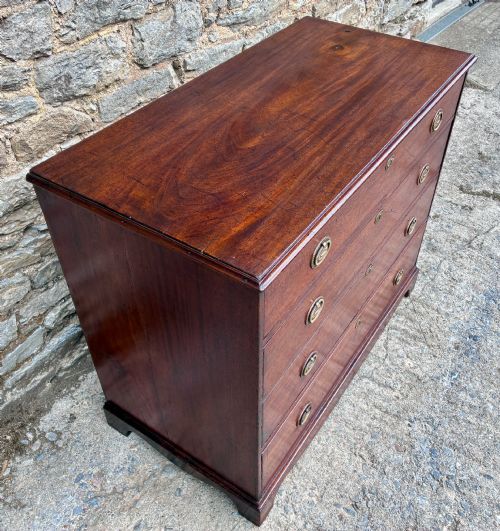
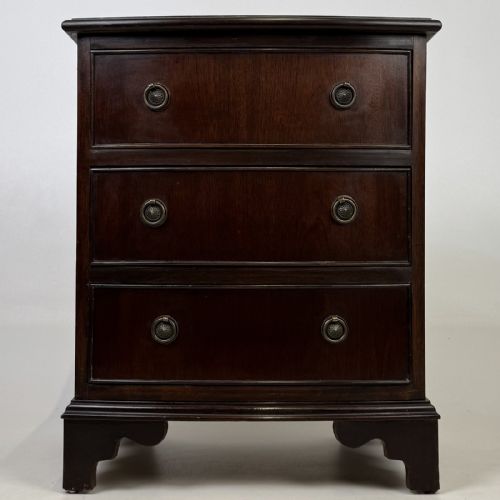
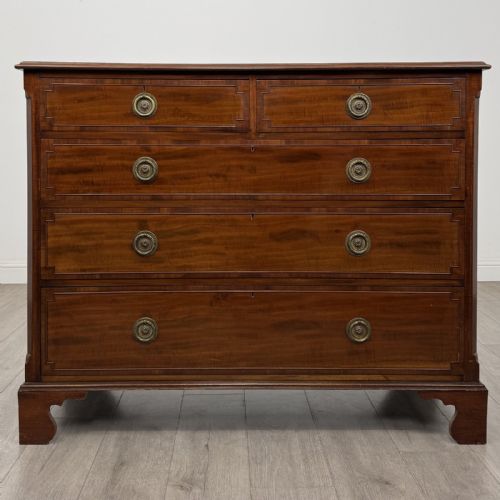
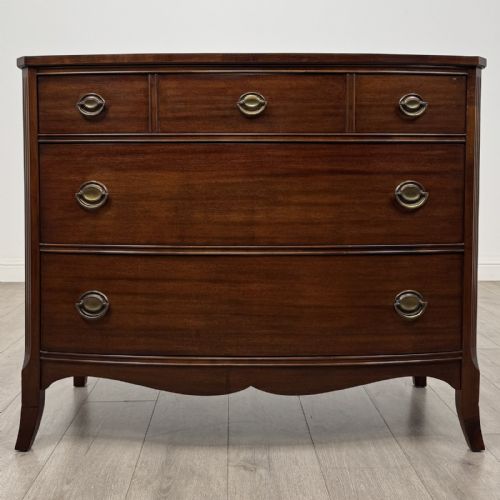
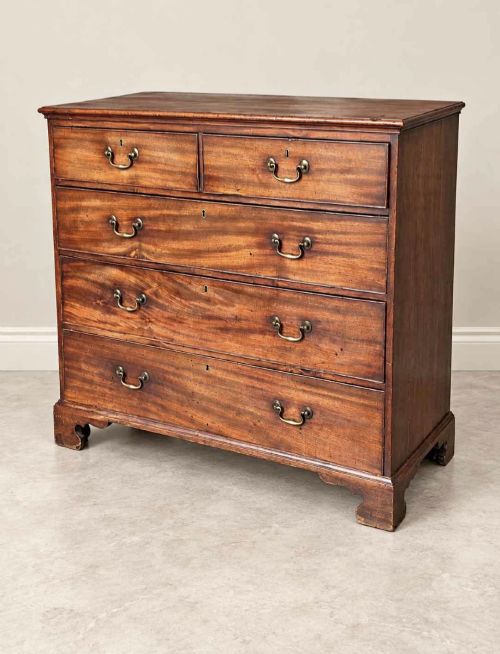
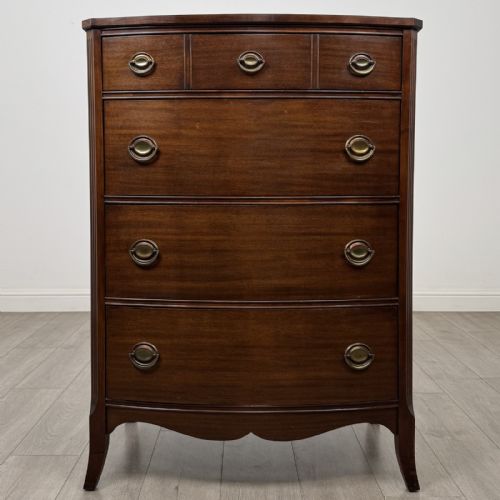
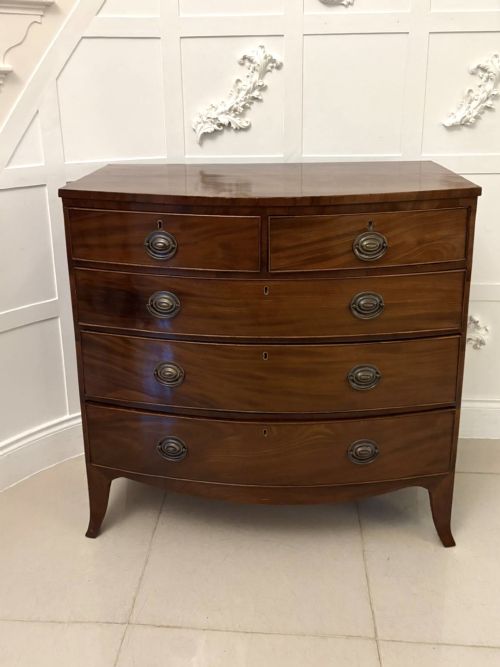
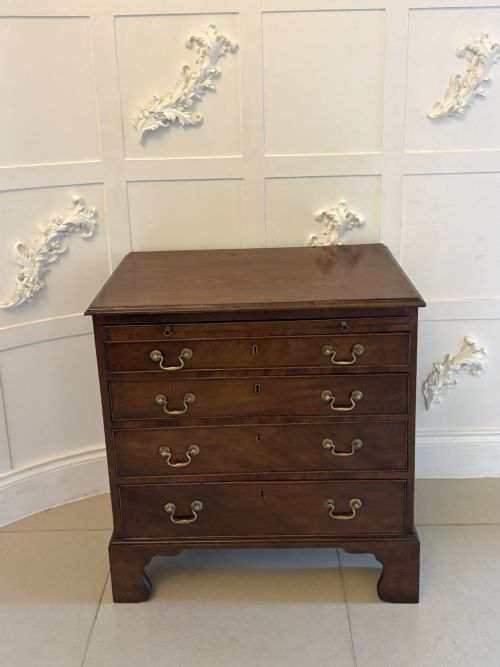
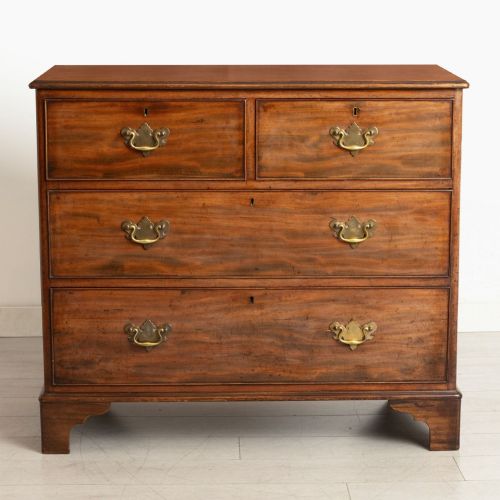
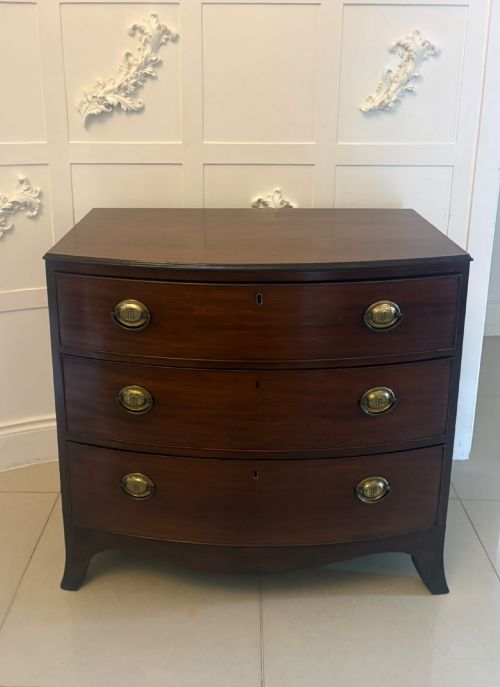
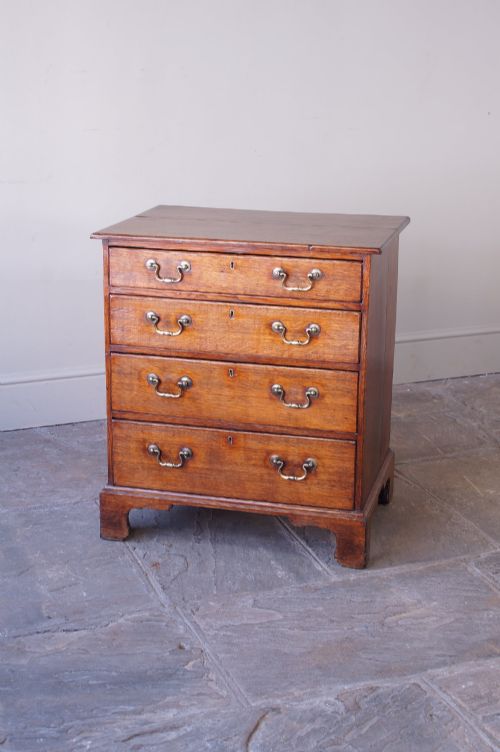
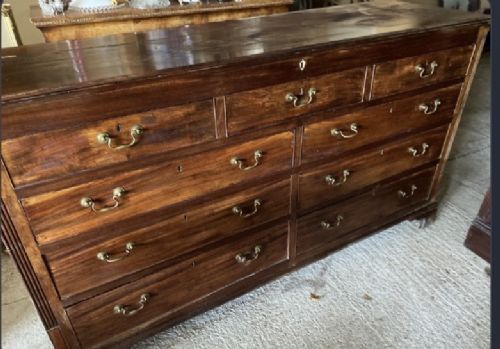
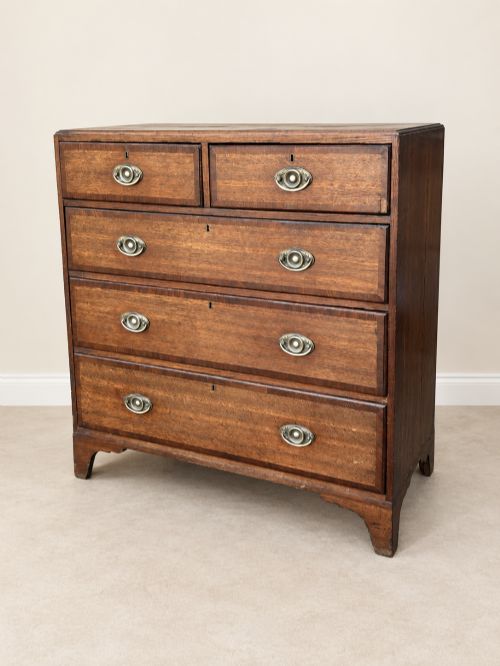
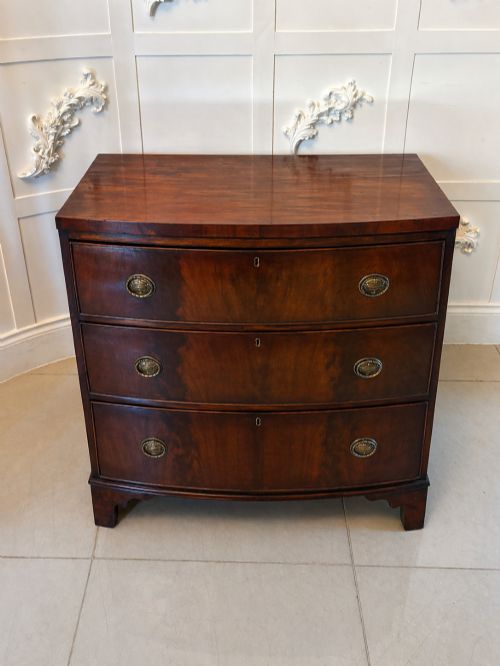
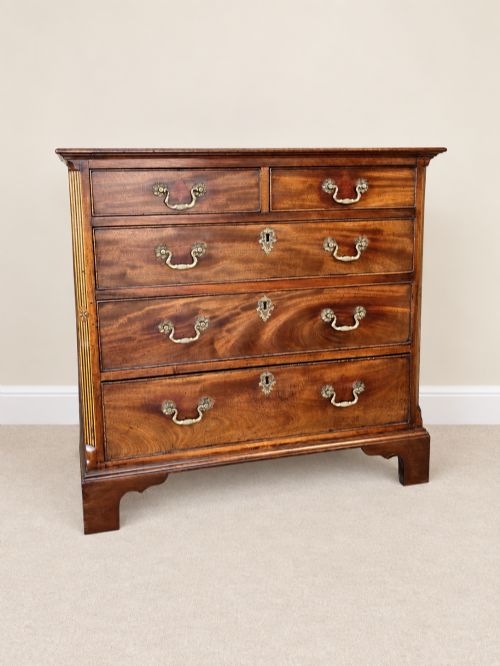
A georgian brass handle commode typically takes the form of a chest of drawers, spanning compact four-drawer formats, bow fronts, and larger storage pieces. The pieces appearing here originate mainly from the eighteenth and nineteenth centuries, with occasional later interpretations in Georgian style.
Mahogany dominates the material record, frequently found as figured timber, Cuban mahogany, or paired with satinwood banding. Oak and walnut also appear, particularly in earlier iterations, alongside painted wood finishes and crossbanded tops.
Buyers encounter distinct regional and stylistic variations, from straightforward oak country examples to formal George III bow fronts and serpentine outlines. Many incorporate utilitarian additions like brushing slides or rest on dedicated stands.
Construction and Materials
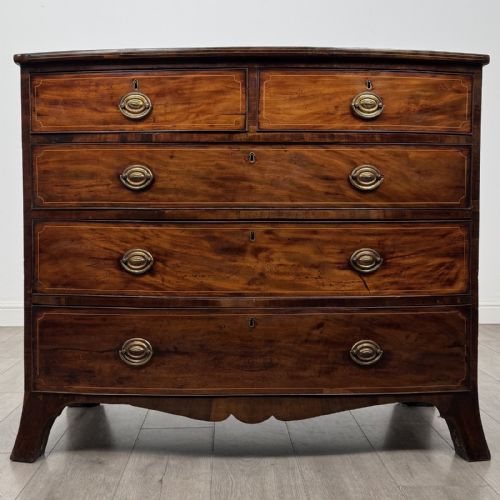
Cabinetmakers built these pieces using dense hardwoods, primarily mahogany, oak, and walnut, often selecting figured veneer or burr walnut for decorative surfaces. Crossbanding in contrasting timbers like satinwood added formal definition to drawer edges and top surfaces.
Solid brass hardware defines the functional fittings across these chests, secured to drawer fronts that range from standard two-over-three arrangements to smaller four-drawer formats. Joinery relied on traditional carcase construction designed to support heavy timber drawers over centuries of daily use.
The available inventory includes numerous bow-front and serpentine silhouettes equipped with original brass hardware and occasional brushing slides.
Assessing Quality and Execution
The choice of timber sets the baseline for quality, separating plain boards from highly figured mahogany, Cuban mahogany, or richly patterned burr walnut. Finer examples display meticulous grain matching across multiple drawer fronts and well-executed crossbanding.
The refinement of the brass handles and the precision of the hardware placement indicate the original maker's investment in the piece. Subtle architectural details, such as serpentine outlines, caddy tops, or integrated brushing slides, separate standard storage from superior examples.
The Georgian Brass Handle Commode Glossary
- Bow front
- A convex curved front characteristic of many formal chests. This shape softens the profile of the furniture while increasing central drawer capacity.
- Brushing slide
- A pull-out shelf integrated above the top drawers. It provided a clean surface for writing or grooming without opening the main storage.
- Serpentine
- A rhythmic front line curving outward in the centre and inward at the sides. This outline requires advanced cabinetmaking skill to execute cleanly in solid timber or veneer.
- Crossbanding
- A narrow strip of veneer laid around the border of a top or drawer front with the grain running perpendicular to the centre panel. It creates a neat framing effect.
- Caddy top
- A raised, moulded tabletop profile resembling the lid of a tea caddy. It is frequently found on smaller chests from the late eighteenth and early nineteenth centuries.
Georgian Brass Handle Commode: Frequently Asked Questions
How do I use a chest of drawers today?
These chests function well in bedrooms, hallways, or living spaces for everyday storage of clothing and household items.
Their sturdy timber construction and generous drawer depths make them practical storage solutions that accommodate modern needs while maintaining historic character.
What is a brushing slide used for?
The pull-out slide served historically as a temporary surface for folding garments or writing short notes.
Today, it offers a convenient display area or a handy ledge when sorting items directly above the top drawer.
How do I tell George III from Regency style?
George III pieces often feature straight or bow fronts with rich mahogany grain and traditional brass pull handles. Regency examples frequently introduce crisper satinwood banding, bolder architectural lines, and more pronounced figuring.
Examining the overall silhouette and secondary timbers helps clarify the transition between these periods.
Are oak and walnut chests older?
Oak and walnut examples frequently point toward the earlier end of the timeline, often associated with seventeenth and eighteenth-century vernacular or formal pieces. Mahogany gained wider dominance as the eighteenth century progressed.
Timber choice acts as a reliable guide when distinguishing country workshop pieces from urban cabinetmaker output.