

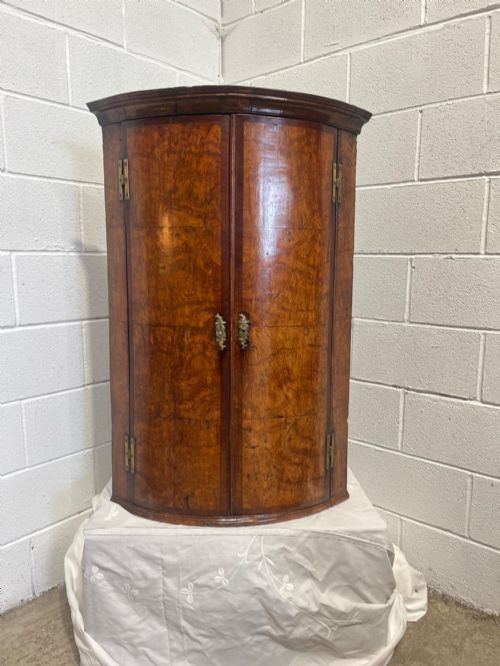
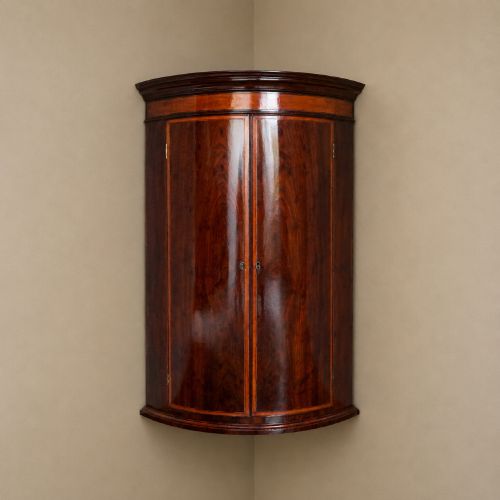
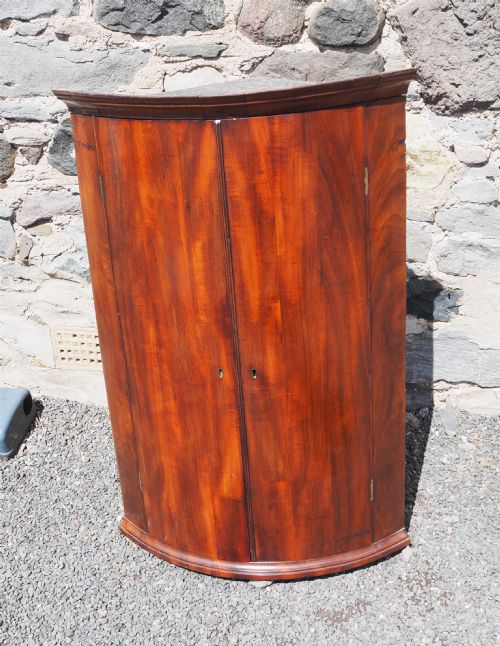
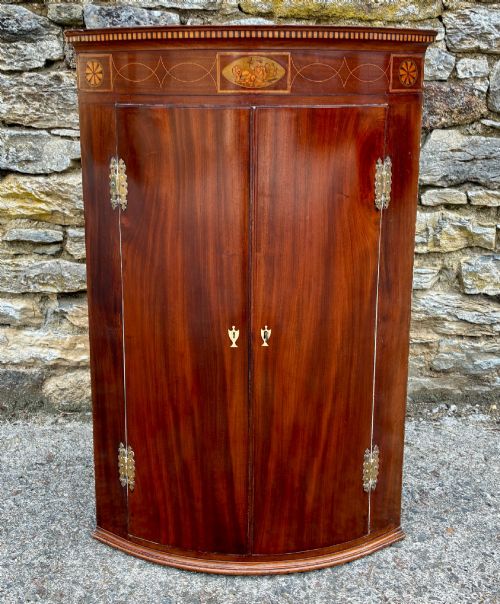


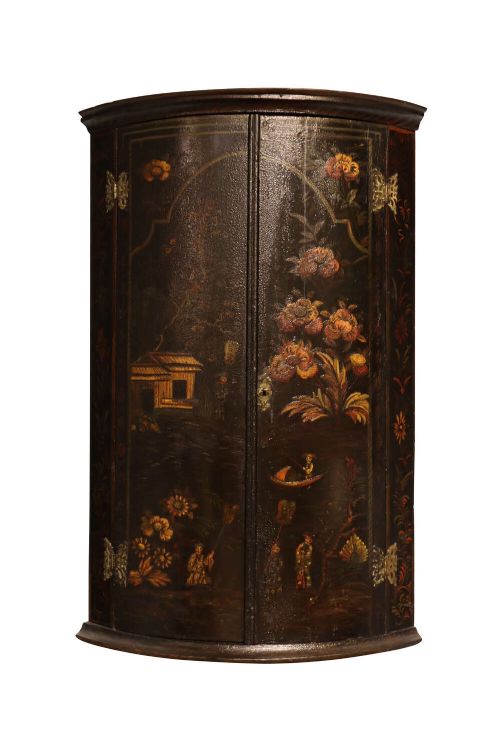
Georgian Bowfront Wall Cabinet
A georgian bowfront wall cabinet brings graceful curved lines and practical storage into small corners.
Georgian Bowfront Wall Cabinet
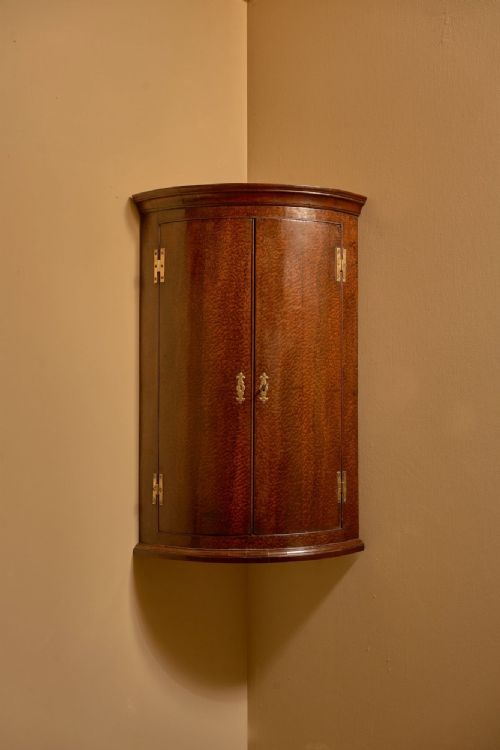
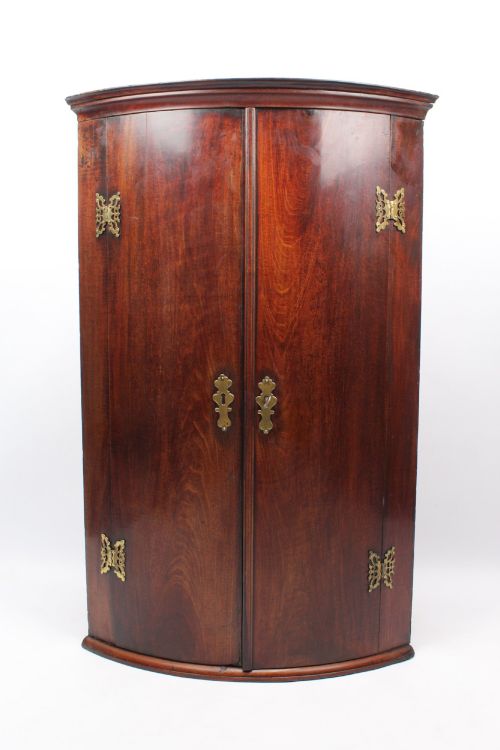
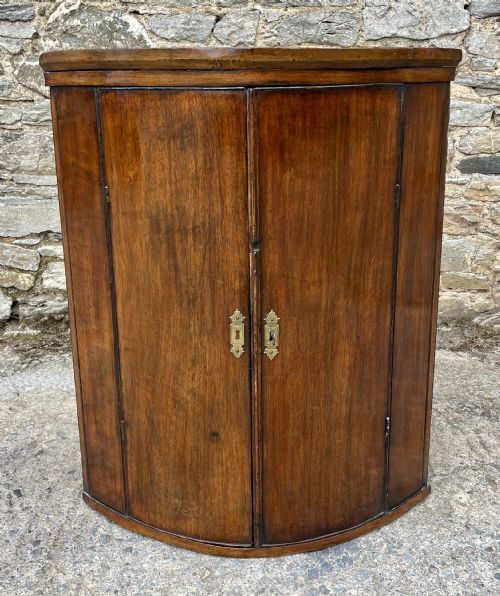
A georgian bowfront wall cabinet typically takes the form of a hanging corner cupboard or wall shelf designed to utilise empty domestic space. These pieces originate predominantly from the Georgian and 18th century periods, carrying the distinctive curved front that defines the type.
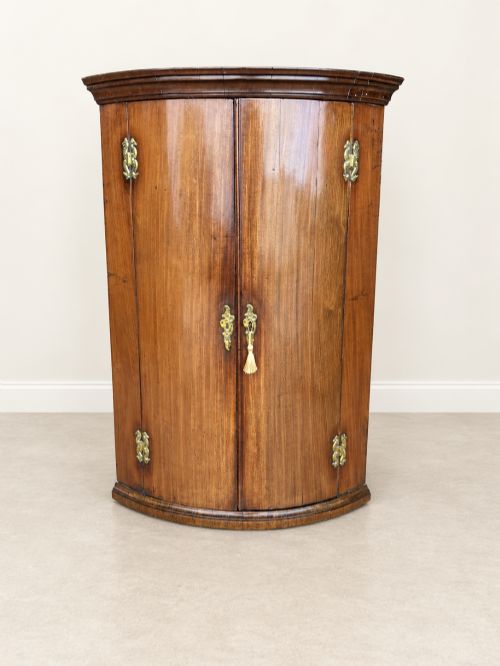
Buyers meet variations ranging from plain oak and elm examples to refined mahogany and plum pudding mahogany constructions. Many pieces feature architectural cornices and fielded panel doors built to fit neatly into room angles.
Materials and Techniques
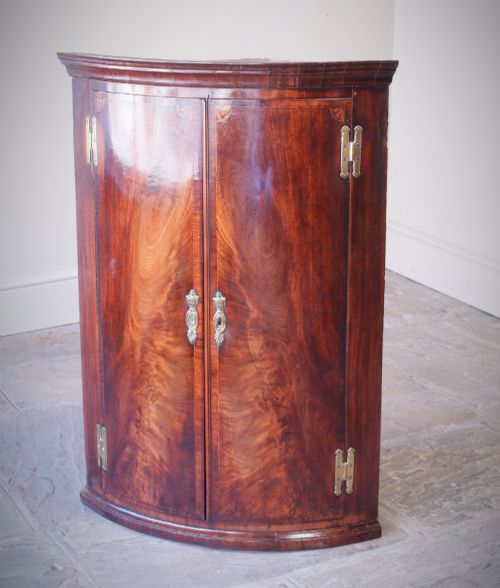
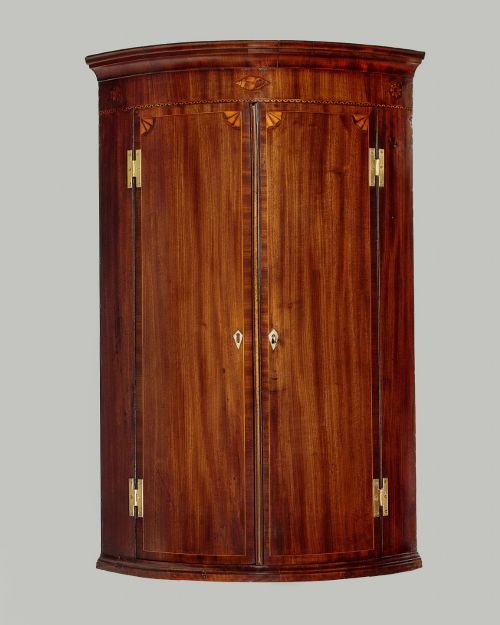
Cabinet makers utilised dense timber stocks including mahogany, oak, burr oak, and walnut, often applying flame mahogany veneers to the curved doors. Construction relied on solid secondary woods for carcases, shaped brackets, and internal shelving.
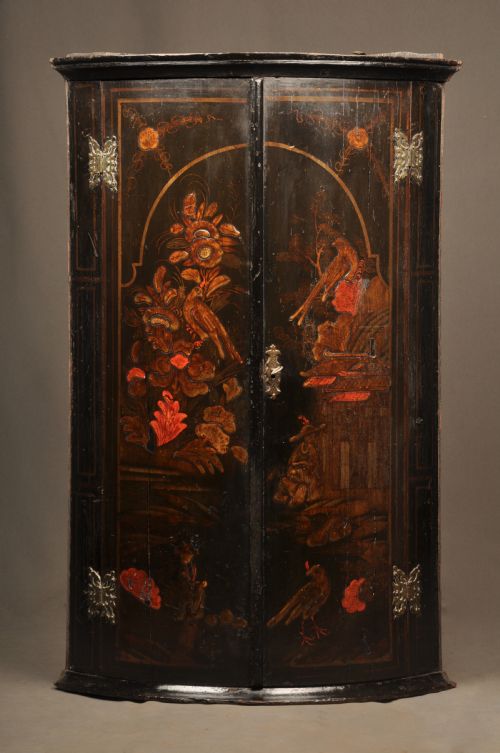
Decorative surface treatments include boxwood inlay, brass H-hinges or escutcheons, and elaborate japanned chinoiserie lacquer in black or painted finishes. The curved bow front required careful timber bending or segment sawing to achieve the smooth exterior sweep.
Georgian Bowfront Wall Cabinet Retail Price Guide 2026
Typical asking prices for georgian bowfront wall cabinet among the pieces listed under this phrase on Sellingantiques today, from the lower quarter to the upper quarter. They describe what is for sale here now, not the wider market.
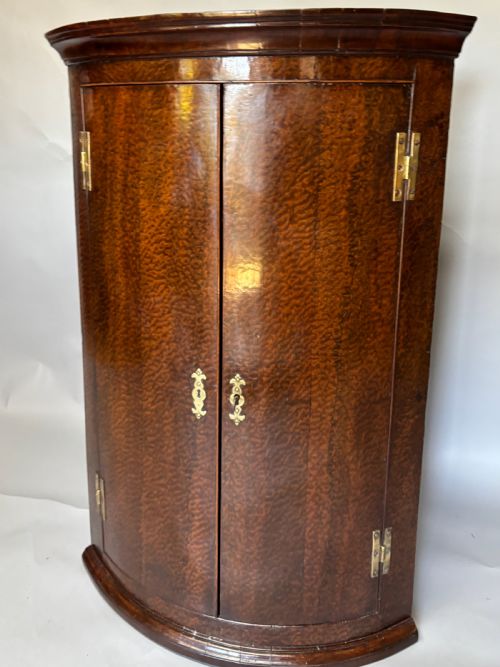
Plum pudding mahogany timbers bring dessert straight to mind with their speckled grain.
Distinctions in Execution
The choice of timber grain dictates visual hierarchy, with highly figured plum pudding mahogany or flame mahogany sitting at the upper end of cabinet making. Crispness in the boxwood stringing and the retention of original brass hardware elevate individual examples.
Surface finish preservation separates standard utilitarian cupboards from masterworks featuring intact japanned chinoiserie lacquer or finely painted George II decoration. The structural integrity of the curved door joints and original hanging brackets further distinguishes finer pieces.
The Georgian Bowfront Wall Cabinet Glossary
- Bow front
- A convex curved front that projects outward from the corners of a cabinet. This curved profile softens room angles and provides additional internal depth.
- Chinoiserie
- European imitation of traditional Chinese artistic styles, seen here in black lacquer and painted scenes. This decorative technique flourished during the 18th century.
- Hanging cupboard
- A wall-mounted storage unit fitted with internal brackets or fixing points for suspension. These pieces save floor space while displaying household items.
- Plum pudding mahogany
- A dense hardwood variety showing mottled, circular grain patterns resembling traditional dessert ingredients. Cabinet makers reserved this highly decorative timber for principal exterior surfaces.
Georgian Bowfront Wall Cabinet: Frequently Asked Questions
How do I identify a Georgian piece?
Examine the timber species, construction joints, and hardware style for period markers. Look for secondary woods like oak or pine behind mahogany primary veneers.
Hand-cut dovetails and forged iron or brass fixings indicate period manufacture. Formats typically follow Georgian architectural proportions with distinct moulded cornices.
What is japanned decoration?
Japanning is a European technique mimicking East Asian lacquerwork using layered varnish and painted motifs. Artisans built up dark surfaces with gilded or coloured figures and landscapes.
This finish appears on select 18th century pieces to create striking decorative contrast. Surviving examples display craquelure and wear consistent with age.
Are shelves adjustable inside?
Interior layouts generally feature fixed wooden shelving stepped into side wall grooves. These boards supported ceramics, glassware, or small books in period settings.
Original fixed shelves remain standard across most surviving hanging cupboards. Alterations to interiors usually reflect later domestic adaptations.