
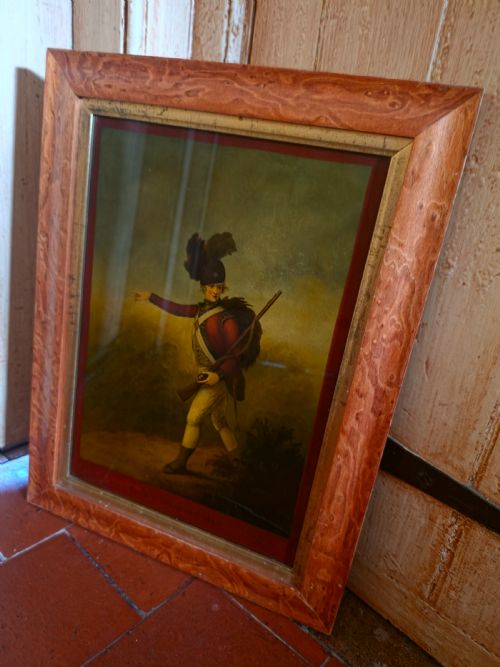
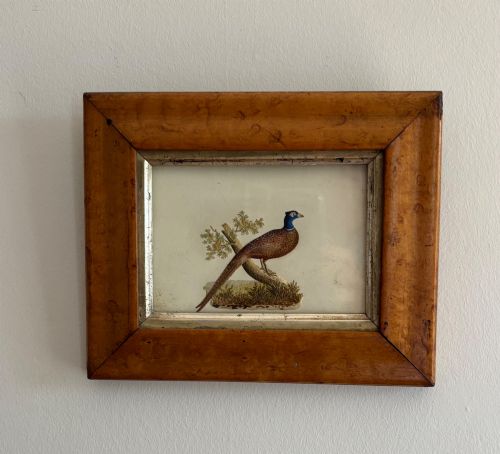
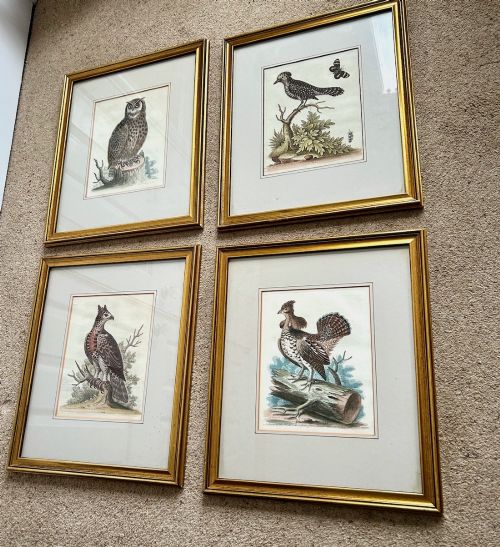




Georgian Bird Picture
A georgian bird picture brings natural history and quiet countryside scenes into a room through delicate paper, silk, and glass.
Georgian Bird Picture
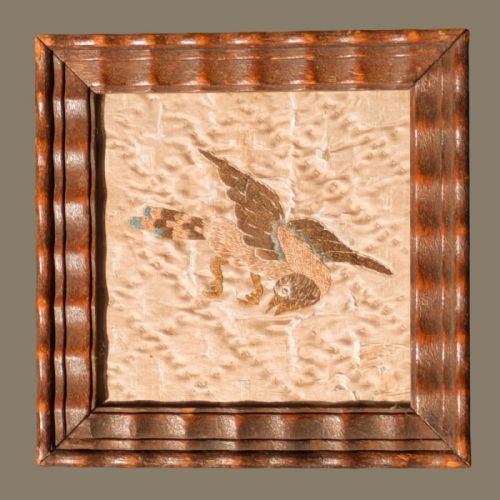
When searching for a georgian bird picture, a buyer encounters framed wall art and textile pieces from the eighteenth and nineteenth centuries. These works capture avian subjects through engraving, embroidery, and painting, often preserved behind glass.
The pieces on this page span the Georgian, Regency, and Biedermeier periods, reflecting the era's fascination with natural history and domestic decoration. Common formats include framed prints, needlework silk pieces, and specialised bass-relief compositions.
Subjects range from scientific ornithological plates by period illustrators to charming needlework embroideries created by hand. Maple frames and gilt wood surrounds frequently house these fragile works, maintaining their condition across centuries.
What varies in quality
The distinction between standard and superior pieces rests on the precision of the handwork and the preservation of the original materials. Hand-coloured prints and fine silk embroidery demonstrate greater skill than mass-produced alternatives.
Framing provides a significant indicator of period authenticity and overall standard. Original maple frames or period gilt wood surrounds that match the age of the artwork elevate the piece above those with later replacements.
Condition of the delicate paper, paint, and textile surfaces determines the enduring appeal of each item. Fading, foxing, or water staining on the paper or silk reduces visual clarity, whereas crisp lines and vibrant pigments indicate careful storage.
Listings feature items spanning the eighteenth and nineteenth centuries, incorporating periods such as the Georgian, Regency, and Biedermeier eras.
Samuel Dixon·George Edwards·Eleazor Albin·Stephen Elmer
The Georgian Bird Picture Glossary
- Reverse glass
- A technique where paint is applied directly to the back of a glass sheet so the image is viewed through the front. This method produced a glossy, protected surface popular in eighteenth and nineteenth-century wall art.
- Basso-rilievo
- A sculptural relief technique where figures project only slightly from the background plane. Samuel Dixon utilised this method to create textured picture compositions of birds.
- Biedermeier
- A Central European style dating from the early nineteenth century favouring utilitarian comfort and clean lines. Maple and other light wood frames from this aesthetic often house period prints.
- Mezzotint
- A printmaking process of the intaglio family where the artist works from dark to light by roughening the copper plate. This technique allowed for rich tonal gradations and subtle shading in pictorial works.
- Needlework
- The craft of decorating fabric or other materials using a needle and thread. Silk work and embroidered bird pictures relied on this painstaking manual skill.
Georgian Bird Picture: Frequently Asked Questions
How should I hang a antique bird picture?
Hang these works away from direct sunlight to protect fragile paper, watercolours, and silk threads from fading. Keep them in rooms with stable humidity to prevent the wood frames and backing materials from warping.
Use secure picture hooks suited to the weight of the timber and glass. Ensure the wall brackets are firmly fixed so the historic frame remains stable.
Are these bird pictures original period pieces?
The listings on this page originate from the eighteenth and nineteenth centuries, spanning periods such as the Georgian and Regency eras. Materials like old glass, hand-stitched silk, and aged maple frames help confirm their historic manufacture.
Examine the construction of the frame and the paper substrate for signs of age. Period fixings and authentic backing papers provide further context for dating.
What is the difference between a print and an embroidery?
A print involves inked impressions on paper, sometimes enhanced with hand colouring by period artists. These works show fine lines and plate marks from the printing press.
Embroidery relies on thread and fabric, creating a tactile surface with raised textures from the stitching. Needlework bird pictures use various coloured silks to build up the plumage.
Why are maple frames common on these pieces?
Maple timber offered a distinct grain pattern that appealed to Georgian and Regency makers framing domestic artwork. The golden tones and bird's eye figuring complemented natural history subjects.
These timber surrounds were turned or moulded to standard profiles of the time. Original maple frames contribute to the historical integrity of the framed artwork.