



Georgian Arch Top Clock
A georgian arch top clock brings architectural presence and precision engineering into a room, spanning bracket and longcase forms.
Georgian Arch Top Clock
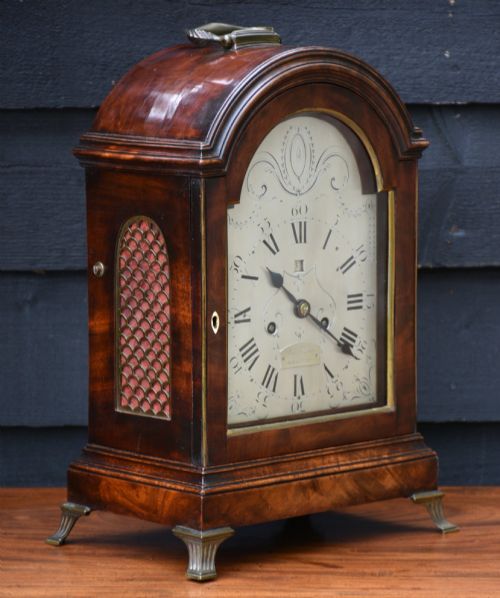
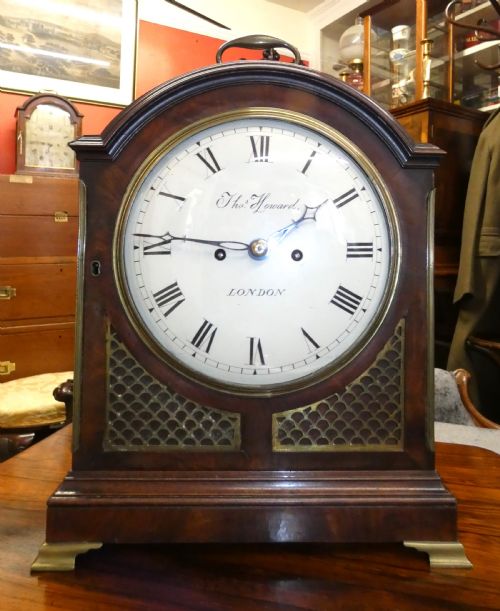
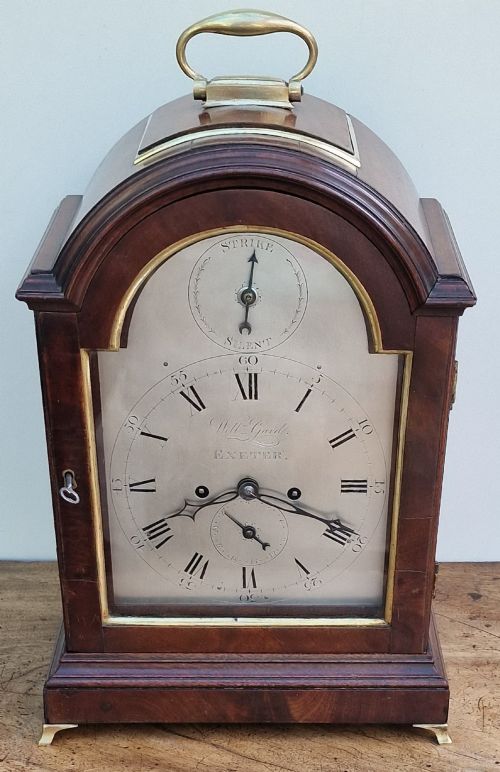
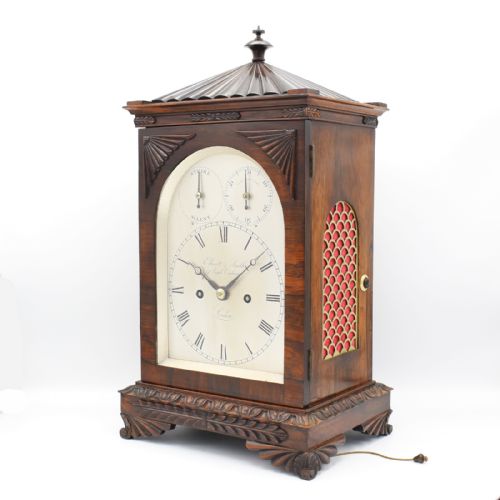
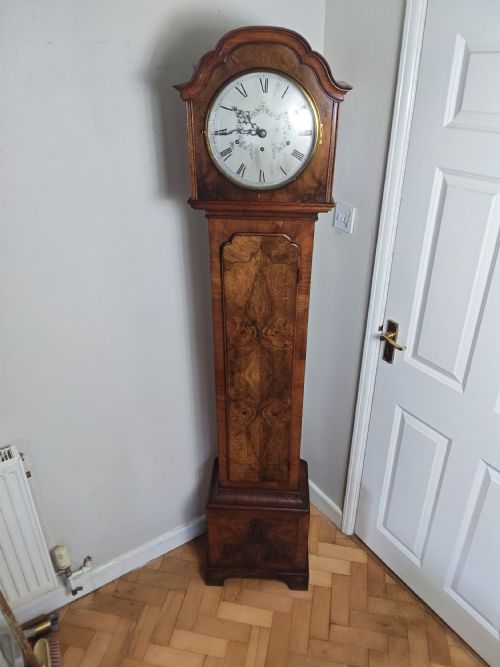
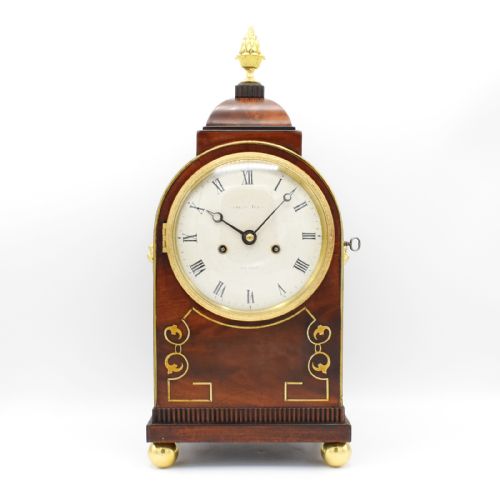
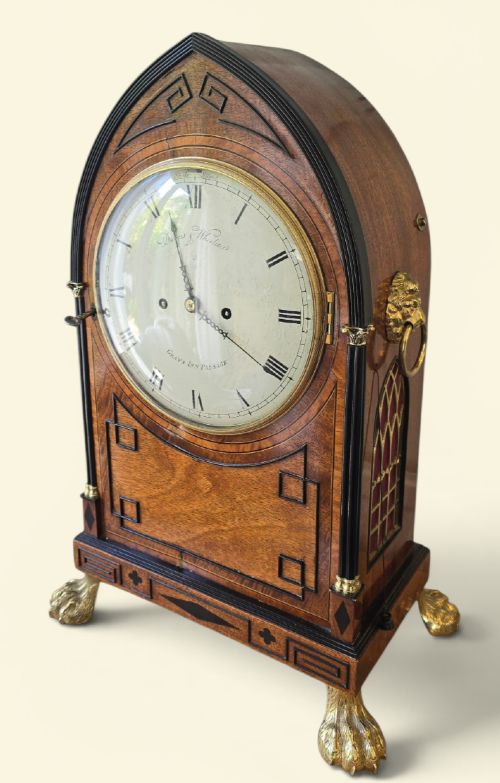
When you search for a georgian arch top clock, you encounter tall longcase clocks and compact bracket or table clocks from the Georgian, Regency, and nineteenth century periods. These timepieces display architectural arched profiles, often enclosing silvered metal dials and intricate brass movements.
The bracket clock form dominates the selection, frequently housed in mahogany, ebony, or burr walnut cases. Longcase examples appear less often, offering grander proportions and sometimes musical or moonphase mechanisms.
Makers ranging from London workshops to provincial towns in Exeter, Salisbury, and Scotland signed these dials. The design vocabulary moves from strict Georgian symmetry through Regency brass inlay to later nineteenth-century interpretations.
Materials and Mechanics
Cabinetmakers utilised rich timber veneers such as mahogany, walnut, ebony, and burr walnut, laid over sturdy framing. Brass embellishments, mounts, and inlay punctuate the polished wood surfaces.
Dial faces combine silvered metal, enamel, and brass, protected behind glass panels. Movements rely on fusee-driven or verge escapement mechanisms to govern time accurately.
Georgian Arch Top Clock Retail Price Guide 2026
Typical asking prices for georgian arch top clock among the pieces listed under this phrase on Sellingantiques today, from the lower quarter to the upper quarter. They describe what is for sale here now, not the wider market.
One grand piano-sized longcase clock plays tunes using three separate weights to orchestrate its musical movements.
Judging the Standard
The calibre of a clock rests on the crispness of its case woodwork and the fidelity of its original brass movement. Finer examples retain their original silvered metal dials and complex striking or musical trains without later alterations.
Regional variations show in the ambition of the maker, from provincial provincial work to sophisticated London workshop output. The harmony between the timber case and the integrity of the internal mechanism dictates the standing of the piece.
William Gard Exeter·Charles Pratt London·Ellicott Smith·Desbois Wheeler·Cording of London·Thomas Goddard London·Hyde of Salisbury·Louis Recordon·Perigal of London·James Coster Henley·John McGregor Wick·Perigal Duterrau·Ganthony of London·Leith of London·Thomas Hall Romsey
The Georgian Arch Top Clock Glossary
- Fusee
- A conical pulley used in spring-driven clocks to equalise the diminishing power of the mainspring as it unwinds. This mechanism ensures consistent torque and better timekeeping.
- Verge escapement
- An early type of escapement mechanism that controls the release of the gear train. It works with a balance wheel or pendulum to regulate the beat.
- Silvered metal
- A brass or copper dial plate treated with a silver compound to produce a pale, matte metallic finish. Graduations and maker signatures are typically engraved and blackened.
- Bracket clock
- A portable table or shelf clock, historically designed to sit on a wall bracket. Many feature carrying handles on top and glazed side panels.
Georgian Arch Top Clock: Frequently Asked Questions
Where did people place bracket clocks?
Bracket clocks sat upon wooden wall brackets or heavy furniture surfaces in principal rooms. Their portability allowed owners to move them between studies, libraries, and drawing rooms.
Today, they function equally well on mantelpieces, sideboards, or dedicated display tables where their side glass panels and dials remain visible.
How do fusee movements work?
A fusee uses a conical grooved pulley connected to the mainspring via a fine chain or gut line. As the spring unwinds, the leverage changes to maintain even force on the gear train.
This clever engineering prevents the clock from losing speed as the power winds down.
What is the difference between a bracket clock and a longcase clock?
Bracket clocks are compact, portable timepieces designed for table or shelf placement, often featuring carrying handles. Longcase clocks stand tall on the floor and house long pendulums and weights.
Both forms share the characteristic arch top dial styling found in Georgian interiors.
How can I tell a Georgian clock from a later copy?
Examination of the timber, movement construction, and dial engraving reveals the true period. Georgian pieces utilise period hardwoods, hand-cut brass gears, and engraved silvered metal rather than stamped substitutes.
Signatures of recorded makers like those from London or provincial workshops provide further historical context.