





George IV Display Cabinet
A George IV display cabinet brings together rich timbers and glazed upper sections to showcase prized volumes and objects.
George IV Display Cabinet
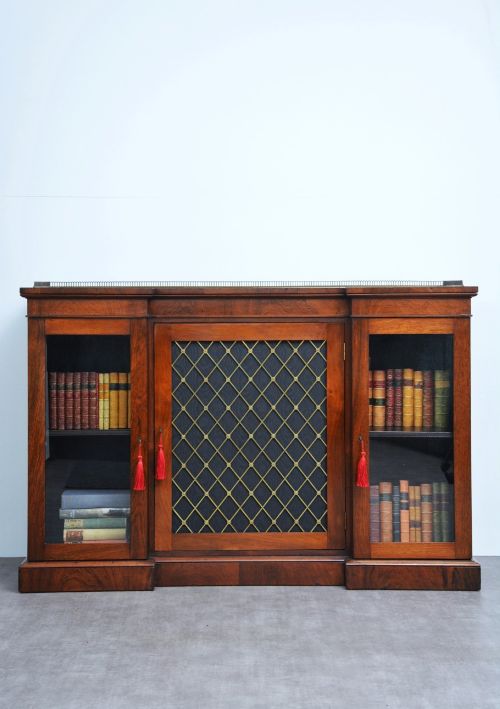
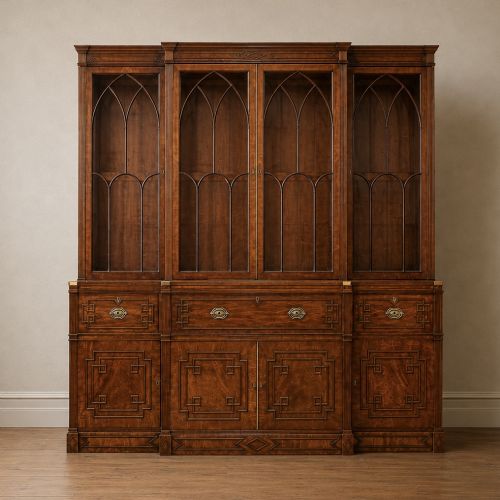
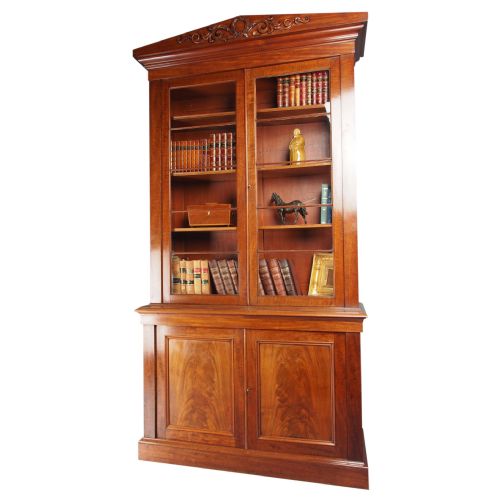
A george iv display cabinet encompasses tall breakfront library bookcases, glazed side cabinets, and compact desk top pieces designed for display. These forms originate from the nineteenth century, the Georgian era, and the Regency period.
Mahogany and rosewood dominate the selection, often enriched with flame mahogany veneer or thuya wood. Pieces frequently feature glazed doors alongside cupboard bases, shelving units, and secretaire compartments.
Stylistic influences range from grand regency lines to gothic revival details. Buyers encounter everything from large breakfront library bookcases to chiffoniers with graduated shelves.
How they were made
Cabinetmakers utilised solid timbers and figured veneers such as flame mahogany and rosewood over sturdy carcases. Thuya wood also appears as a choice exotic veneer for decorative surfaces.
Glazing bars divided the glass door panels into geometric patterns, protecting the contents while maintaining visibility. Brass hardware and fittings provided functional and decorative accents across the designs.
George IV Display Cabinet Retail Price Guide 2026
Typical asking prices for george iv display cabinet among the pieces listed under this phrase on Sellingantiques today, from the lower quarter to the upper quarter. They describe what is for sale here now, not the wider market.
Periods recorded span the nineteenth century, Georgian era, and Regency with occasional gothic revival styling.
What varies in quality
The choice of timber figure separates standard items from finer examples, with striking flame mahogany or figured rosewood commanding attention. The precision of the joinery in the glazing bars and breakfront assemblies dictates the structural integrity.
Subtlety of stylistic detailing, whether gothic revival motifs or grand regency proportions, defines the upper tier of craftsmanship. The integration of functional elements like secretaire drawers demonstrates the maker's skill.
Gillows
The George IV Display Cabinet Glossary
- Breakfront
- A cabinet design where the central section projects forward from the flanking wings. This architectural arrangement creates depth and focal emphasis in large library bookcases.
- Secretaire
- A desk disguised as a drawer or cabinet section that pulls down to reveal a writing surface and small compartments. It combines storage with a pull-out writing desk.
- Chiffonier
- A low sideboard or cabinet featuring graduated shelves above for display. This form serves as a versatile piece for smaller collections.
- Thuya wood
- A coniferous burr timber yielding highly figured, swirling grain patterns used for decorative veneering. It adds warmth and intricate texture to cabinet surfaces.
George IV Display Cabinet: Frequently Asked Questions
What periods do these cabinets date from?
These pieces date from the nineteenth century, encompassing the Georgian and Regency eras. Makers worked within distinct stylistic phases including gothic revival and grand regency.
Dates typically centre around the eighteen-twenties, reflecting the tastes of the George IV period.
What timbers were used in construction?
Cabinetmakers relied primarily on mahogany and rosewood for the main carcases and doors. Flame mahogany veneer and exotic thuya wood provided highly decorative exterior surfaces.
Brass hardware frequently completed the construction details on doors and secretaire fittings.
How do bookcases and display cabinets differ?
Bookcases generally focus on shelf storage for volumes, whereas display cabinets emphasise glazed doors for viewing objects. Many examples combine both functions through upper glazed shelving and lower cupboard bases.
Formations range from massive breakfront library units to compact desk top display pieces.
Where should I place a chiffonier?
A chiffonier suits a principal reception room or study where its graduated upper shelves can hold decorative items. The low cabinet base provides enclosed storage beneath the display surface.
Ensure adequate clearance around the piece to appreciate the rosewood or mahogany grain.