


George III Wooden Caddy
A george iii wooden caddy brings tactile warmth and period elegance to a room, holding tea or precious objects.
George III Wooden Caddy
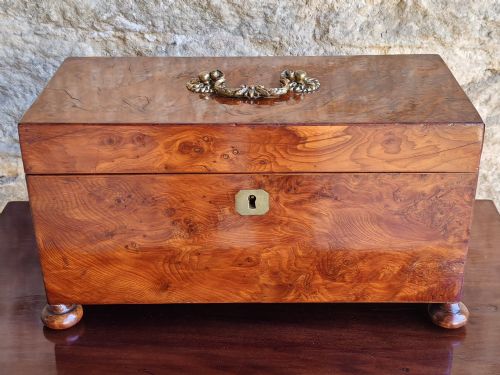
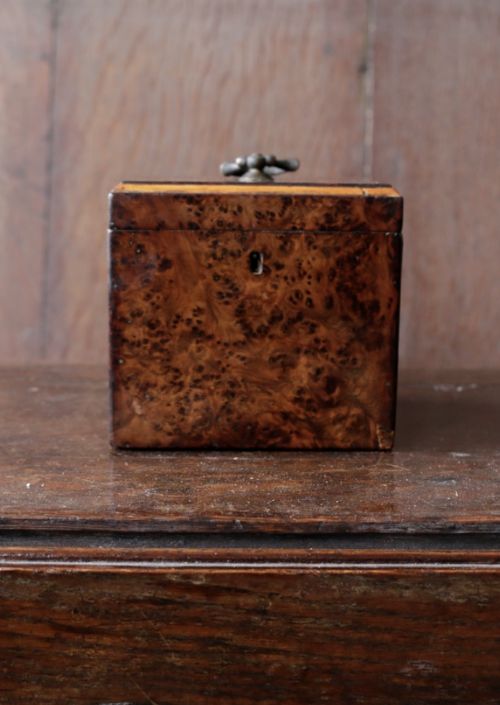
A george iii wooden caddy encompasses tea caddies, tea caddy boxes, and larger storage forms fashioned during the Georgian and Regency periods. Mahogany remains the most common timber encountered, alongside figured variations such as burr yew, satinwood, and partridge wood.
These pieces range from straightforward rectangular containers to more decorative oval, hexagonal, and octagonal shapes. Examples occasionally include internal compartments, secret drawers, or brass carrying mounts suited for functional service in period interiors.
Materials and Technique
Cabinetmakers utilised solid timbers and selected veneers, frequently combining mahogany with contrasting stringing in boxwood or bone. Marquetry and wood inlay decorate refined surfaces, particularly on satinwood and yew examples from the eighteenth century.
Internal elements often feature precise compartmentalisation for leaf tea alongside brass hinges, escutcheons, and carrying handles. Joinery methods prioritise tight mitres and fitted internal lids to preserve the aroma of stored contents.
Listings feature pieces spanning the Georgian era, the Regency period, and the 1890s Sheraton Revival style.
Craftsmanship and Material Selection
The distinction between standard examples and exceptional work rests on the choice of timber and the precision of the inlay. Figured grains like burr yew and highly figured mahogany elevate a piece above plain stock.
Execution of decorative details, such as complex geometric banding, well-fitted lids, and original brass hardware, marks the higher tier of cabinetmaking from this era.
The George III Wooden Caddy Glossary
- George III
- The period of British history spanning from 1760 to 1820, defining the predominant style era for these pieces. Furniture from this time emphasises proportion and classical detail.
- Satinwood
- A durable, lustrous timber native to India and the Caribbean, highly prized for its pale yellow colour and smooth grain. Cabinetmakers utilised it extensively for veneering fine decorative boxes.
- Marquetry
- The art of applying pieces of veneer to a structure to form decorative patterns and pictures. Craftsmen combined different timbers like boxwood and mahogany to create contrast.
- Cellarette
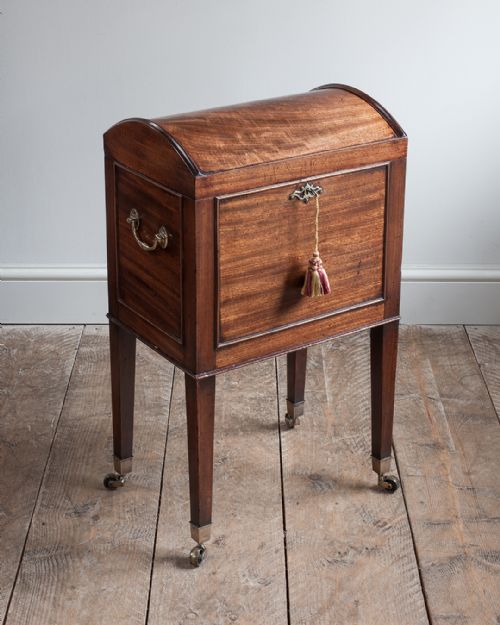
- A lockable container used for holding bottles of wine or spirits, often standing on feet or legs. These items share construction traits with large caddies from the same period.
- Escutcheon
- A protective plate surrounding a keyhole, commonly cast in brass on these wooden boxes. It serves both a functional purpose and a decorative role on the front panel.
George III Wooden Caddy: Frequently Asked Questions
What were george iii wooden caddies used for?
These containers served primarily to store expensive tea leaves securely under lock and key in wealthy households. Tea was a precious commodity, requiring dedicated boxes with fitted internal compartments.
Over time, many of these boxes transitioned into general storage for letters, trinkets, or sewing accessories as social customs changed.
How do I date a george iii wooden caddy?
Dating relies on observing the timber species, construction methods, and overall silhouette, such as the shift from straight-sided rectangles to curved oval or octagonal shapes. Details like brass hardware and internal lining remnants provide further clues.
Cabinetmakers of the eighteenth century employed specific veneering techniques and stringing patterns that help narrow down the decade of production.
Where should I place a caddy in my home?
These boxes suit placement on sideboards, occasional tables, or desks where their figured timber surfaces can be appreciated up close. Their compact dimensions allow them to sit comfortably on shelving or mantelpieces.
Keeping them away from direct sunlight and radiators protects the antique veneers and polished wood finishes from drying out.
What is the difference between a caddy and a cellaret?
A caddy is typically a smaller tabletop box designed for tea or dry goods, often featuring internal compartments and a locking lid. They range from simple rectangular shapes to complex inlaid octagons.
A cellaret is a substantially larger freestanding container or cooler built to hold multiple wine bottles, frequently incorporating a stand or base structure.