



George III Tray Stand
A george iii tray stand combines the portability of a serving tray with the utility of a proper table.
George III Tray Stand
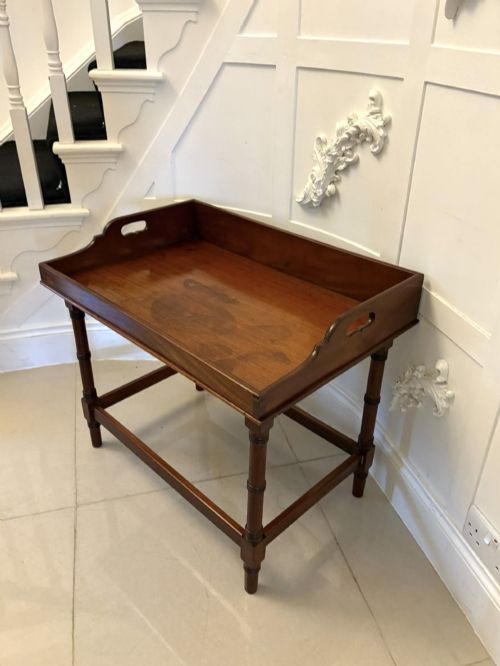
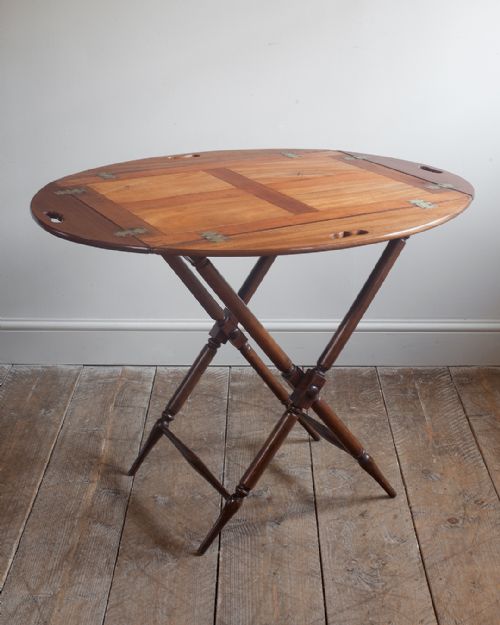
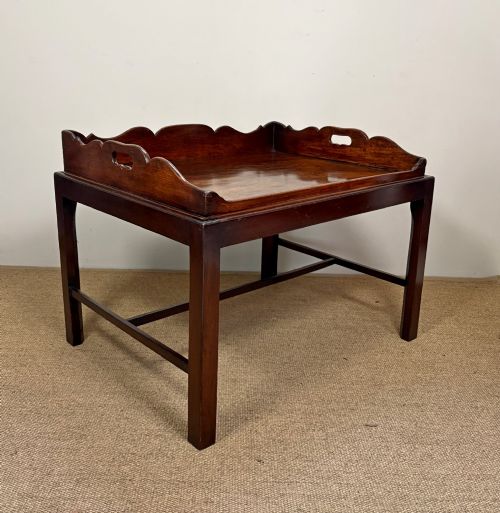
A george iii tray stand takes the form of a detachable oval or rectangular tray resting upon a folding or fixed wooden frame. Many examples function as butler's trays, nightstands, or lamp tables.
The pieces on this page span the Georgian, Regency, and Edwardian periods, utilising forms that range from tilt-top tables to three-tier dumb waiters.
Makers utilised woods such as mahogany, Cuban mahogany, and satinwood, occasionally pairing sterling silver or brass with the timber structure.
Materials and construction methods
Cabinet makers relied heavily on solid mahogany and Cuban mahogany, often selecting timber with rich grain patterns for the tray surfaces. Satinwood and kingswood appear on select inlaid examples.
Metal components such as brass handles, hinges, and bindings provide both structural support and functional contrast to the dark wood. Sterling silver occurs on smaller specialised trays.
Folding stands utilise hinged wooden cross-frames designed for easy storage and transport, while fixed variants function as permanent side or lamp tables.
George III Tray Stand Retail Price Guide 2026
Typical asking prices for george iii tray stand among the pieces listed under this phrase on Sellingantiques today, from the lower quarter to the upper quarter. They describe what is for sale here now, not the wider market.
Listings feature woods such as mahogany, Cuban mahogany, satinwood, and kingswood alongside brass and sterling silver hardware.
Distinctions in quality and finish
The calibre of a george iii tray stand depends largely on the figure of the mahogany and the crispness of any cross-banding or inlay work. Timber selection dictates the visual depth of the surface.
Original stands command greater interest than later replacements, though many historic trays survive paired with modern or later wooden supports. The integrity of the folding mechanism and hinges also influences the piece.
Peter and Anne Bateman
The George III Tray Stand Glossary
- Butler's tray
- A portable wooden tray with hinged or shaped sides, designed to lift off its supporting frame. These trays often feature cut-out hand grips for carrying.
- Dumb waiter
- A tiered stand featuring revolving circular trays supported on a central pillar with tripod legs. These items served dining rooms during the Georgian era.
- Torchere
- A tall stand designed to hold a candle or lamp. These vertical wooden supports appear frequently in eighteenth-century lighting forms.
- Cross-banding
- A border of veneer laid around the edge of a tray with the grain running perpendicular to the central panel. This technique frames the primary timber.
George III Tray Stand: Frequently Asked Questions
What is a george iii tray stand?
A george iii tray stand is a piece of furniture comprising a removable serving tray placed upon a collapsible or fixed wooden base. These versatile items served domestic households for carrying and displaying objects.
Craftsmen constructed them primarily in mahogany during the eighteenth and early nineteenth centuries. Today they function as side tables or coffee tables in modern interiors.
Were these stands always used for serving?
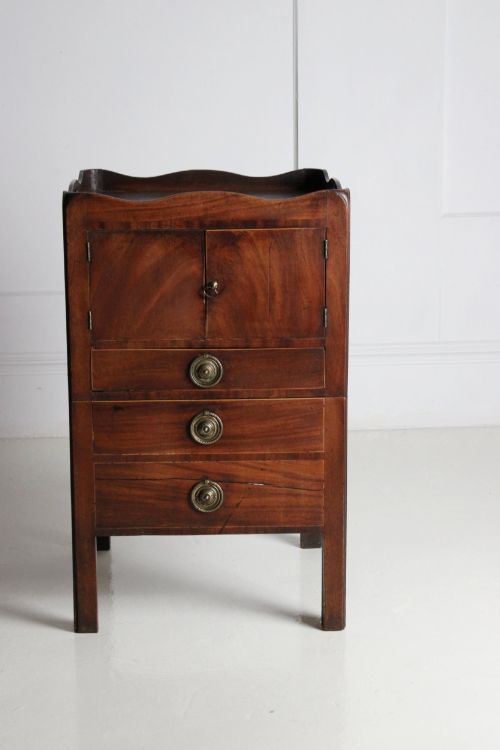
While originally designed for transporting silver, glassware, or food, many variants served other domestic duties. Examples include nightstands, pot cupboards, and lamp tables.
The removable nature of the tray allowed servants to clear rooms quickly by lifting the surface from its folding frame.
How do I distinguish original stands from later ones?
Many surviving trays were paired with later or modern replacement stands over the centuries of use. Examining the timber age, wear patterns, and joint construction helps determine if the base matches the top.
Original folding X-frames show period-appropriate joinery and wear consistent with the age of the tray itself.
How do I care for a mahogany tray top?
Mahogany surfaces require regular dusting with a soft, dry cloth to protect the polished wood finish. Avoid placing damp items directly onto the antique timber.
Keeping the furniture away from direct sunlight and sudden temperature changes preserves the colour and prevents the wood from warping.