
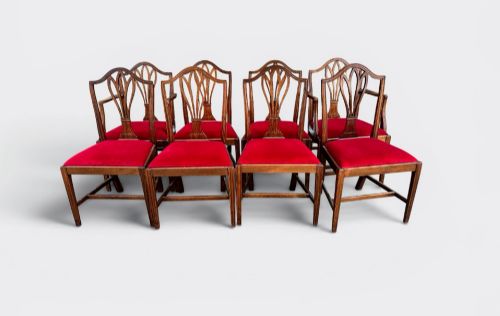
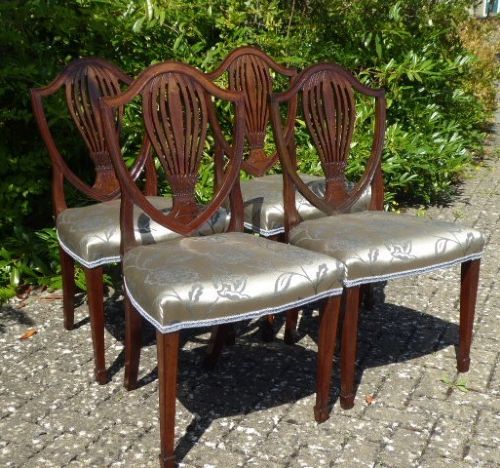

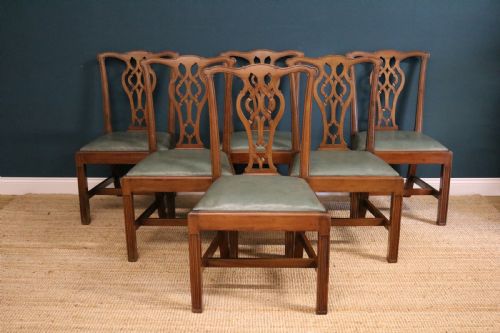


George III Style Side Chairs
George iii style side chairs are classic seating options that bring timeless elegance to dining spaces and halls.
George III Style Side Chairs
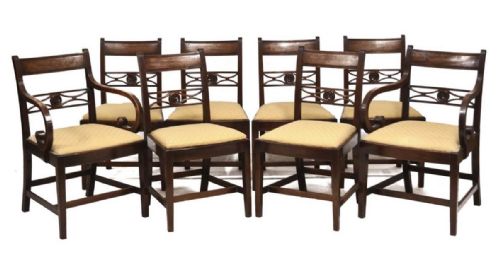
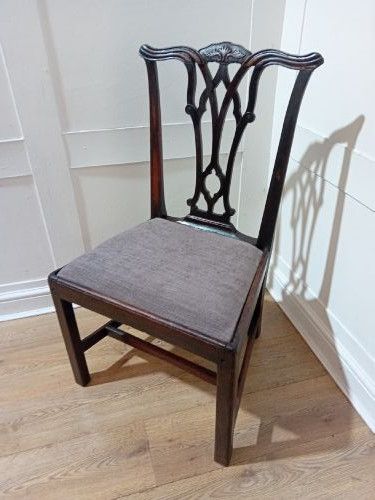
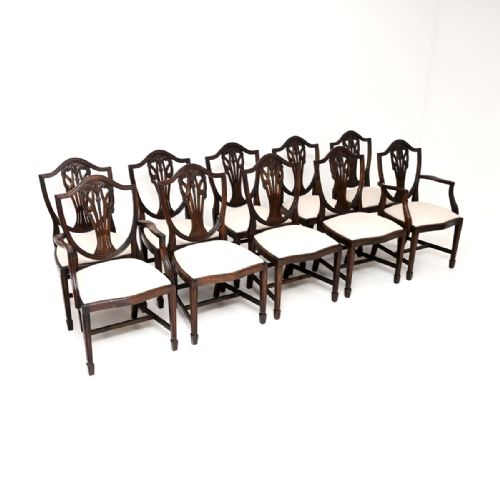
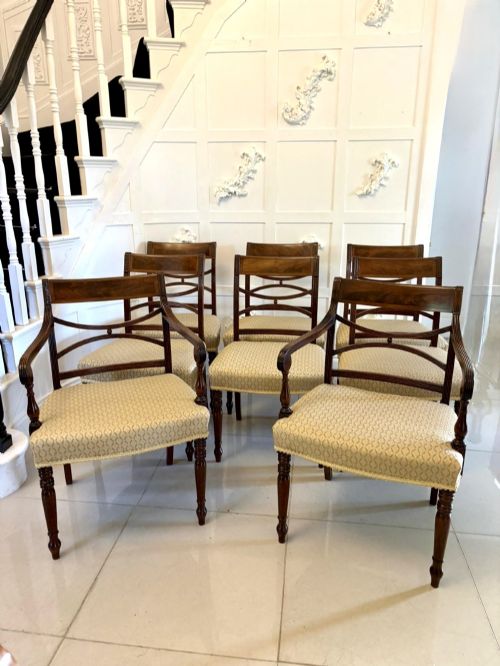
When you search for george iii style side chairs, you enter a field defined by mahogany timber, shield backs, and upright proportions designed for formal dining rooms. The pieces appearing here span genuine 18th-century examples alongside later revival periods from the 19th and early 20th centuries. Mahogany dominates the selection, frequently paired with upholstered seats in fabric, leather, or damask.
You will encounter single chairs alongside matched sets ranging from pairs up to twelve pieces. The forms draw on classic design idioms including Hepplewhite and Chippendale, showing carved details and inlaid decoration. Whether an original Georgian townhouse chair or a later revival interpretation, each piece maintains the upright stance required for dining use.
What varies in quality
The degree of crispness in the carved details separates standard workshop production from exceptional craftsmanship. Superior chairs display deep, well-defined carving on the splats and top rails rather than shallow moulding. The choice of timber grain and the tightness of the joinery further distinguish the finer pieces.
Original period pieces carry greater historical weight than revival equivalents, though condition and matching numbers within a set drive desirability. Sets that retain their original upholstery materials or harmonious patination stand apart from mixed or heavily restored groupings.
Some chairs boast horsehair fabric that has outlastated several generations of diners.
Howard & Co·Gillows·H. Samuel
The George III Style Side Chairs Glossary
- Shield back
- A chair back shaped in the outline of a heraldic shield, popularised in the late 18th century by designers like Hepplewhite.
- Splat
- The vertical central strip of wood in the back of a chair, often carved or pierced for decoration.
- Drop-in seat
- A removable seat frame padded and upholstered separately before being dropped into the wooden rebated seat rail.
- Giltwood
- Wood that has been treated with gold leaf or gold paint to give a metallic decorative surface.
- Damask
- A reversible figured fabric woven on a jacquard loom, frequently utilised for traditional upholstery.
George III Style Side Chairs: Frequently Asked Questions
How do I spot a reproduction?
Examine the timber underneath and inside the frame to check for tool marks, screw types, and signs of age that match the claimed period. Revival pieces from the 19th or 20th centuries often utilise different secondary woods or machine-cut elements.
Review the wear patterns around the feet and stretchers where daily use leaves distinct traces. Genuine 18th-century examples accumulate natural patination that modern workshops cannot easily replicate.
Can I mix these with modern tables?
These classic mahogany chairs pair effectively with contemporary dining tables to create a striking contrast of eras. Their slender proportions and dark wood tones anchor modern dining spaces.
Ensure the seat height matches your table clearance before combining them. The neutral tones of mahogany and traditional upholstery integrate smoothly into various interior schemes.
How should I maintain the upholstery?
Vacuum fabric and horsehair surfaces gently using a soft brush attachment to remove dust without damaging the weave. Protect leather and damask elements from direct sunlight to prevent fading.
Address spills immediately by blotting with a clean, dry cloth rather than rubbing. Professional cleaning is recommended for antique textiles.