
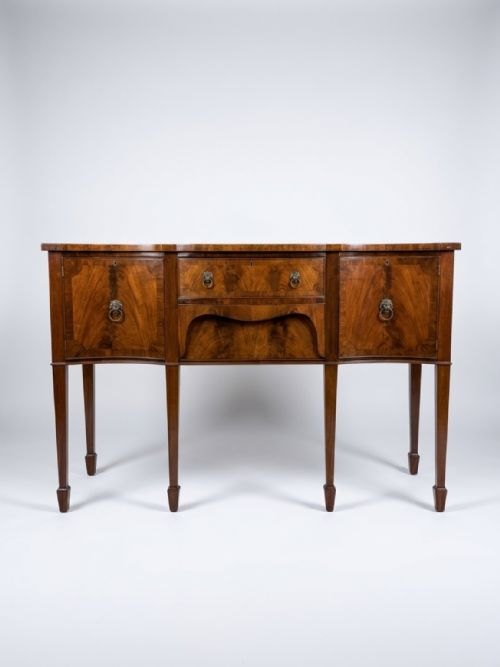
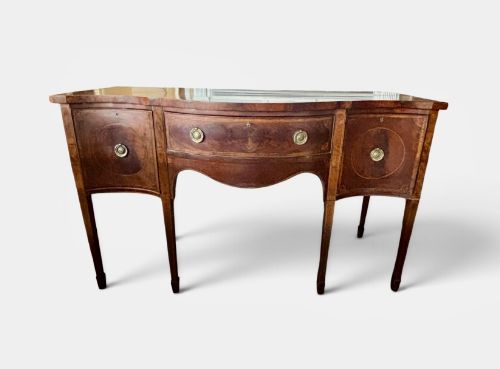
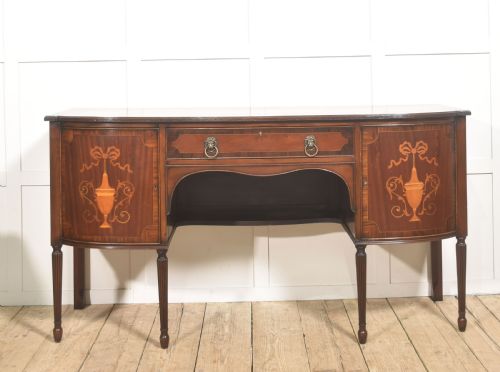


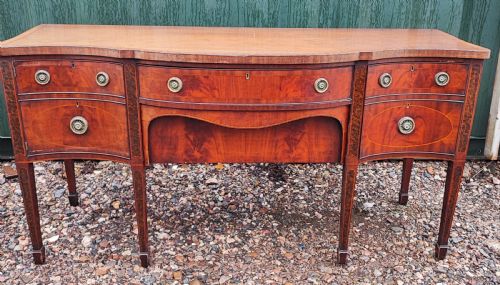


George III Serpentine Server
A george iii serpentine server brings fluent curves and figured timber to a dining room.
George III Serpentine Server
A george iii serpentine server combines a sweeping, undulating front with the rich warmth of 18th century mahogany. These pieces function as serving tables or sideboards designed for the dining room, often featuring an advanced bowed centre flanked by concave wings. The examples found here range from serving tables to fully fitted sideboards.
Most pieces date to the Georgian era, though the selection includes later interpretations from the nineteenth and early twentieth centuries built in the same style. The form relies on precise cabinetmaking to achieve the curved facade without compromising structural integrity. Buyers will encounter both plain timber models and those enriched with detailed inlay.
Makers of the period configured these items to handle the demands of formal dining, providing a generous surface for platters and dishes. The serpentine profile softens the rigidity of the room, introducing fluid lines characteristic of high Georgian design. Every piece reflects a distinct approach to proportion and timber selection.
Distinctions in quality
Quality rests upon the depth of the mahogany grain and the precision of the curved serpentine front. Superior examples display dramatic flame figuring across the drawers, matched symmetrically from the centre outwards. Lesser pieces utilise plain timber or simpler construction without the same visual richness.
The finesse of the inlay also separates standard items from finer work, particularly where boxwood and satinwood create crisp geometric borders. Original brass hardware and clean joinery at the curved corners indicate higher workshop standards. The integrity of the timber movement across the serpentine shape dictates long term stability.
Listings feature items spanning the Georgian period, the nineteenth century, and early twentieth-century revivals.
The George III Serpentine Server Glossary
- Serpentine
- A furniture front characterised by a concave centre flanked by two convex ends, or the reverse. This shape requires advanced woodworking techniques to curve timber smoothly.
- Flame Mahogany
- A veneer cut from the branch junction of the mahogany tree, producing a distinctive flickering flame pattern. It was highly prized for principal display surfaces.
- Inlay
- A decorative technique where pieces of contrasting wood, such as satinwood or boxwood, are inserted into recessed cavities in the primary surface. It creates sharp linear or geometric patterns.
- Serving Table
- A formal table used in dining rooms for holding food and utensils before service. Unlike a sideboard, it typically lacks cupboards or drawers.
- Stringing
- A narrow strip of contrasting wood inlaid into the surface to form thin decorative lines around drawer borders and table edges.
George III Serpentine Server: Frequently Asked Questions
What is a serpentine server used for?
A serpentine server provides a sturdy surface for placing dishes, decanters, and serving pieces during formal meals. The elongated top allows hosts to arrange food efficiently within reach of the dining table.
Historically, these tables stood against the dining room wall to assist servants during large dinner parties. Today they serve a similar practical function while acting as a focal point for displaying decorative objects.
How do I identify a George III period piece?
Identifying a George III piece involves examining the timber density, construction methods, and hardware style. Pieces from this era utilise dense mahogany with hand-cut dovetails on the drawer interiors.
One should also look for period-appropriate secondary woods like oak or pine inside the frame. Later nineteenth and twentieth-century reproductions often show machine-cut elements or different interior lining materials.
How do I care for mahogany furniture?
Mahogany requires stable room humidity and protection from direct sunlight to prevent the timber from fading or drying out. Dusting regularly with a soft, dry cloth preserves the natural sheen of the wax finish.
Avoid placing hot serving dishes directly on the antique wood surface without protective mats. Periodic application of a quality beeswax helps nourish the grain and maintain the deep colour.
Where should I place a serving table?
A serving table fits best against a primary wall in a dining room, hallway, or spacious living area. The curved serpentine front requires adequate clearance so the profile remains visible and unobstructed.
Ensuring the piece is positioned away from direct heat sources protects the veneer and old timbers from splitting. The height and length should complement the scale of the surrounding room.