




George III Oak Cupboard
A george iii oak cupboard brings honest timber and sturdy regional craftsmanship straight into a modern interior.
George III Oak Cupboard
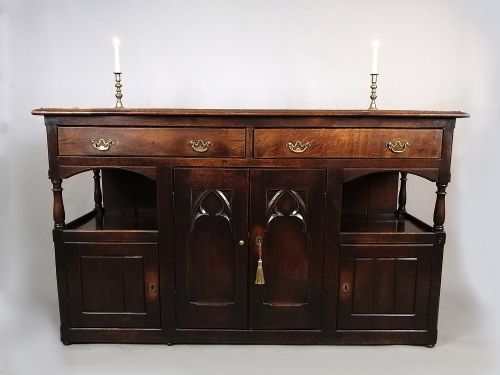
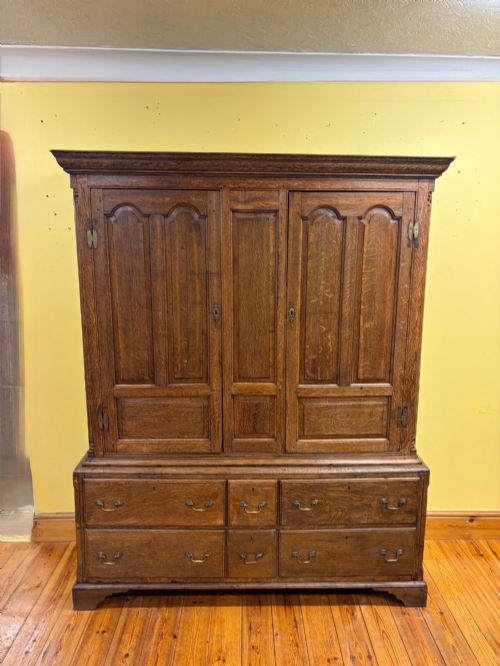
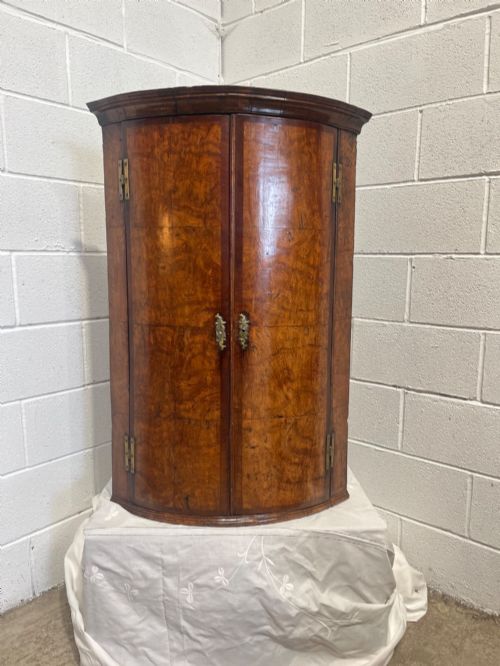
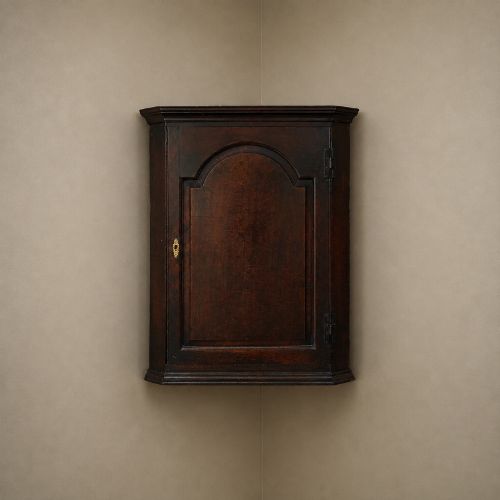
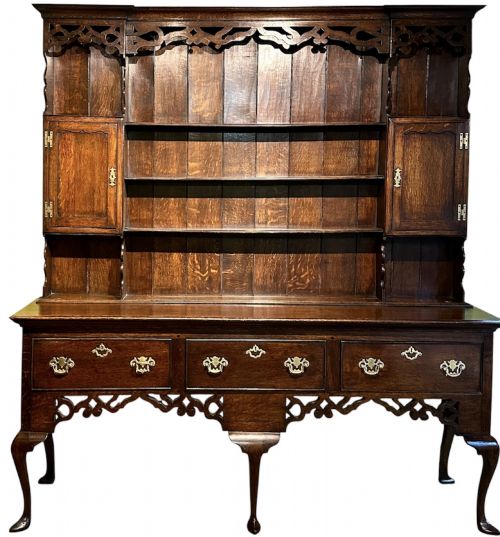
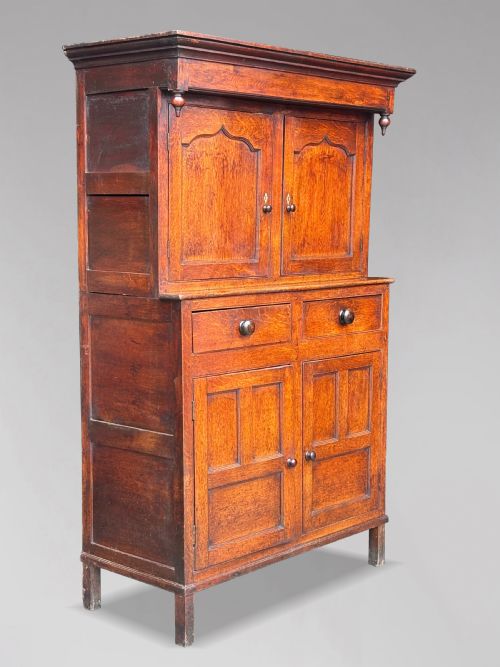
A george iii oak cupboard encompasses a robust range of domestic storage furniture made during the Georgian period, spanning wall-hanging corner cabinets, floor-standing corner cupboards, and large housekeeper's storage pieces. These items originate from English and Welsh workshops, reflecting both provincial utility and refined country cabinet-making.
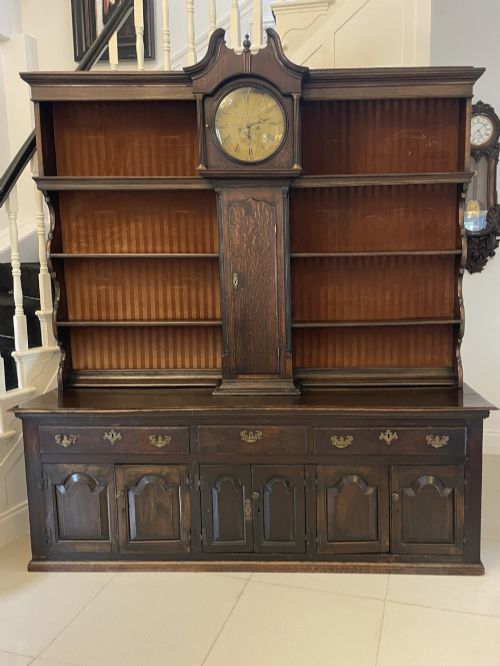
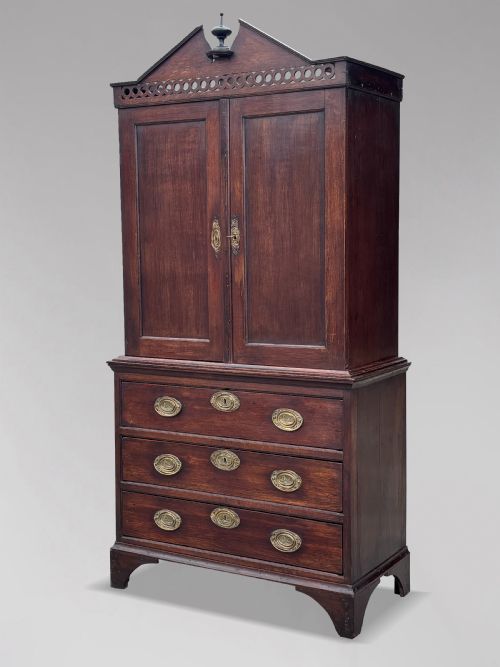
The most common formats met on this page are corner cupboards, dressers with cupboard bases, and substantial linen presses or housekeepers' cupboards. Timber selection relies heavily on native oak, sometimes enhanced by burr oak or contrasting crossbanding in mahogany and satinwood.
How They Were Made
Construction relies primarily on solid oak, shaped through traditional joinery techniques such as panel and frame construction, dovetailing for drawers, and hand-cut hinges. Cabinet makers utilised native hardwoods like fruitwood and elm alongside brass hardware and iron fixtures to secure doors and mount interior shelves.
Surface decoration frequently incorporates inlaid details, fruitwood inlay, and mahogany crossbanding to frame panels and corners. Many pieces display rich natural grain patination developed through decades of domestic use and polishing.
Listings feature oak, burr oak, mahogany, fruitwood inlay, and satinwood across eighteenth-century Georgian forms.
What Varies in Quality
The standard of a george iii oak cupboard depends upon the crispness of its inlays, the selection of timber figures such as burr oak, and the integrity of its original brass or iron hardware. Superior examples maintain well-proportioned cornices, tight joints, and unaltered internal shelving.
Provincial pieces range from simple utility furniture with plain panels to elaborate constructions featuring mahogany crossbanding, specialist glazing, and integrated clock faces or racks. Alterations to doors, feet, or interior configurations notably affect the integrity of the piece.
The George III Oak Cupboard Glossary
- Crossbanding
- A strip of veneer applied to the border of a panel, running perpendicular to the grain of the central timber. This technique creates a neat framing effect common on better-quality Georgian cabinets.
- Housekeeper's cupboard
- A large, tall storage piece traditionally used in grand homes to store linens, dried foods, and household stores. These units typically combine upper cupboard doors with lower drawers or smaller cupboards.
- Corner cupboard
- A specialised storage cabinet built with a triangular cross-section to fit neatly into the corner of a room. Versions in this archive appear both as wall-hanging units and floor-standing pieces.
- Burr oak
- A specialised timber growth featuring swirling, knotted grain patterns that produce distinctive optical movement. Cabinet makers utilised burr oak veneers on prominent doors and panels to catch the light.
George III Oak Cupboard: Frequently Asked Questions
Where did people put corner cupboards?
These cabinets were designed to utilise awkward angles in smaller rooms, dining spaces, and hallways. Wall-hanging versions mounted directly above tables, while floor-standing variants anchored empty corners.
Their triangular footprint allowed households to maximise storage without obstructing movement through domestic interiors.
What is a housekeepers cupboard used for?
Large storage pieces served domestic staff in country houses for organising household linens, blankets, and dry provisions. The compartmentalized interior kept textiles clean and protected from damp conditions.
Today, these substantial units function well in modern kitchens or utility rooms for storing tableware and pantry supplies.
How do I identify a Georgian oak piece?
Examination of the timber reveals native English or Welsh oak with hand-planed surfaces, pegged joints, and iron or brass hardware. The presence of secondary timbers like deal or fruitwood inside drawers supports period construction.
Secondary indicators include panel-and-frame doors and rich, dark patination accumulated over centuries of care.
Are these cupboards made of solid oak?
Most pieces feature heavy solid oak construction for structural frames, doors, and sides. Some examples incorporate oak veneers or decorative crossbanding in mahogany and satinwood on prominent surfaces.
Internal elements such as drawer linings and backboards frequently utilise secondary native timbers like pine or fruitwood.