

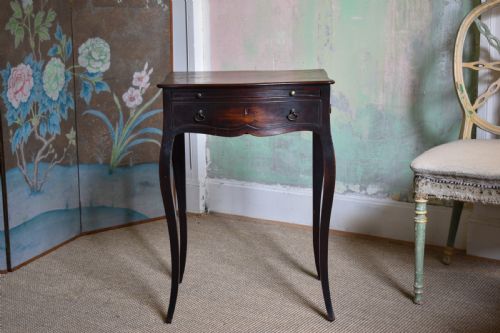
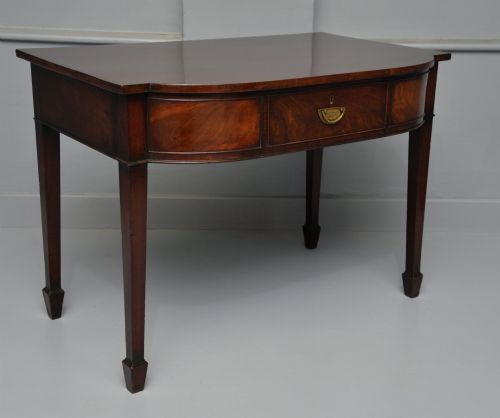
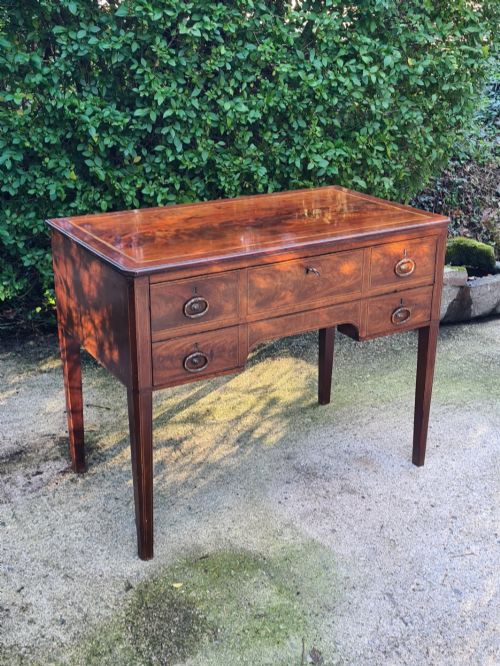
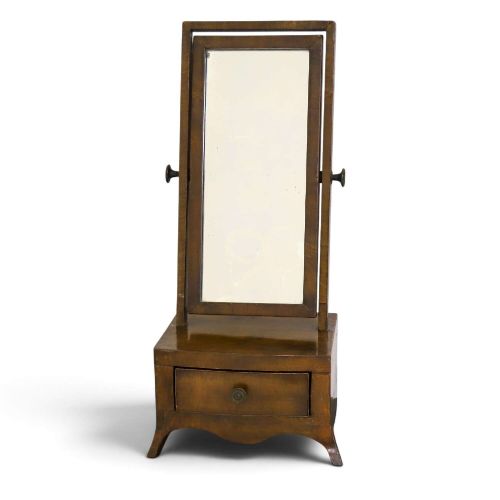

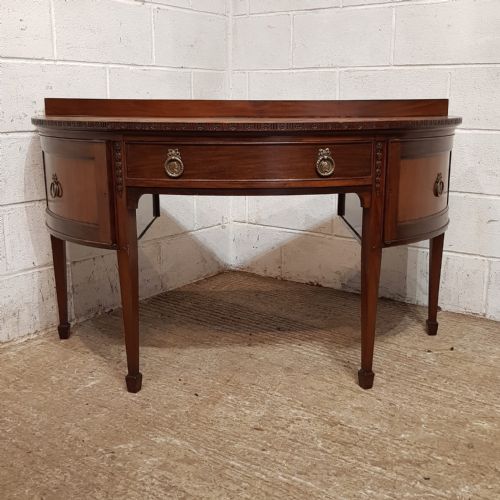
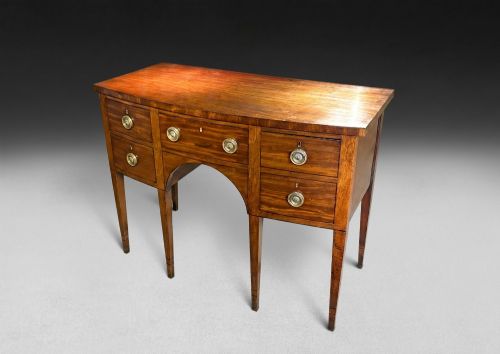
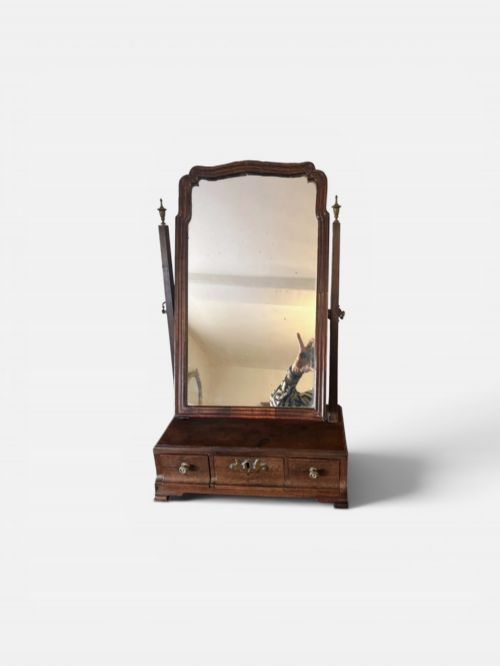
George III Mahogany Dressing Table
A george iii mahogany dressing table brings an architectural grace and rich timber grain to a bedroom, combining functional drawers with refined period proportions.
George III Mahogany Dressing Table
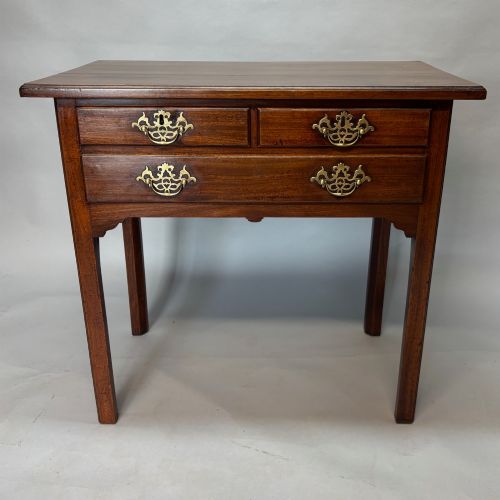
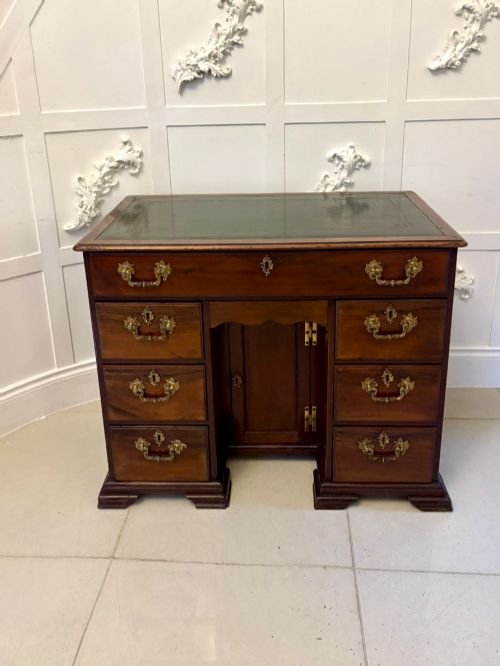
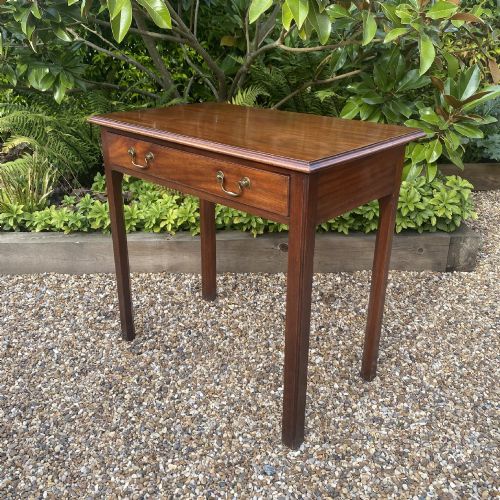
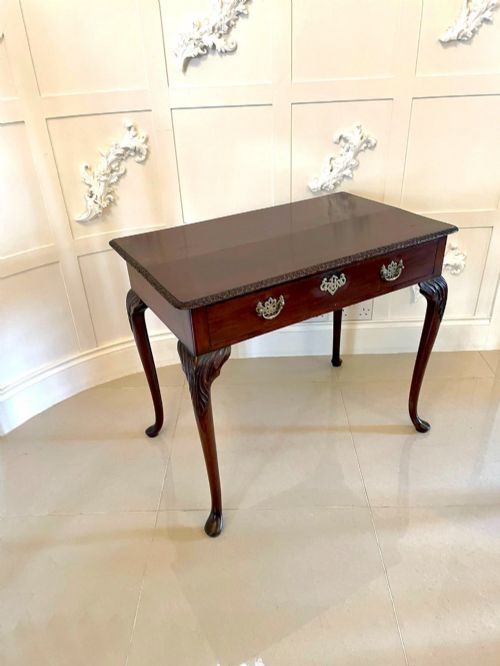
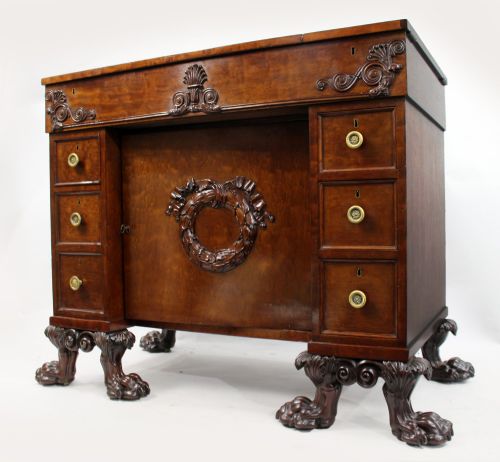
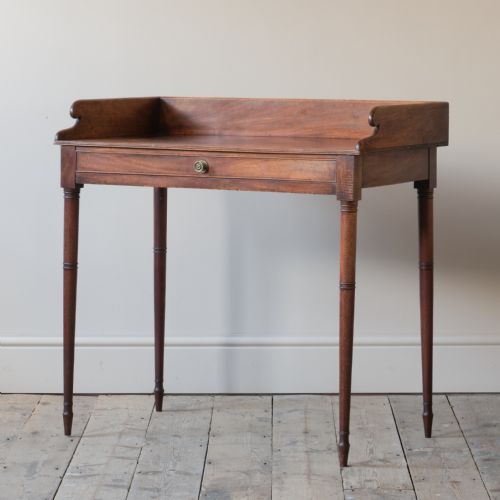
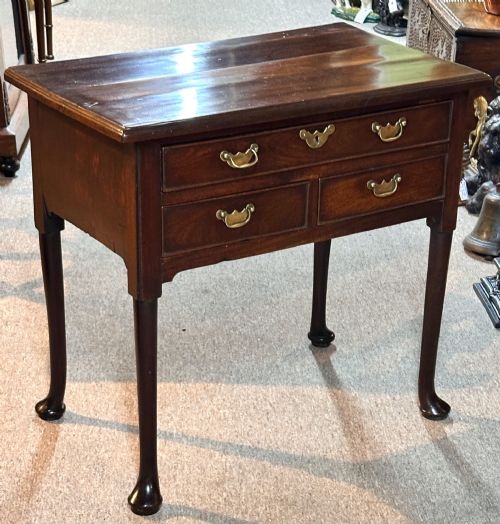
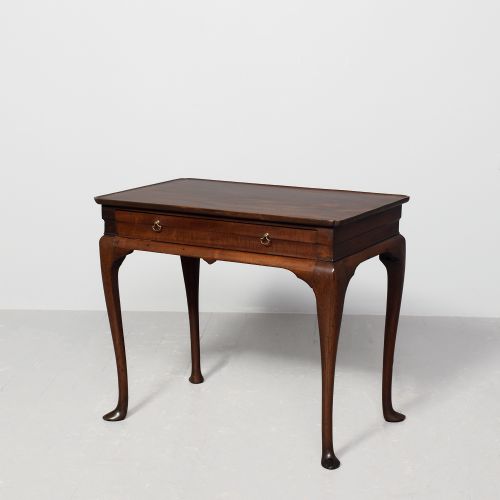
A george iii mahogany dressing table encompasses both freestanding kneehole forms and compact tabletop mirrors designed for personal grooming during the Georgian era. These pieces appear alongside closely related lowboys, side tables, and washstands that share the same eighteenth-century domestic vocabulary.
Surviving examples range from straight-fronted models to sophisticated serpentine and bow-front designs. Makers utilised rich mahogany timbers, occasionally augmented with satinwood, boxwood, or purpleheart banding, to create functional furniture for the bedroom and dressing room.
How they were made
Cabinetmakers built these tables using dense mahogany, often selected for figured grain patterns, supported by secondary timbers for drawer linings and internal framing. Drawers were joined with precise dovetailing, reflecting the high standard of period joinery.
Decorative surface details relied on contrasting veneers such as satinwood and purpleheart, alongside stringing in boxwood. Hardware typically consisted of cast brass handles and escutcheons, while mirrors utilised pivoting glass plates held within shaped wooden frames.
George III Mahogany Dressing Table Retail Price Guide 2026
Typical asking prices for george iii mahogany dressing table among the pieces listed under this phrase on Sellingantiques today, from the lower quarter to the upper quarter. They describe what is for sale here now, not the wider market.
Listings feature mahogany, satinwood, and purpleheart, spanning the Georgian period through to the nineteenth century.
What varies in quality
Quality rests in the selection of the timber grain, particularly where highly figured mahogany or contrasting veneers are deployed across curved drawer fronts. The crispness of carved details, such as bracket feet or edge mouldings, distinguishes superior cabinet work from more utilitarian production.
Proportion and structural integrity define the better pieces, where original brass hardware, uncompromised drawer linings, and balanced serpentine or bow fronts remain intact. The sophistication of internal compartments, particularly in dressing chests and kneehole forms, also marks out higher-status examples.
The George III Mahogany Dressing Table Glossary
- Lowboy
- A small low table with drawers, frequently used as a side table or dressing table during the eighteenth century. These pieces typically feature slender legs and multiple drawers arranged beneath a rectangular top.
- Kneehole desk
- A form of desk or dressing table featuring a central recessed cupboard enclosed by banks of small drawers on either side. This layout provides a comfortable space for seating while offering ample enclosed storage.
- Serpentine
- A curved furniture front characterised by a convex central section flanked by concave sweeps. This complex shape requires skilled cabinetmaking to achieve smooth, continuous lines across drawer fronts.
- Washstand
- A specialist piece of furniture designed to hold a basin and washing equipment, sometimes incorporating folding tops or gallery backs. Surviving examples often date from the Georgian period and utilise mahogany or satinwood.
- Dressing mirror
- A pivoting glass plate mounted within a frame, supported by upright arms above a small box base fitted with drawers. These portable mirrors sat atop tables or chests to aid in personal grooming.
George III Mahogany Dressing Table: Frequently Asked Questions
How were these dressing tables used?
These tables served primarily for daily grooming and personal care, holding mirrors, cosmetics, and small accessories in bedroom settings. The drawers provided secure storage for jewellery, brushes, and linens.
Many examples incorporated specialised compartments or writing surfaces, allowing them to function as modest desks or writing tables when needed. Their compact proportions made them versatile items of domestic furniture.
Where should I place one?
A dressing table or lowboy suits a bedroom, dressing room, or hallway as a console surface with functional drawer storage. Their finished backs and refined timber grain also allow them to sit away from walls in larger spaces.
Pairing a table with a matching dressing mirror recreates its original intended arrangement. The warm tones of mahogany complement both traditional interiors and modern minimalist rooms.
How do I care for the wood?
Maintain eighteenth-century mahogany by keeping the timber away from direct heat sources and strong sunlight, which can fade or dry the polished surface. Dust regularly with a soft, dry cloth and avoid silicone-based sprays.
Applying a traditional wax polish occasionally preserves the moisture and sheen of the aged wood. Care must be taken around brass hardware and veneer edges during cleaning.
How do I distinguish periods?
Georgian and George III pieces display characteristic joinery methods, such as hand-cut dovetails and native secondary timbers inside drawers. Proportions during the eighteenth century tended to favour architectural balance and restraint.
Later Victorian or Edwardian interpretations often reveal subtle differences in timber density, machine-cut elements, or paler secondary woods. Examining drawer construction and surface wear helps confirm the age of a piece.