
George III Mahogany Buffet
These georgian george iii mahogany buffet pieces and related sideboards offer functional dining room elegance built to last through the centuries.
George III Mahogany Buffet
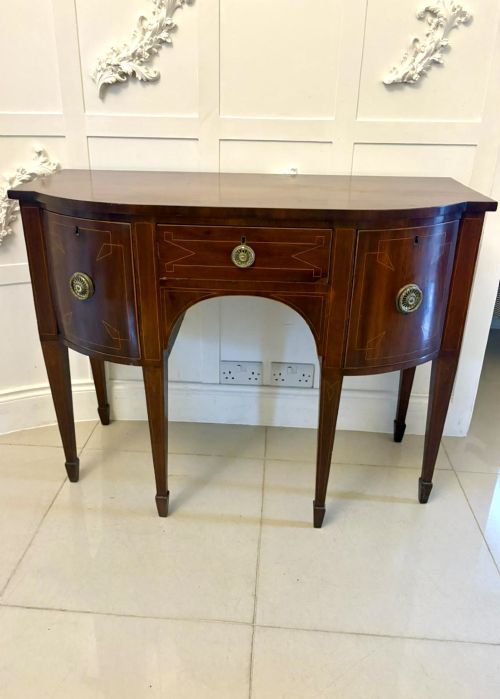
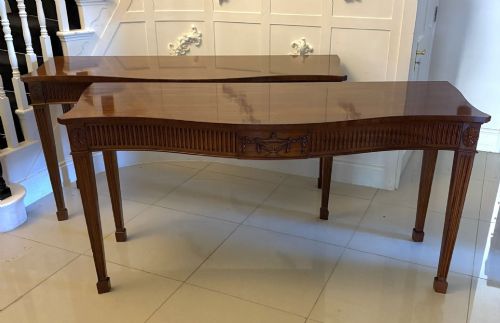
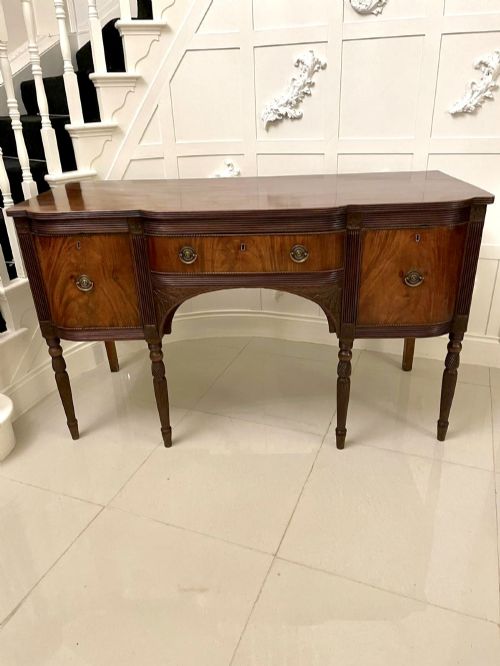
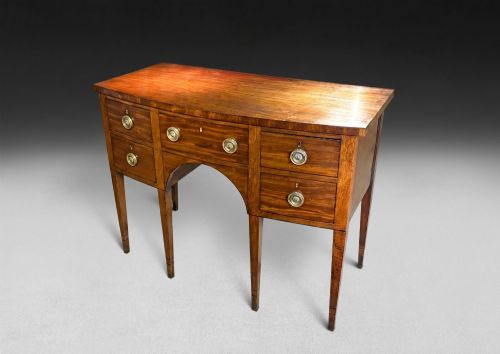
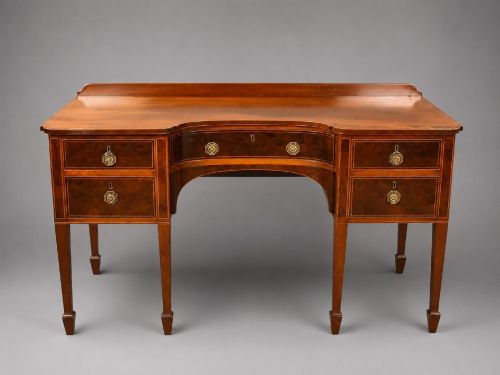
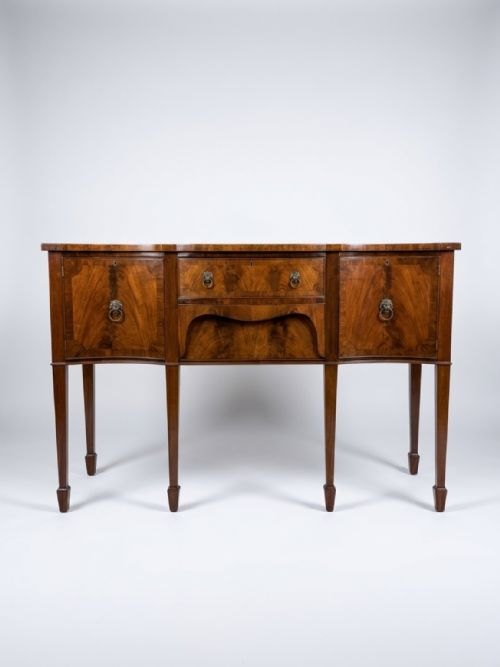
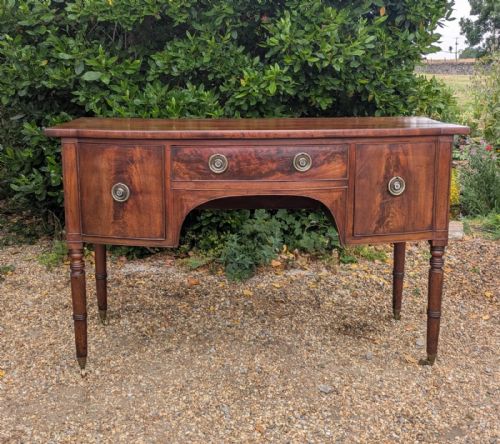
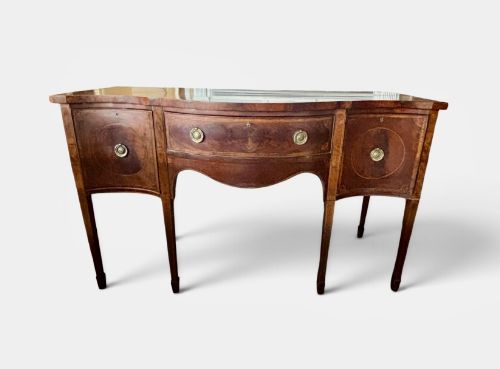
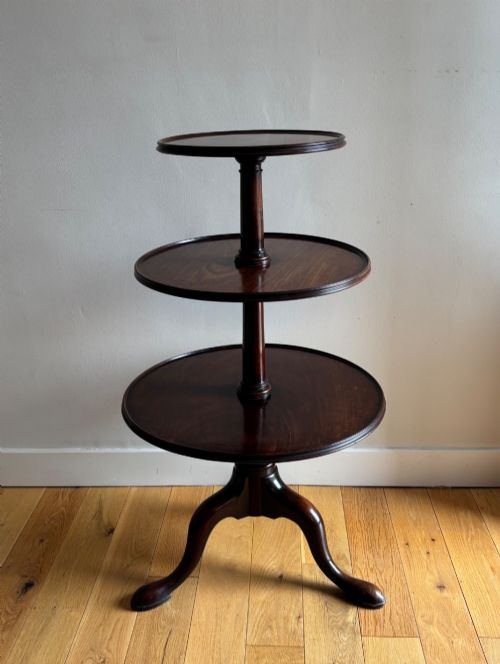
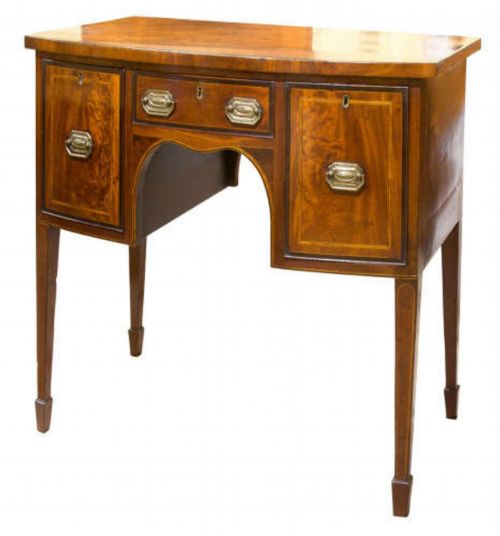
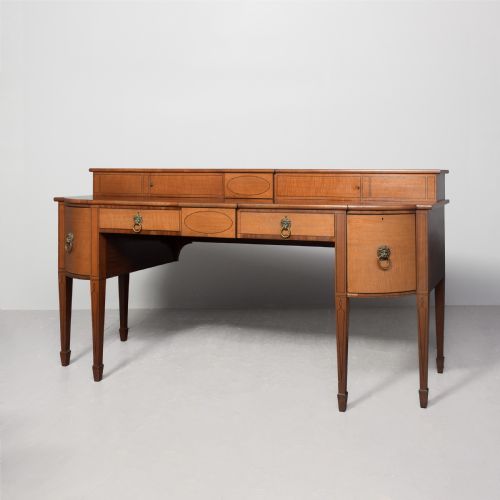
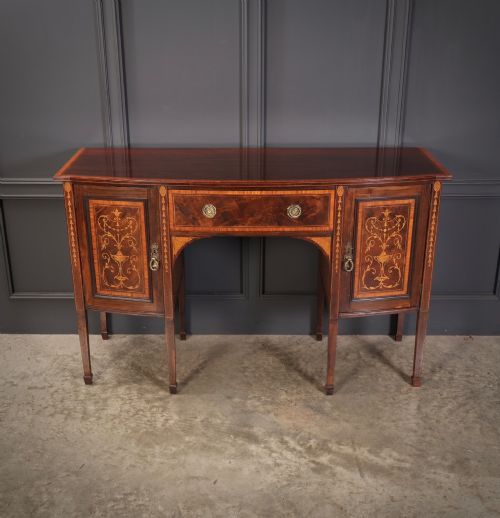
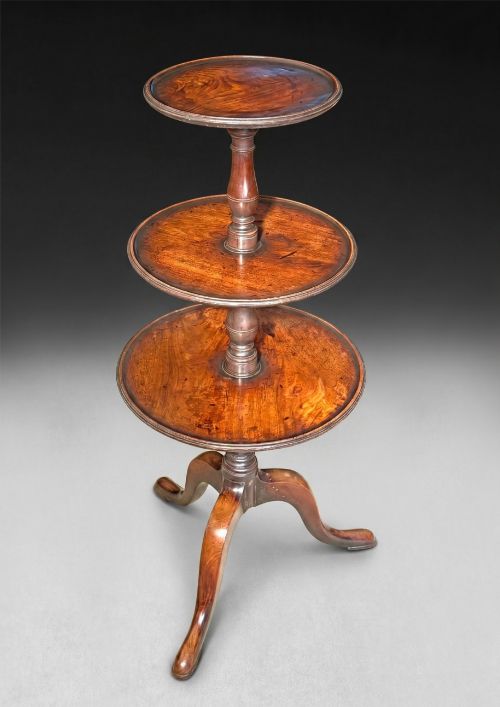
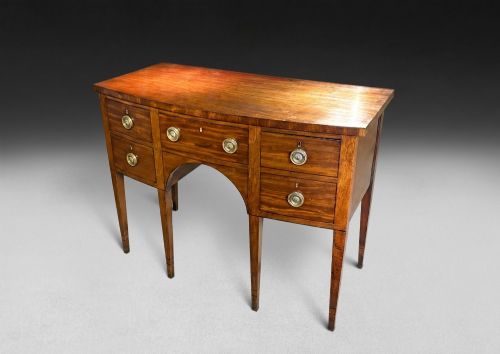
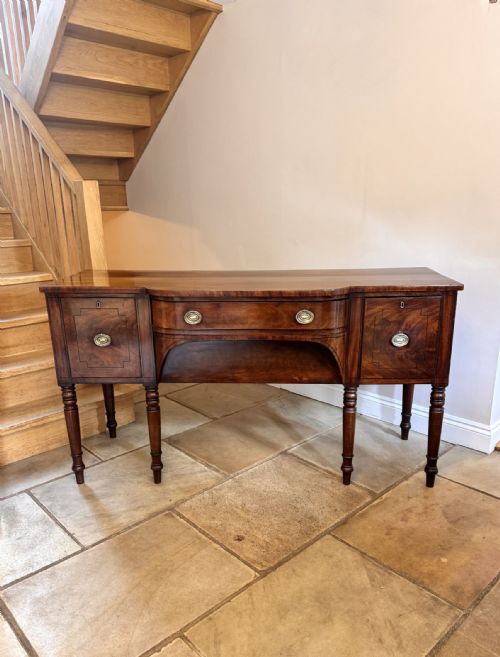
When you search for a george iii mahogany buffet, you encounter dining room furniture primarily spanning the eighteenth century and the georgian period. The selections here include serving tables, sideboard forms, and tiered dumb waiters designed for practical use in historic dining spaces.
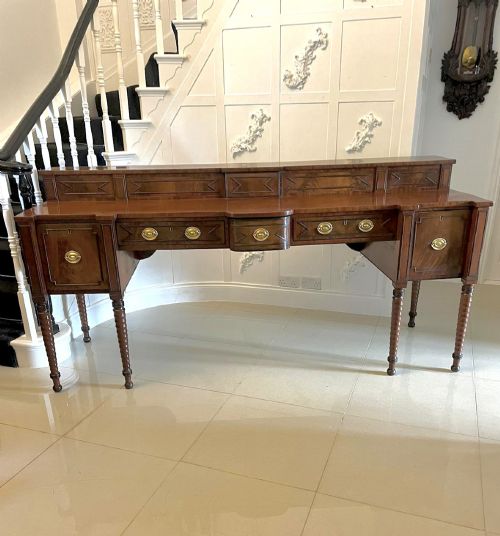
The most common form on this page is the sideboard, often featuring straight, bow-fronted, or serpentine shapes. Alongside these are tiered dumb waiters constructed in circular or multi-tiered arrangements for serving food and drink without servants present.
Makers and craftsmen of this era utilised local and imported timbers to shape pieces tailored to formal dining rooms. Regional variations appear too, such as large Scottish stage-back sideboards built for substantial country houses.
How they were made
Construction relies heavily on solid mahogany and flame mahogany veneers applied over robust secondary timbers. Cabinetmakers selected boards with rich grain patterns to create striking visual movement across large front panels and table tops.
Decoration is achieved through contrasting timber details rather than heavy carving. Craftsmen incorporated boxwood inlay, satinwood inlay, and purpleheart banding to frame drawers and edge tabletops.
Hardware and structural supports frequently integrate cast brass elements on dumb waiters and sideboards. These metal fittings provide functional pivots and decorative accents that complement the dark timber tones.
The furniture spans neoclassical and sheraton revival styles alongside core georgian periods.
What varies in quality
The distinction between standard utility items and superior examples lies in the selection of timber and the precision of the cabinetwork. Finer pieces display carefully matched flame mahogany veneers and intricate inlay work that remains crisp and intact.
Proportion and silhouette dictate the desirability of a piece within this category. Well-executed serpentine curves and subtle bow fronts require advanced carpentry skills that separate master workshops from provincial joiners.
The George III Mahogany Buffet Glossary
- Serpentine
- A furniture front or edge shaped with a central convex curve flanked by two concave curves. This contour demands high skill from the cabinetmaker.
- Bow-front
- A convex curved front that swells outward from the corners. It is a common profile found on sideboards from the georgian period.
- Dumb waiter
- A freestanding piece of furniture featuring multiple graduated tiers rotating on a central pillar. These were placed beside dining tables to hold dishes.
- Inlay
- A technique where pieces of contrasting timber such as satinwood or boxwood are inserted into recesses flush with the main surface. It creates geometric or floral patterns.
George III Mahogany Buffet: Frequently Asked Questions
What is a george iii buffet used for?
These items served as functional storage and serving surfaces in formal dining rooms during the eighteenth century. They held silverware, linen, and dishes during large meals.
They also provided extra surface space for laying out food and wine before service at the dining table.
How do I identify a georgian sideboard?
Look for dense mahogany construction paired with period-appropriate design traits such as tapering legs or shaped fronts. Subtle stringing and inlay work are typical markers of the georgian era.
Check for traditional cabinet construction methods, including hand-cut dovetails within the drawer boxes, which confirm age and origin.
Where were dumb waiters placed?
Dumb waiters stood within reach of the dining table so guests could help themselves to food and drink. Their tiered circular design maximised surface area while occupying minimal floor space.
They were especially popular in dining rooms where hosts preferred privacy during meals without servants in attendance.
How do I care for antique mahogany furniture?
Keep mahogany furniture away from direct sunlight and heat sources to prevent the timber and veneers from drying out. Consistent indoor humidity protects the wood grain and structural joints.
Apply natural beeswax periodically and buff gently with a soft cloth to maintain the polished sheen without building up heavy chemical residues.