


George III Dining Room Chair
A george iii dining room chair combines robust architectural timber with restrained classical carving, offering enduring elegance for any serious interior.
George III Dining Room Chair
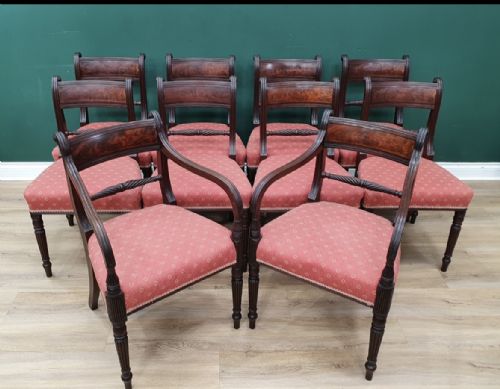
A george iii dining room chair is a sturdy timber seat designed for formal dining during the Georgian period, typically constructed from rich dark wood with upright backs and drop-in or upholstered seats.
Buyers on this page most frequently encounter sets of mahogany chairs originating from the eighteenth and early nineteenth centuries, alongside later revival pieces produced in Edwardian workshops and the twentieth century.
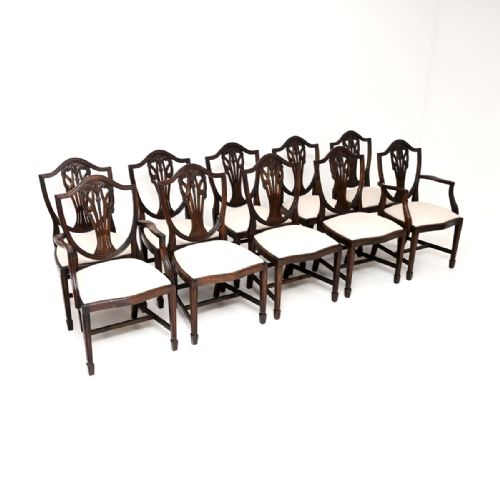
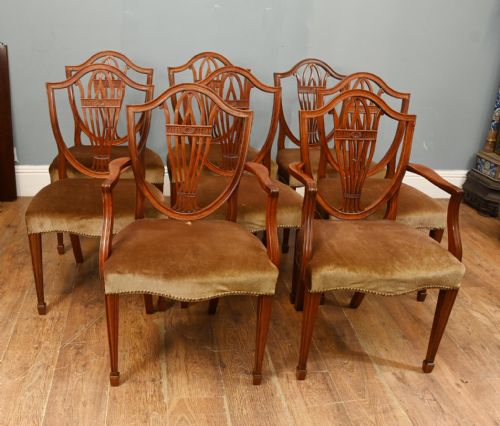
The designs range from plain ladder-back frames and shield-back forms to inlaid models with carved splats, reflecting both authentic period production and later historical revivals.
Materials and Construction
Cabinetmakers constructed these frames primarily from solid mahogany and flame mahogany, sometimes incorporating delicate lighter wood inlay for decorative contrast on the splats and stiles.
Seats utilised traditional webbing and stuffing techniques before receiving final coverings of leather, velvet, or contemporary upholstery fabric.
Structural reinforcement often included brass castors on heavier carver chairs or internal corner blocks to withstand the rigours of daily dining use.
Even chairs that have dined through centuries still appreciate a gentle application of beeswax rather than modern aerosol polish.
Assessing Quality and Craftsmanship
Superior examples distinguish themselves through crispness of hand-carving on the crest rails and the thoughtful selection of dense, richly figured timber.
The integrity of the frame construction, including tight joinery at the leg and rail junctions, separates fine original workshop production from looser later reproductions.
Gillows·H Samuel London
The George III Dining Room Chair Glossary
- Carver chair
- A dining chair featuring arms, traditionally placed at the head of the table for the host. These pieces are often slightly wider and more substantial than the single chairs in a set.
- Splati
- The vertical central strip of wood within a chair back connecting the crest rail to the seat. It frequently displays elaborate fretwork or inlay.
- Stile
- The upright vertical side post of a chair back that runs from the seat up to the crest rail. These members provide crucial structural support for the backrest.
- Inlay
- A decorative technique where thin pieces of contrasting timber or light materials are inserted into recesses within the primary wood surface. This adds geometric or floral detail to the frame.
George III Dining Room Chair: Frequently Asked Questions
How many chairs come in a typical set?
Sets vary widely from small gatherings of four or six pieces up to larger dining suites numbering ten or twelve chairs. Many larger groupings include a combination of single side chairs and matching carvers for the table ends.
Buyers should examine the composition of each set carefully to ensure uniform wood grain and matching design details across all pieces.
Are these chairs comfortable for daily use?
Most period dining chairs were designed with upright posture in mind, featuring supportive vertical backs and padded upholstered seats. While supportive, their proportions reflect eighteenth-century ergonomic preferences rather than modern lounge seating.
Modern users often find them perfectly suited for formal dining, provided the internal webbing and upholstery remain firm and supportive.
How do I spot a later revival chair?
Revival pieces produced during the Edwardian era or the twentieth century often display machine-tooled elements and cleaner timber surfaces without the patination of eighteenth-century timber. The weight and internal construction methods can also point towards a later manufacturing date.
Comparing the timber shrinkage and tool marks under the seat rails helps clarify the actual period of manufacture.
What is the difference between a single and a carver?
Single chairs are armless dining seats designed to line the sides of a table efficiently. Carver chairs feature integrated armrests to accommodate the host or hostess.
Historically, a full dining suite paired several single chairs with a matching pair of carvers at the head and foot of the table.