
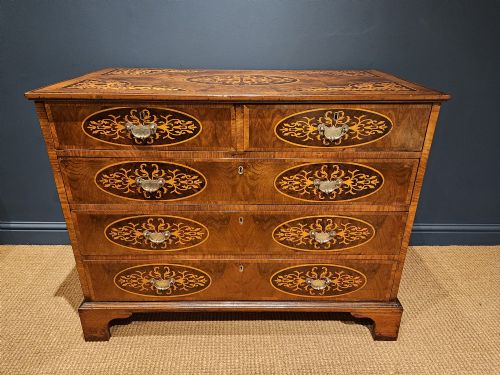
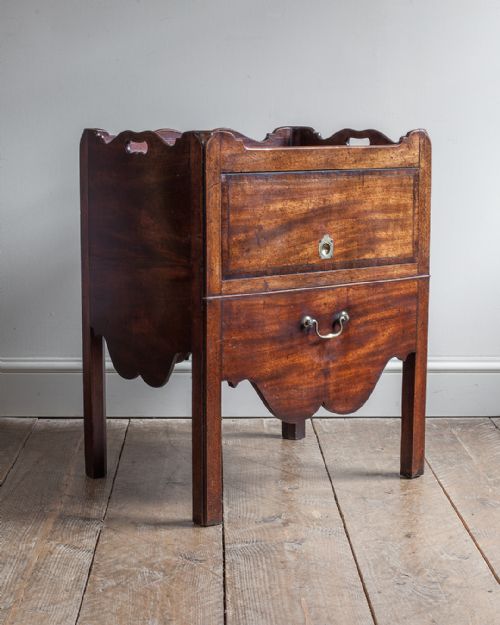
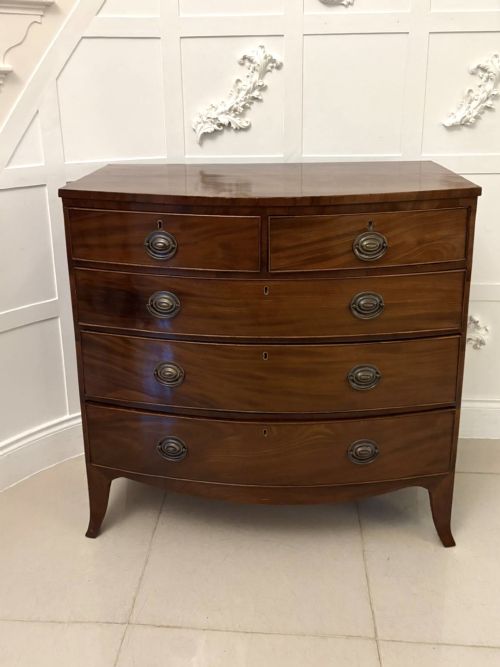
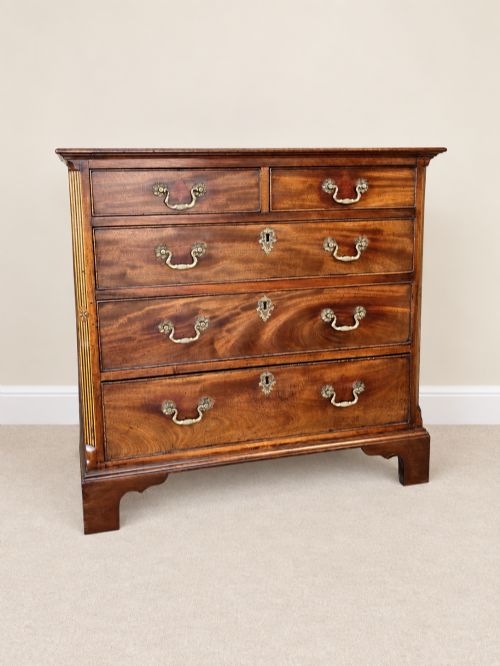
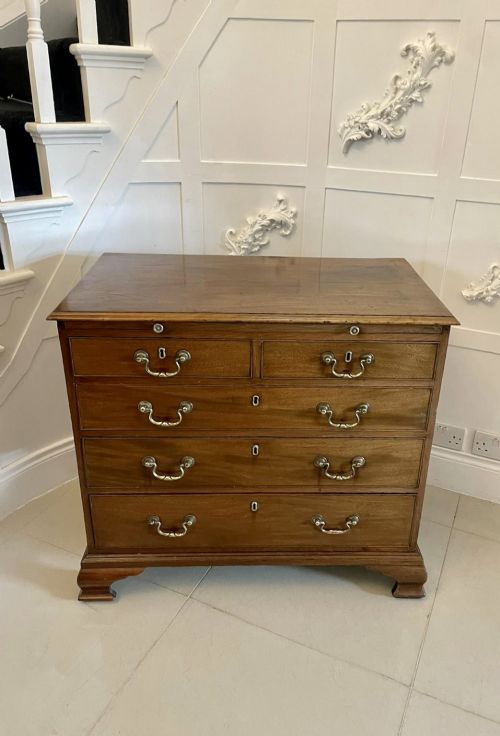
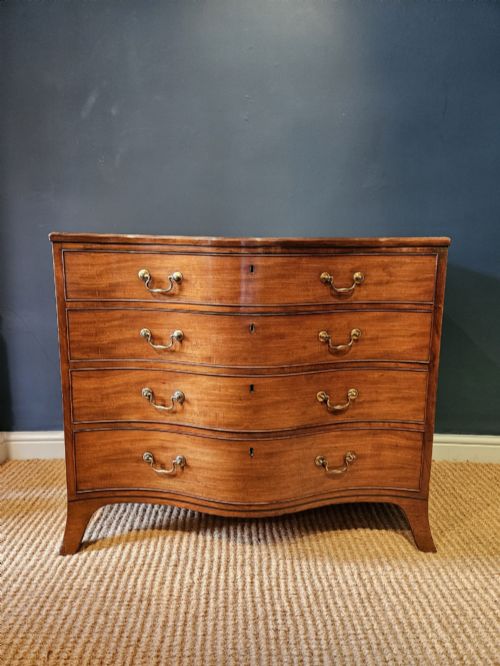
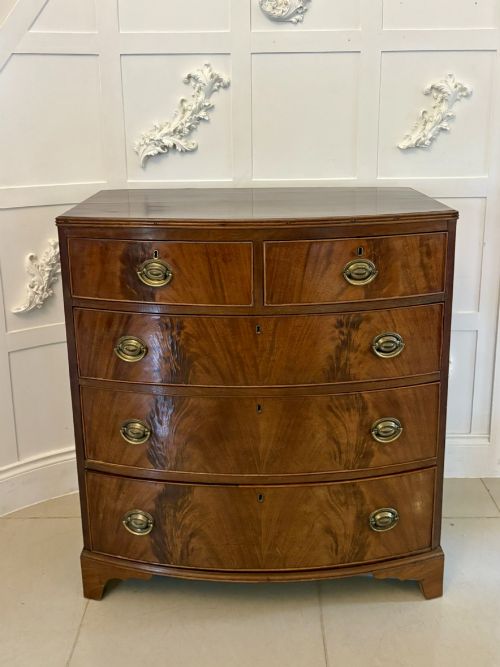
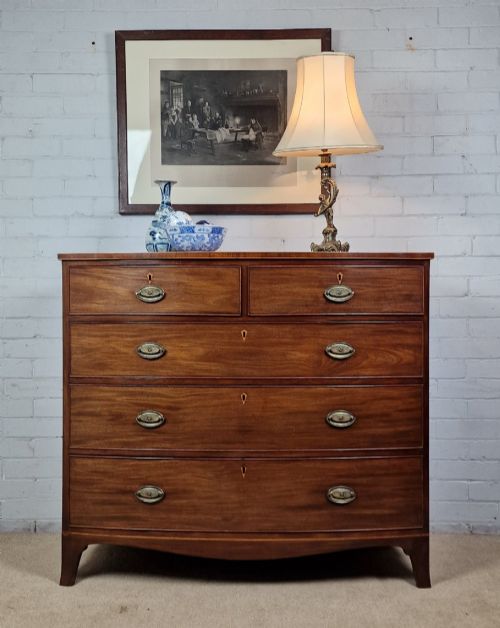
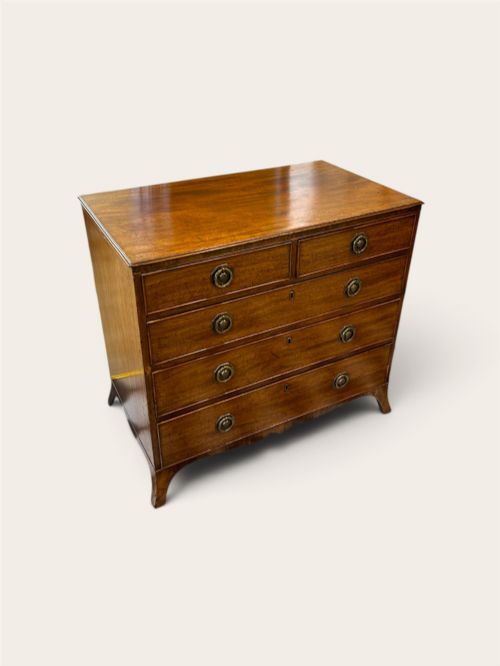

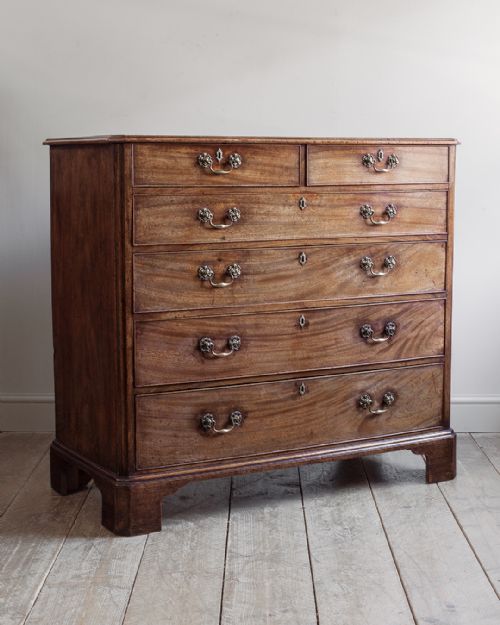
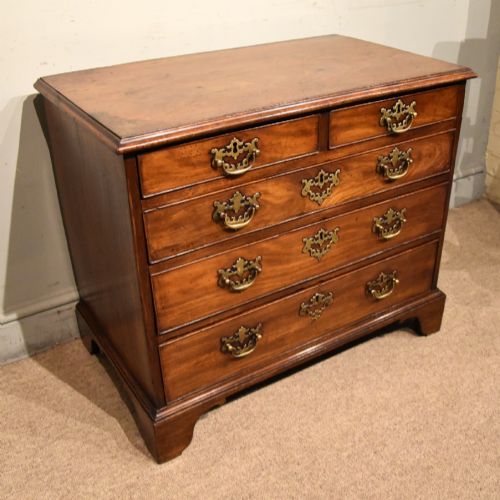
George III Commode Chest
A george iii commode chest brings robust eighteenth-century cabinetry into a room, offering deep storage beneath polished timber tops.
George III Commode Chest
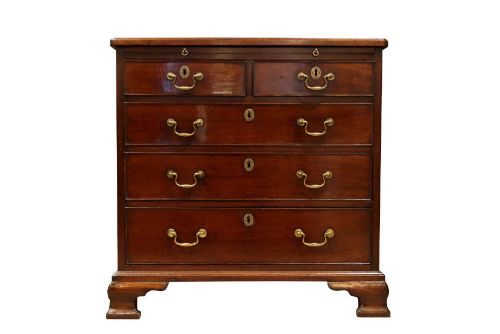
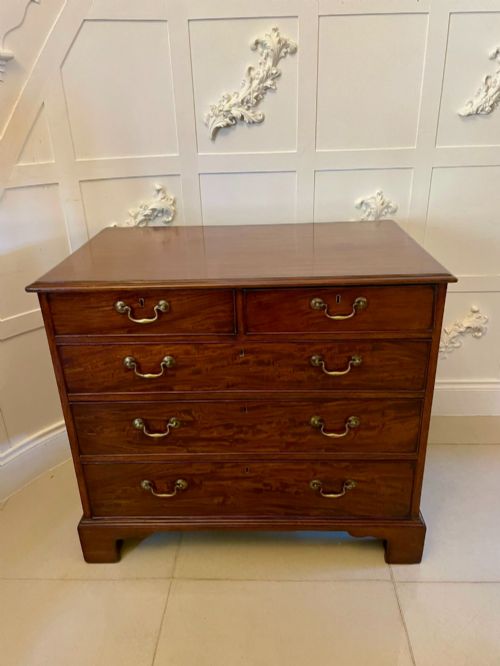
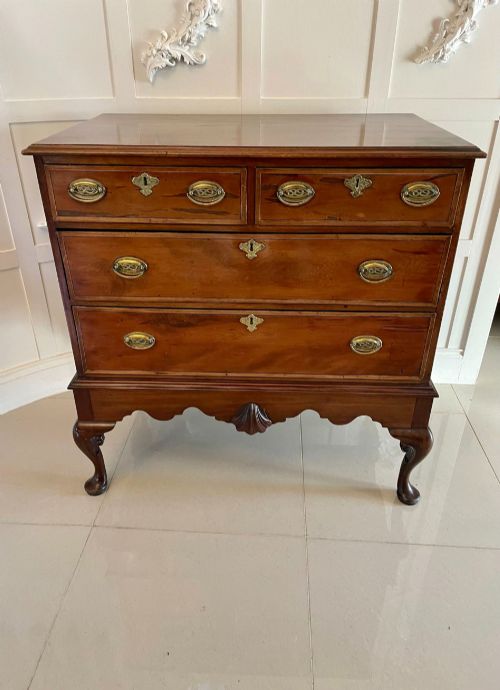
A george iii commode chest functions primarily as a substantial storage unit for textiles and personal belongings, taking the form of a chest of drawers or a bedside cupboard. These pieces originate predominantly from the Georgian period, often reflecting the specific cabinet-making standards of the eighteenth and nineteenth centuries.
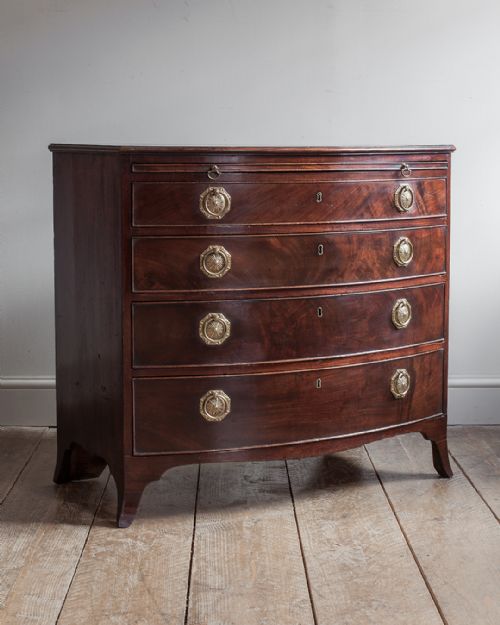
The version most commonly encountered on this page is constructed from mahogany, appearing in straight-fronted, bow-fronted, or serpentine configurations. Examples range from compact bachelor chests equipped with brushing slides to larger multi-drawer formats designed for domestic utility.
Makers and cabinet-makers of the era also produced miniature furniture and occasional tables alongside these standard chest forms. The overarching style adheres closely to Georgian and Regency conventions, maintaining functional integrity across centuries of domestic use.
How they were made
Cabinet-makers of the period relied heavily on solid mahogany, oak, and occasionally satinwood or burr walnut for the primary structure and drawer linings. Timber selection dictated the weight and durability of the piece, with figured grains chosen for prominent display surfaces.
Brass hardware, including swing handles and key escutcheons, was cast and fitted to secure the drawer fronts and doors. Joinery techniques involved precise dovetailing for the drawer boxes, ensuring structural stability that survives through modern restoration.
Several miniature chests appear in the selection, proving that eighteenth-century cabinet-makers also enjoyed showing off their skills on a tiny scale.
What varies in quality
Complexity of form also governs quality, with serpentine and bow-fronted designs requiring advanced woodworking skill compared to straight-fronted carcases. Furthermore, the retention of original brass handles and smooth drawer action indicates superior initial craftsmanship.
The George III Commode Chest Glossary
- Brushing slide
- A pull-out shelf located above the top drawers, traditionally used for folding clothes or writing.
- Bow front
- A convex, curved front profile that projects outward from the centre, common in late eighteenth-century case furniture.
- Serpentine
- A shaped front featuring a convex central section flanked by concave curves, demanding high cabinet-making skill.
- Commode chest
- A hybrid term used in trade and historical records to describe low storage chests and bedside cabinets with enclosed cupboards or drawers.
- Caddy top
- A tabletop style with a raised, moulded edge resembling the lid of a tea caddy.
George III Commode Chest: Frequently Asked Questions
What is a george iii commode chest?
A george iii commode chest is a wooden storage cabinet from the Georgian era, typically featuring multiple drawers or enclosed cupboard space.
These items served practical domestic purposes in bedrooms and dressing rooms, combining utilitarian storage with polished decorative timber.
How do I use one at home?
These chests fit easily into hallways, bedrooms, or living spaces as functional storage for linens, paperwork, or tableware.
The flat top surface also provides a convenient platform for lamps, mirrors, or decorative objects without dominating the room.
Are these chests made of solid wood?
Most examples utilise solid mahogany, oak, or pine for the internal structure and drawer carcases, often faced with fine mahogany or satinwood veneers.
Secondary timbers like oak and pine were standard for drawer linings and backboards during the eighteenth and nineteenth centuries.
How can I tell the period?
Dating relies on observing construction methods, timber choice, and stylistic cues such as bracket feet, handle design, and carcase proportions.
Pieces from the Georgian period typically exhibit hand-cut dovetails and regional timber usage distinct from later nineteenth-century reproductions.