

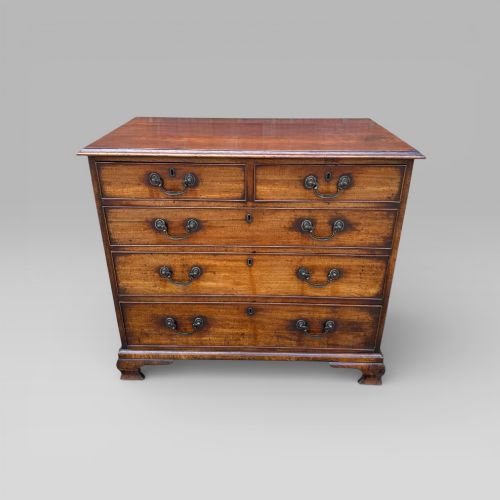


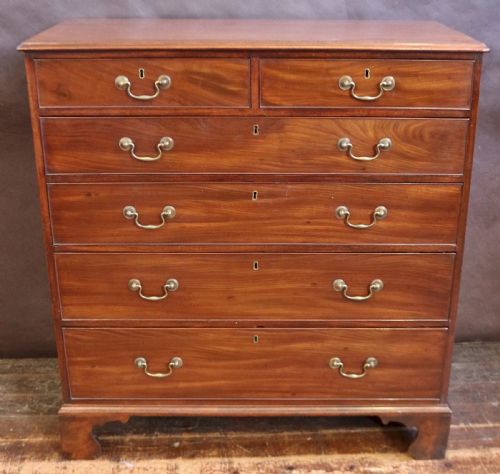




George III Coffer
A george iii coffer is a solid domestic storage piece holding household textiles, silver, or valuables, built during the Georgian era to last.
George III Coffer
A george iii coffer takes several distinct forms across the listings, appearing most frequently as plank-constructed pine or elm blanket boxes, panelled oak coffers, and mule chests fitted with lower drawers. These pieces date from the eighteenth century into the opening years of the nineteenth century, reflecting utilitarian country workshops as well as more polished urban cabinet-makers.
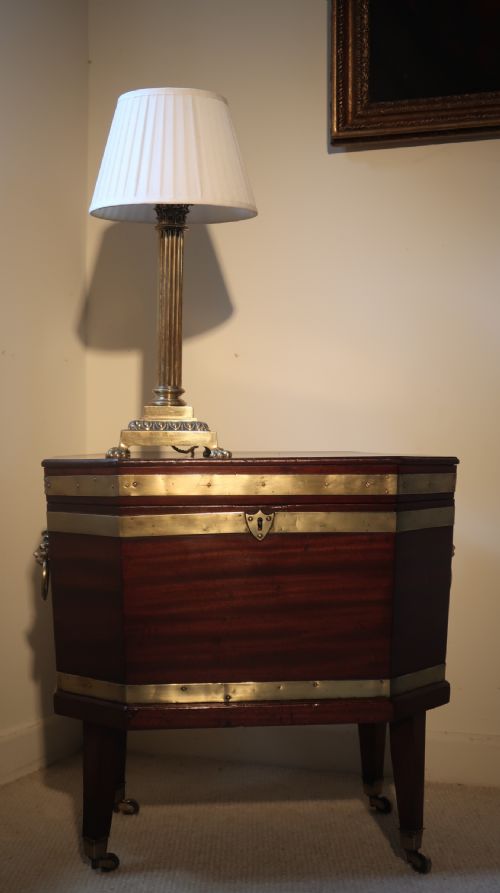
The evidence shows forms ranging from the small Welsh coffer bach and narrow oak boxes to large mahogany examples and specialised cellarettes or silver chests. Oak and elm dominate the earlier country pieces, whilst mahogany and satinwood appear in the more refined domestic interiors of the period.
Materials and Construction
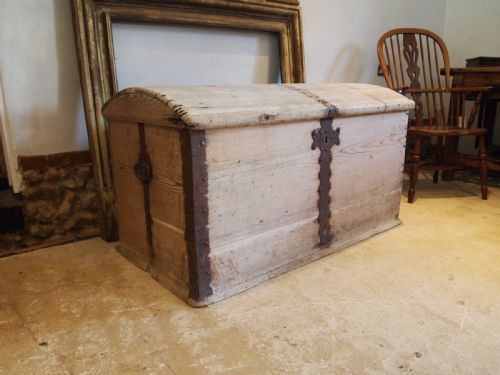
Makers constructed these coffers primarily using native timbers such as oak, elm, pine, and mahogany, frequently utilising simple six-plank joining or traditional frame-and-panel techniques. Iron hardware, brass carrying handles, and metal bindings reinforce the corners and lids of travelling trunks and heavy storage chests.
Surface treatments include plain wax polishing, crossbanding, and occasional carved detailing, while specialised pieces incorporate interior divisions, brushing slides, or integrated stands.
George III Coffer Retail Price Guide 2026
Typical asking prices for george iii coffer among the pieces listed under this phrase on Sellingantiques today, from the lower quarter to the upper quarter. They describe what is for sale here now, not the wider market.
A travelling trunk bound in hide and metal testifies to the bumpy realities of eighteenth-century coaching journeys.
Assessing Quality
Quality rests upon the selection of timber, such as figured elm or dense quarter-sawn oak, and the integrity of the original construction joints. Pieces that retain their original brasses, working locks, and uncompromised internal trays or till boxes command greater respect among collectors.
J Moorcroft·Seabrook of St Pauls London·Colonel Parkinson Lamberts London
The George III Coffer Glossary
- Mule chest
- A storage chest featuring one or more drawers at the base beneath the main lift-top compartment. This form bridges the traditional coffer and the chest of drawers.
- Cofer bach
- A small chest originating in Wales, traditionally constructed in oak or elm to hold personal valuables or linen. These miniature pieces mirror the construction of larger domestic coffers.
- Six plank coffer
- A primitive form of chest constructed from a single board for each side, joined simply at the corners. It represents the earliest and most direct method of box construction.
- Cellarette
- A fitted timber container designed to hold wine bottles or decanters securely during the Georgian period. They often incorporate lead linings and internal partitions.
- Crossbanding
- A border technique where thin strips of veneer are laid around the edges of a surface so the grain runs perpendicular to the centre. This decoration appears on finer mahogany and oak pieces.
George III Coffer: Frequently Asked Questions
What is a coffer bach?
A coffer bach is a small Welsh storage chest built in oak or elm during the eighteenth century.
These miniature boxes typically feature panelled construction and served to hold precious textiles or personal documents.
How do I distinguish a mule chest?
A mule chest combines a traditional lift-top blanket box with one or more drawers built into the base.
This hybrid form emerged to provide easier access to stored garments without requiring items to be lifted entirely out of the top well.
What timber was used most?
Oak and elm form the majority of country pieces, whilst mahogany appears frequently in formal urban examples.
Pine was also utilised extensively for utilitarian storage chests and painted marriage boxes.
How were these chests used?
Households utilised these heavy timber boxes to store blankets, linen, silver, and winter clothing securely.
Heavier trunks with iron or hide bindings were additionally adapted for travel and transporting valuables.