



George III Armoire
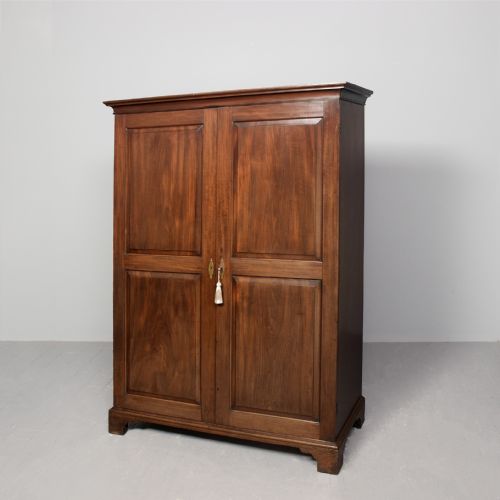
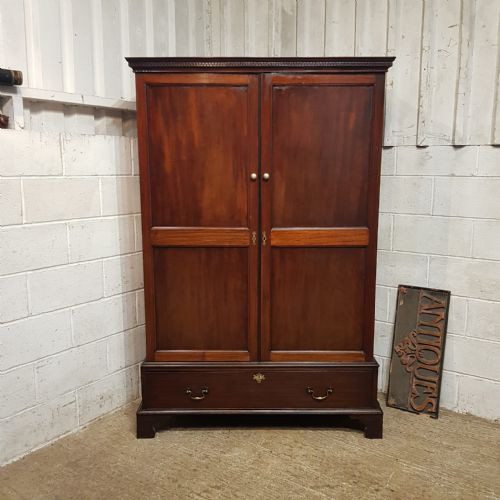
A george iii armoire offers grand proportions and panelled timber doors, housing deep interior shelves designed to store household linens and formal attire.
George III Armoire
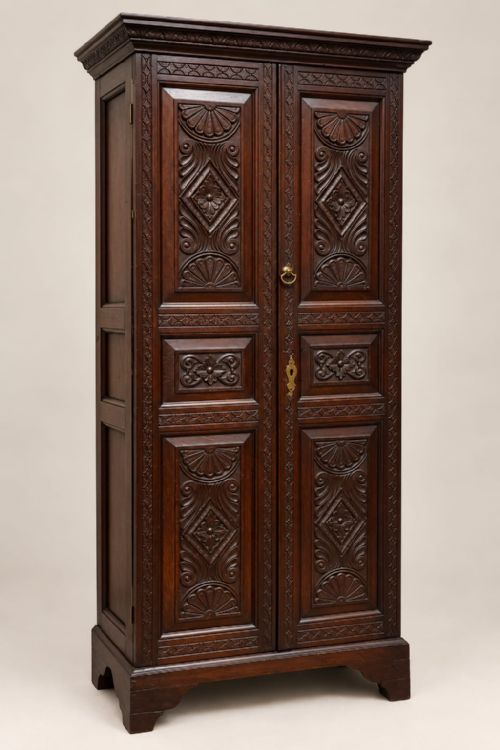
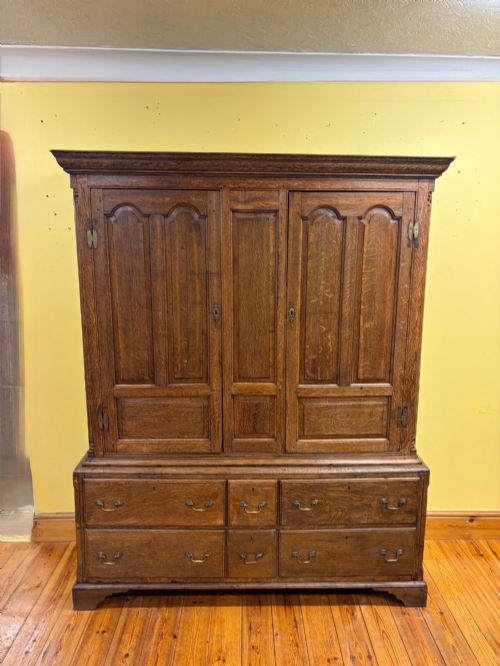
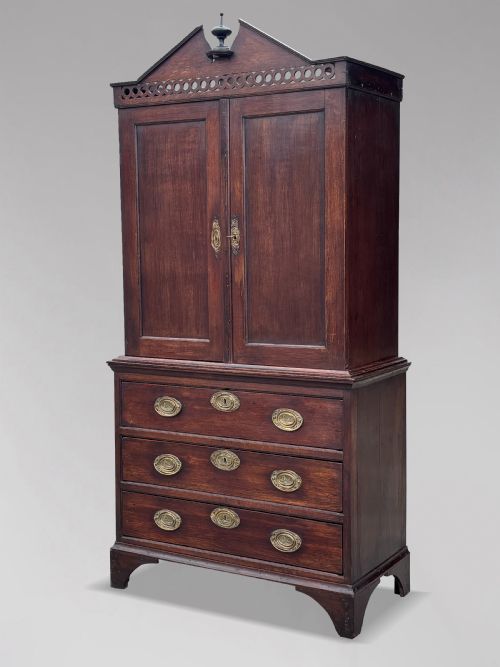
A george iii armoire encompasses large mahogany or oak storage furniture from the eighteenth century, most commonly encountered as fitted linen presses and housekeepers' cupboards.
These items typically combine a hanging wardrobe section or sliding interior trays with lower drawer bases, reflecting the domestic storage needs of the period.
The selection ranges from early geometric oak pieces to later satinwood-banded mahogany cabinets bearing classical architectural details.
How they were made
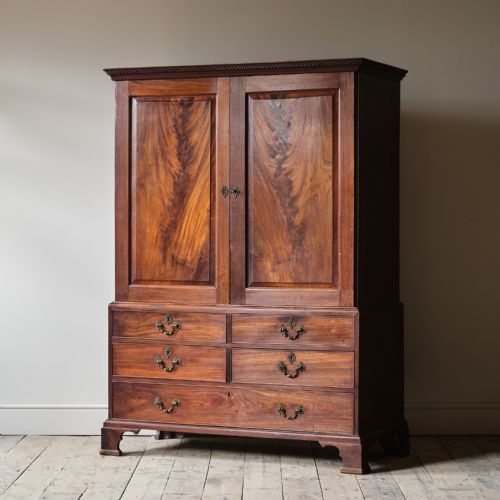
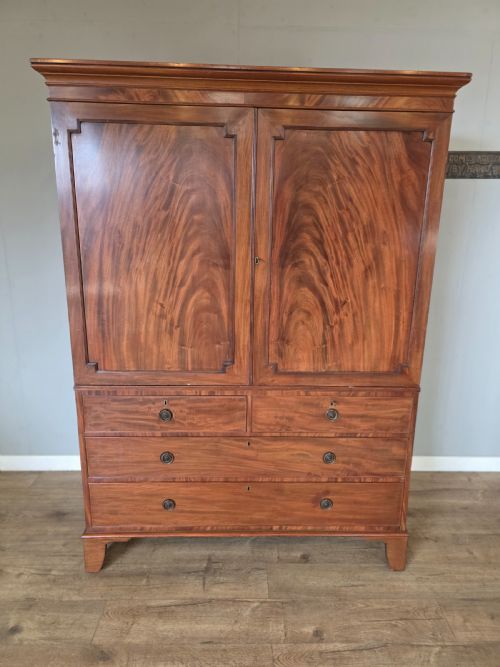
Cabinet makers utilised solid oak and dense mahogany timber, frequently selecting flame mahogany veneers for exterior panels to create striking figured surfaces.
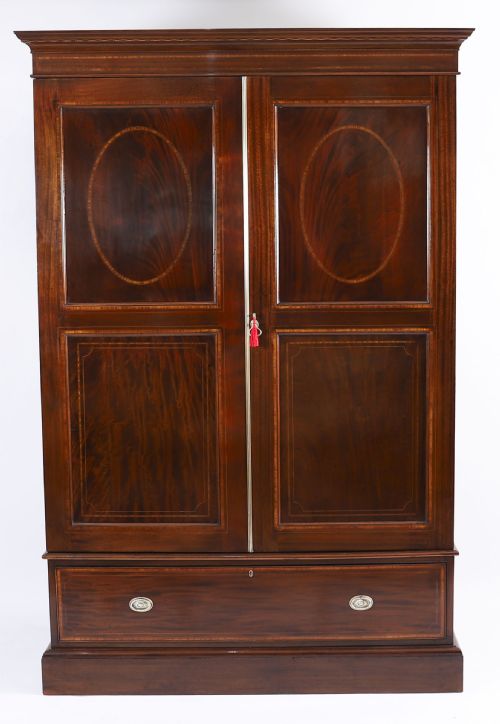
Decorative detailing relied upon contrasting boxwood inlay and satinwood banding, complemented by functional brass hardware and iron fittings.
What varies in quality
The distinction rests upon the choice of timber figurations, such as matched flame mahogany veneers, and the precision of the boxwood inlay work.
Interior architecture also defines the grade, distinguishing standard shelf arrangements from complex estate cabinets fitted with specialised sliding trays.
The George III Armoire Glossary
- Linen Press
- A dual-section storage piece featuring sliding internal trays behind upper doors above a chest of drawers. These trays were originally built to store household textiles flat.
- Breakfront
- A cabinet design where the central section projects forward from the flanking wings. This architectural layout creates depth and shadow across the facade.
- Satinwood Banding
- A decorative inlay technique using narrow strips of pale exotic timber framed around darker drawer fronts or door panels. It provides subtle border contrast.
- Swan-Neck Pediment
- An ornate broken arch top ornament terminating in inward-curving scrolls. This classical feature often crowns the highest point of eighteenth-century case pieces.
George III Armoire: Frequently Asked Questions
What is a george iii armoire?
These large timber storage cabinets date from the late eighteenth and early nineteenth centuries. They were built to hold linens and garments in large homes.
Most examples function as linen presses with sliding trays or fitted interior hanging spaces. Their substantial presence anchors a traditional bedroom or dressing room.
How do I use a linen press?
The upper section contains sliding wooden trays that store folded clothing, blankets, or linens without stacking them too high. The lower chest section provides deep drawer storage for heavier items.
Placing these large cabinets against a solid wall allows the doors to open fully without obstruction. Their generous internal volume makes them practical for modern wardrobe use.
How do I identify a george iii piece?
Examine the timber species, construction joints, and decorative details like satinwood banding or boxwood stringing. Eighteenth-century cabinet work utilises dense mahogany or native oak with hand-cut joinery.
Look for proportions and classical pediment styles typical of the Georgian era. These structural traits separate period originals from later revival interpretations.
Are these pieces made of solid mahogany?
Most case pieces utilise solid timber frames combined with carefully applied mahogany veneers on the primary surfaces. Figured veneers like flame mahogany create decorative grain patterns on the main doors.
Secondary structural timbers inside the drawers and carcass typically consist of oak or pine. This combination prevented warping while presenting an impressive exterior finish.