

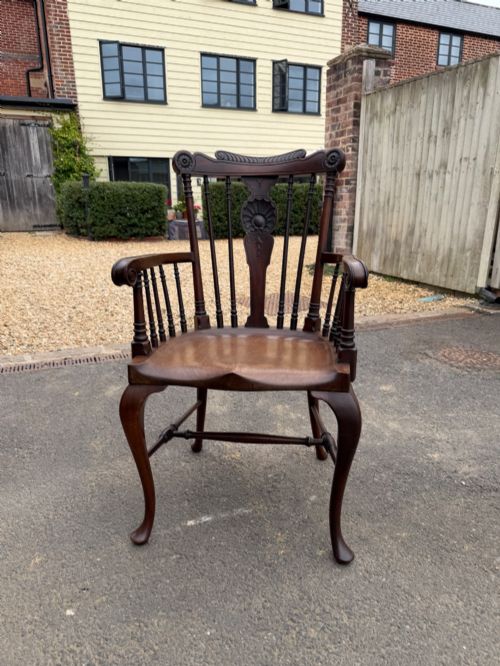


George II Carver Chairs
George ii carver chairs bring robust mid-eighteenth-century proportion and carved mahogany or walnut frames into a modern dining room.
George II Carver Chairs
When buyers search for george ii carver chairs, they encounter sturdy seating designed with open arms for the heads of a dining table. The selection spans genuine eighteenth-century examples alongside later revival pieces from the nineteenth and early twentieth centuries.
Most entries on this page take the form of single armchairs or matched sets of dining chairs featuring open wooden arms. The timber selection relies predominantly on mahogany and walnut, occasionally incorporating burr figuring or distinct regional carving from Irish workshops.
How they were made
Cabinetmakers constructed these frames using solid mahogany and walnut timbers, shaped through precise joinery and hand-carving. Dense hardwoods allowed craftsmen to carve intricate details into chair splats and knees without compromising structural integrity.
Upholstery formed an integral part of the construction, utilising materials like tapestry, velvet, and various textiles fixed over webbed seats. Brass tacking often secured these fabric coverings along the seat rails, adding a metallic border to the cushioned drop-in or padded pads.
George II Carver Chairs Retail Price Guide 2026
Typical asking prices for george ii carver chairs among the pieces listed under this phrase on Sellingantiques today, from the lower quarter to the upper quarter. They describe what is for sale here now, not the wider market.
Listings span the eighteenth, nineteenth, and early twentieth centuries, constructed in mahogany, walnut, and upholstered textiles.
What varies in quality
The crispness of the hand-carving separates standard production from exceptional examples across both original eighteenth-century work and later revivals. Sharply defined acanthus leaves and fluid cabriole lines indicate superior workmanship by skilled carvers.
Timber selection dictates the visual depth of each frame, with figured burr walnut and dense, richly patinated mahogany occupying the upper tier. The integrity of the original joinery and the retention of period upholstery foundations further elevate a piece within the marketplace.
Robert Strahan Dublin
The George II Carver Chairs Glossary
- Carver chair
- An armchair designed to sit at the head of a dining table, featuring open wooden arms. These pieces match larger sets of single dining chairs.
- Cabriole leg
- A furniture leg that curves out and then in, resembling the leg of an animal. This form typically terminates in a pad or claw foot.
- Splat
- The vertical wooden strip down the centre of a chair back. On these chairs, the splat is frequently pierced or shaped in a vase or fiddle outline.
- Revival
- Furniture produced in a later era that copies the style of an earlier period. Nineteenth-century makers frequently revived eighteenth-century designs.
- Burr walnut
- Timber taken from a walnut tree growth featuring swirling grain patterns. This highly decorative wood appears on high-status chair backs.
George II Carver Chairs: Frequently Asked Questions
Are these chairs comfortable for daily dining?
The open arm design provides ample elbow room, while padded upholstery offers a supportive seat for prolonged sitting.
Buyers often pair original carvers with matching single dining chairs to seat guests comfortably around a main table.
How do I distinguish an original from a revival?
Eighteenth-century examples display natural timber oxidation and hand-cut joinery marks beneath the seat frame.
Revival pieces from the Victorian or Edwardian eras generally exhibit machine-assisted construction methods and slightly different secondary woods.
Can I mix walnut and mahogany chairs?
Combining different timbers depends on the room's existing wood tones and the consistency of the chair heights.
Sticking to similar George II proportions ensures that contrasting wood finishes sit harmoniously together in a dining space.
What maintenance do upholstered seats require?
Regular vacuuming around the textile and brass tack borders prevents dust accumulation within the fabric weave.
Preserving the underlying upholstery webbing ensures the drop-in seat pad maintains proper support over decades of use.