
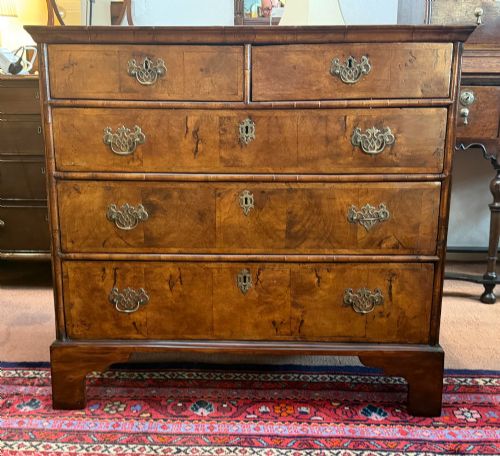
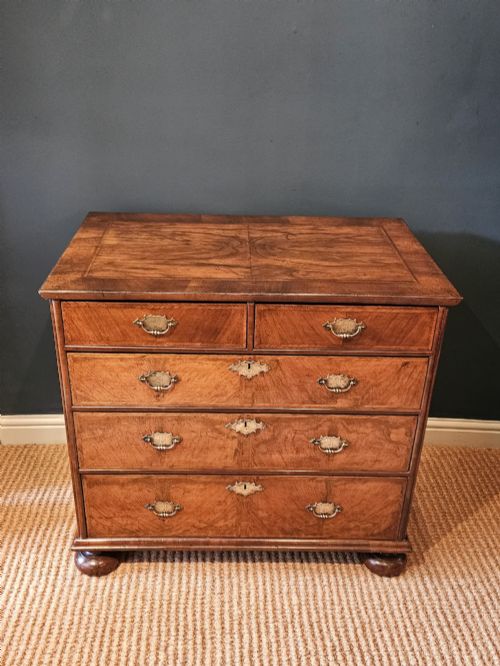
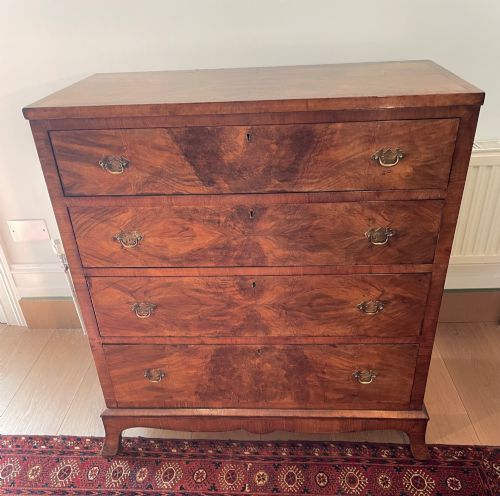
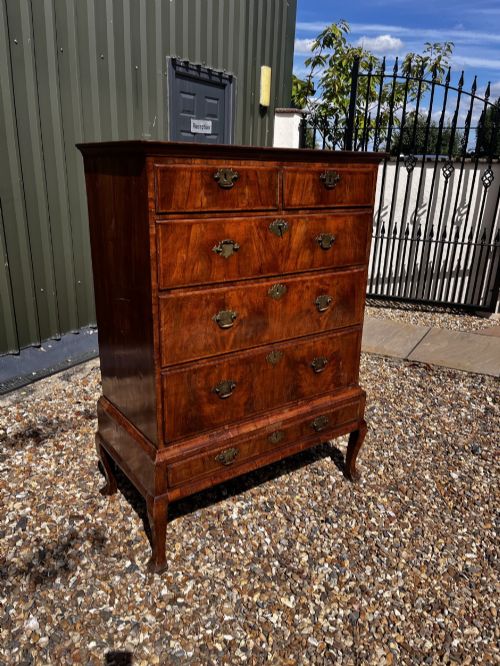
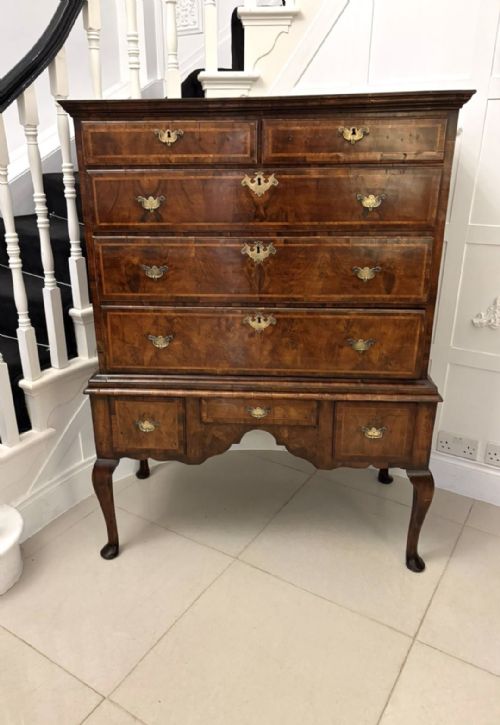
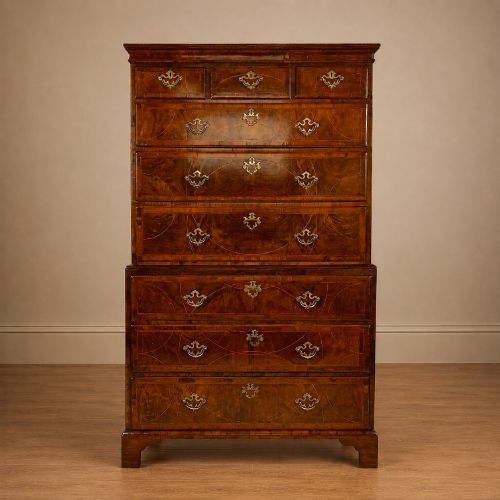
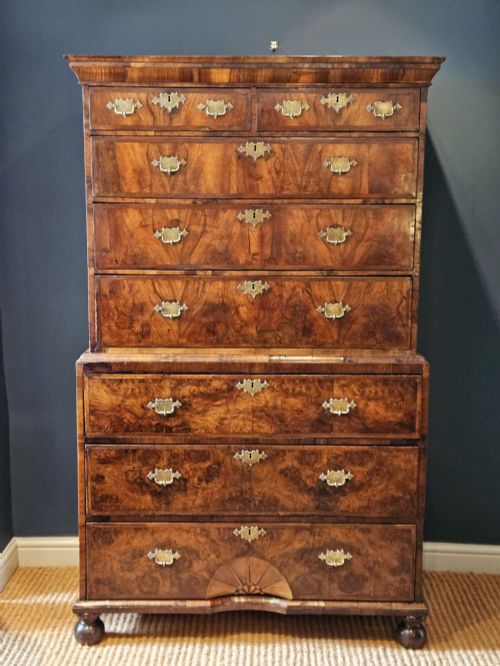
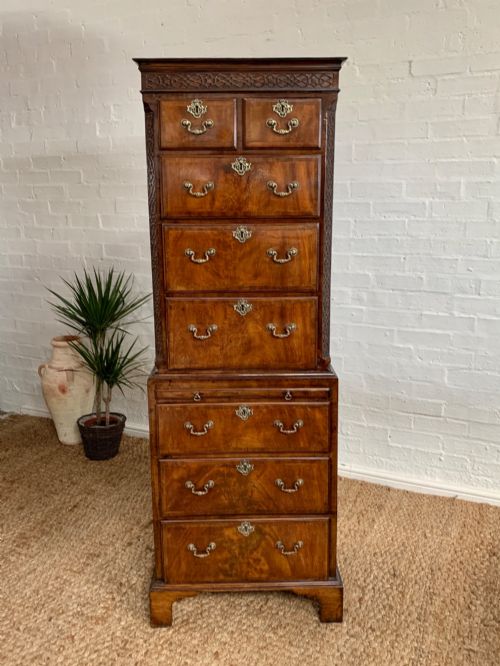
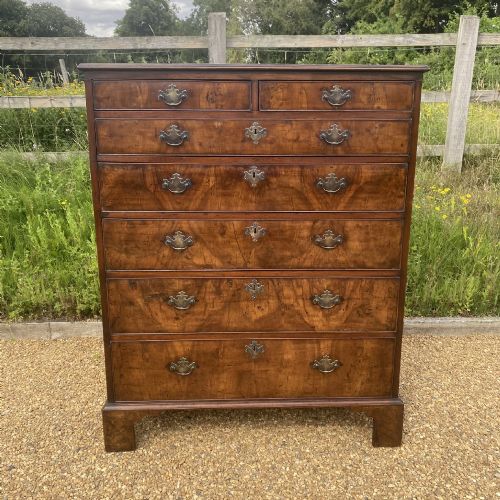
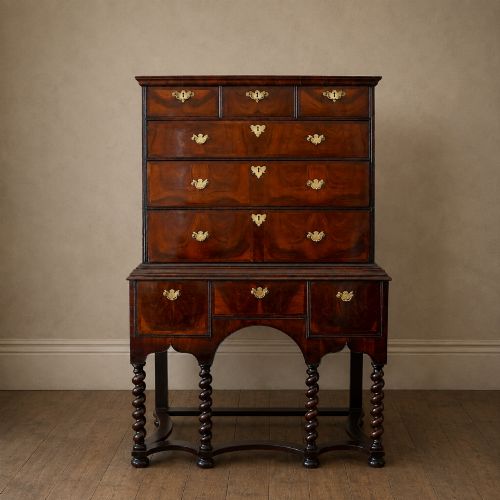
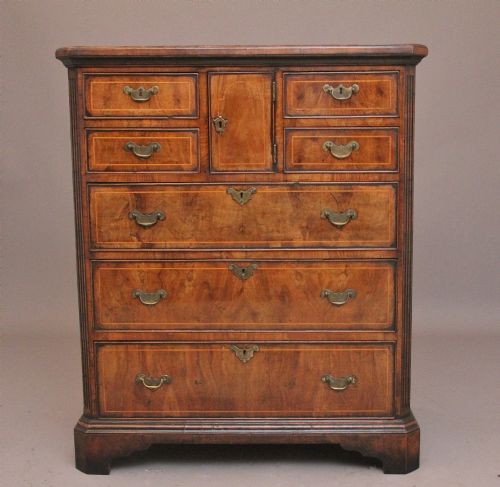
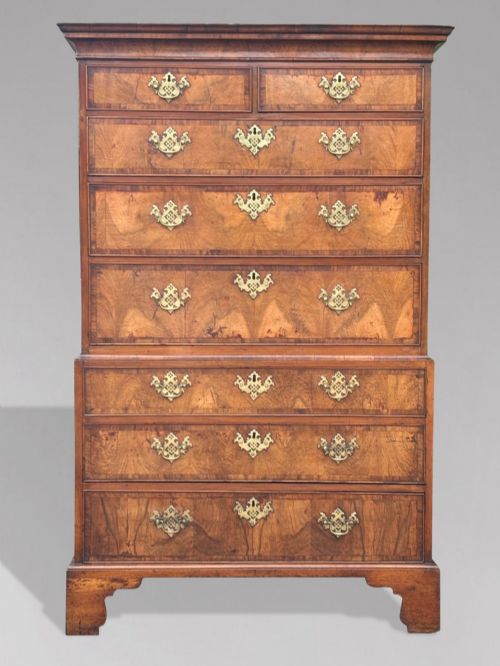
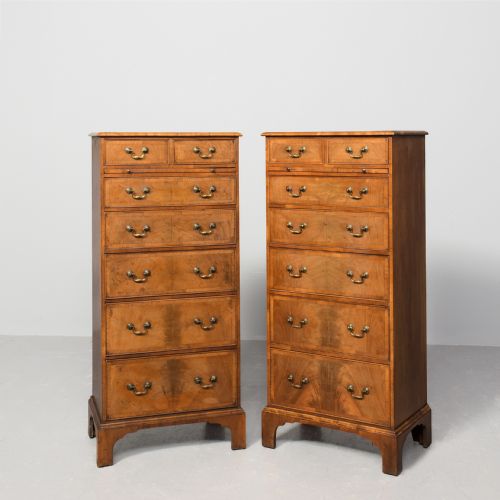

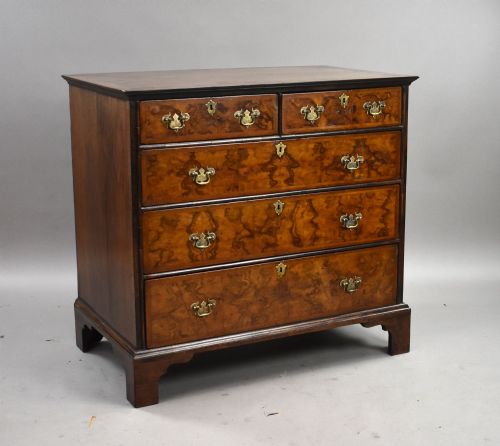

George I Walnut Tallboy
A george i walnut tallboy brings architectural dignity and warm timber grain to a room while providing vertical storage.
George I Walnut Tallboy
A george i walnut tallboy combines two chests stacked one atop the other to create a tall storage piece, often appearing as a chest on chest or a chest on stand. These items originate predominantly from the 18th century, with significant representation from the George I and George II periods alongside later revival pieces.
The versions most common on this page span chests of drawers, chests on stands, and bureau bookcases that utilise walnut and burr walnut timbers. Such pieces reflect the domestic storage needs of early Georgian interiors through fitted drawer arrangements and compact proportions.
Evaluating the Pieces
The visual appeal relies upon the choice of veneer, where highly figured burr walnut or carefully matched oyster veneers create striking grain patterns across the drawer fronts. Subtle decorative additions, such as herringbone banding and sunburst inlays, distinguish finer examples from plain constructions.
Proportion and surface patination dictate desirability, with smaller proportions and undisturbed original timber surfaces representing the upper tier of surviving pieces.
Listings feature walnut, burr walnut, red walnut, and fruitwood, alongside structural oak and pine.
The George I Walnut Tallboy Glossary
- Tallboy
- A tall chest of drawers made in two sections, where a wider chest forms the base and a narrower chest sits on top. It is also frequently referred to as a chest on chest.
- Herringbone banding
- A decorative border made from small veneer strips laid diagonally to form a zigzag pattern. It frames drawer fronts and top surfaces on finer furniture.
- Burr walnut
- Timber taken from a tree growth that produces swirling, knotted grain patterns. Cabinet makers prized this wood for decorative veneer panels.
- Chest on stand
- A form where a chest of drawers rests upon an elevated frame with legs. This configuration appears frequently among early 18th century examples.
- Feather banding
- Inlay work created by cutting veneers diagonally and arranging them to resemble the barbs of a feather. This technique borders drawer perimeters.
George I Walnut Tallboy: Frequently Asked Questions
What is a tallboy?
A tallboy is a vertical chest of drawers built in two stacked sections. The upper section is slightly narrower than the lower base unit.
Cabinet makers developed this form during the early 18th century to maximise storage capacity while occupying a compact floor footprint.
Where should I place a tallboy?
A tallboy suits bedrooms, hallways, or reception rooms where vertical storage is required without taking up excessive floor space. Ensure the room has stable humidity levels to protect the walnut timbers and veneers.
Position the piece away from direct heat sources and sunlight to prevent the timber from drying out or fading over time.
What is the difference between a tallboy and a chest on stand?
A tallboy consists of two enclosed chest sections stacked directly on top of each other. A chest on stand places a single chest section upon an open frame supported by legs.
Both forms offer elevated storage but provide distinct visual silhouettes within early Georgian furniture design.