

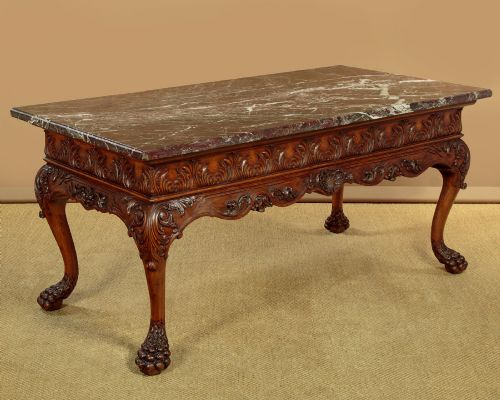


George I Walnut Side Table
A george i walnut side table brings rich timber figure and sturdy proportion to any room, offering a practical surface with period character.
George I Walnut Side Table
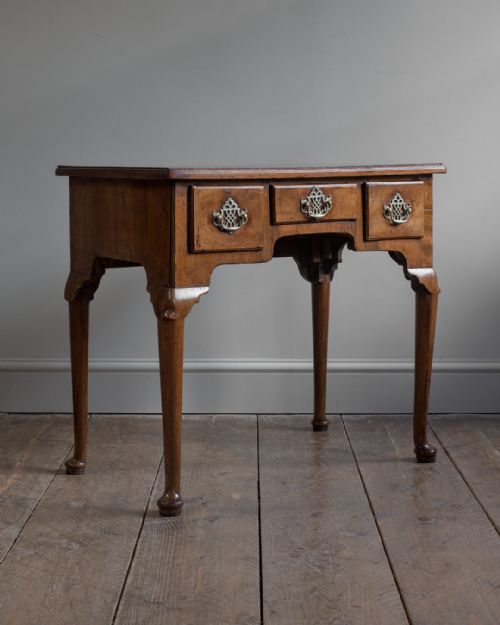
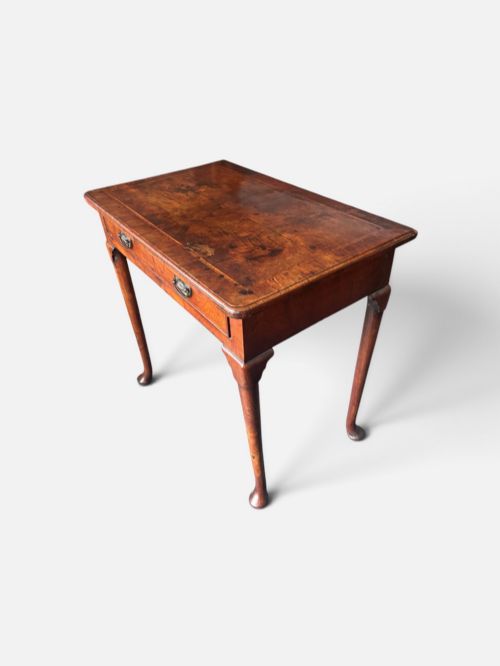
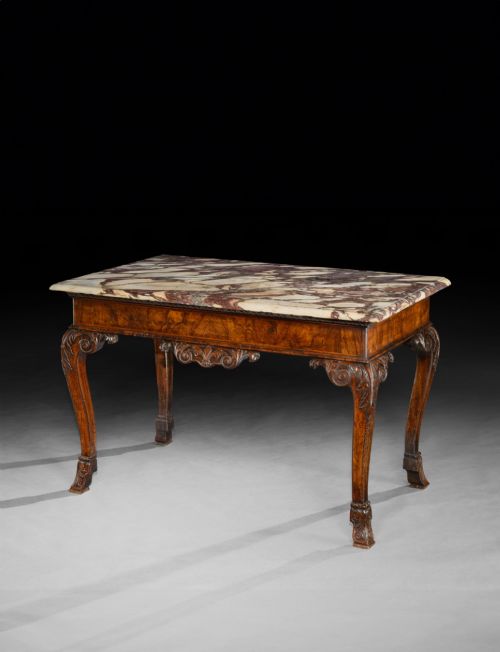
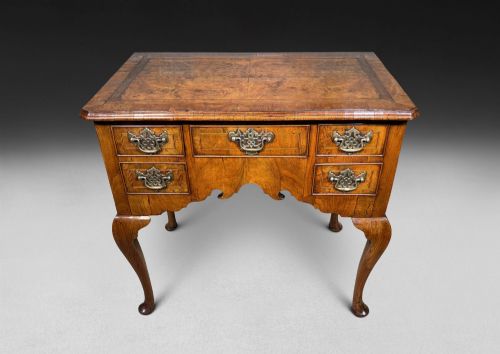
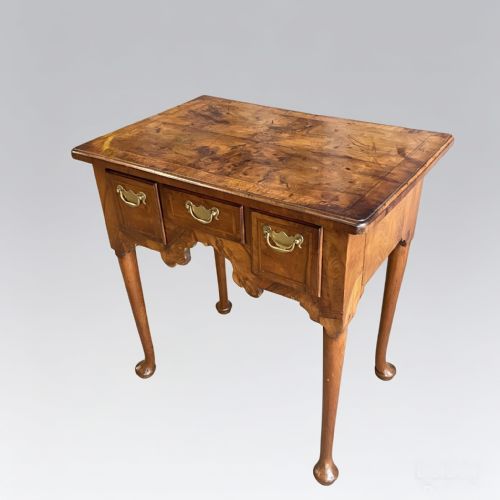
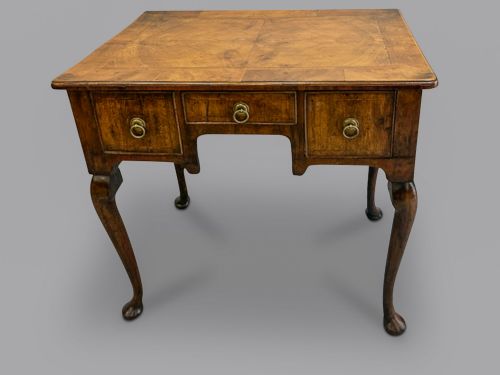
A george i walnut side table generally appears on this page in the form of lowboys, card tables, and occasional tables dating primarily from the eighteenth century. These pieces combine compact proportions with useful drawer space, serving equally well as dressing tables or small serving surfaces.
While the search specifies the George I era, surviving examples span into the George II and George III periods, alongside later nineteenth-century revivals and twentieth-century interpretations. Lowboys dominate the selection, frequently featuring cabriole legs and fitted drawers.
Makers and craftsmen of the period utilised domestic and imported timber, resulting in pieces finished with herringbone inlay, feather banding, or plain figured veneers. Buyers encounter both solid walnut constructions and carcases faced in burr walnut.
How they were made
Cabinetmakers constructed these tables using solid walnut, red walnut, and Virginia walnut, often applying burr walnut or figured veneers to the primary surfaces. Crossbanding in contrasting grain and delicate herringbone inlay frequently framed drawer fronts and tabletops.
Secondary timbers provided internal structure for drawers and carcases, whilst brass drop handles and escutcheons secured the fittings. Joinery relied on traditional hand-cut dovetails for drawer construction and tenon joints for the frame.
George I Walnut Side Table Retail Price Guide 2026
Typical asking prices for george i walnut side table among the pieces listed under this phrase on Sellingantiques today, from the lower quarter to the upper quarter. They describe what is for sale here now, not the wider market.
Several lowboys retain their original handles, having survived centuries of daily drawer pulling without a single modern replacement.
What varies in quality
The choice of timber creates a distinct separation across these tables, with highly figured burr walnut and intricate herringbone banding commanding greater visual depth than plain grain surfaces. Original handles, untouched patination, and crisp carving on cabriole legs further distinguish superior examples from standard workshop output.
Structural integrity depends upon the survival of the original timber framing and the minimal intervention of later repairs. Tables retaining their early drawer linings and undisturbed polish display a unified appearance that heavily influences collector interest.
W.F. Greenwood and Sons York
The George I Walnut Side Table Glossary
- Lowboy
- A small dressing table or side table featuring one or more rows of drawers beneath a flat top, typically raised on tall cabriole legs.
- Herringbone inlay
- A narrow band of veneer laid in alternating diagonal patterns resembling the bones of a fish, used to border drawer fronts and tabletops.
- Burr walnut
- Timber sliced from the warty growths on walnut trees, yielding intricate, swirling grain patterns highly prized for decorative veneering.
- Cabriole leg
- A furniture leg that curves outward at the knee and tapers inward toward the foot, mimicking the shape of an animal limb.
- Feather banding
- A decorative inlay formed by cutting veneers at an angle and arranging them to meet in a central V-shaped line resembling a feather.
George I Walnut Side Table: Frequently Asked Questions
What is a lowboy used for?
A lowboy served historically as a small dressing table for personal grooming or as a side table for holding small domestic items. Today, people use them in hallways, bedrooms, or living spaces as accent tables with storage.
The compact footprint allows these tables to fit into narrow spaces while providing surface area and drawer capacity.
How do I spot a George I table?
Early eighteenth-century tables typically feature restrained proportions, rich walnut timbers, and cabriole legs that often terminate in pad feet. Detail work like herringbone inlay and feather banding points toward this early period of cabinetmaking.
Later pieces often incorporate stylistic shifts from the George II and George III eras, altering the leg profiles and edge mouldings.
Are these tables made of solid walnut?
Construction methods varied, with makers utilising solid walnut alongside carcases faced in figured, burr, or red walnut veneers. Secondary timbers were often employed for drawer linings and internal framing.
The choice of veneer allowed craftsmen to display dramatic grain patterns across the main surfaces of the table.
How do I care for antique walnut?
Antique walnut requires stable indoor humidity and protection from direct sunlight to prevent the timber and veneers from drying out or fading. Gentle dusting with a dry cloth maintains the finish without stripping the historic wax patination.
Avoid placing these tables near direct heat sources or damp areas to preserve the integrity of the early joinery.