





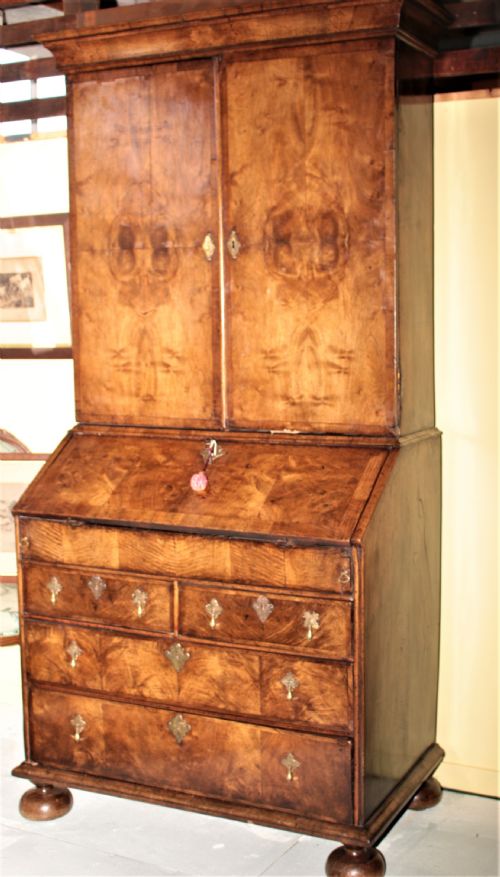


George I Walnut Bookcase
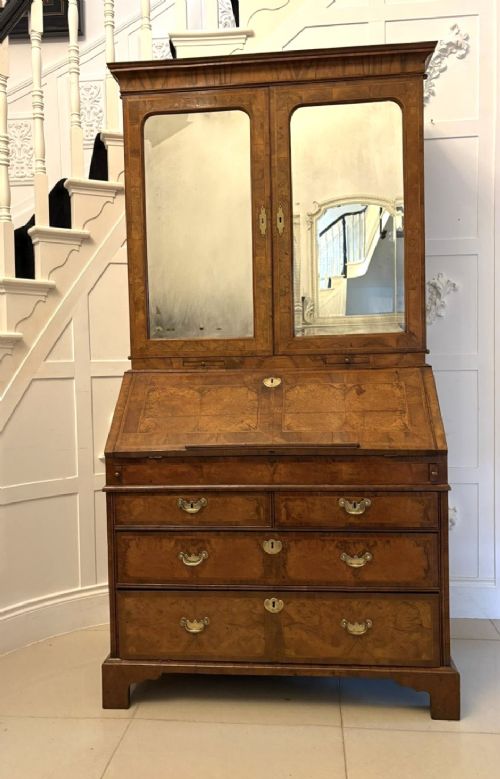
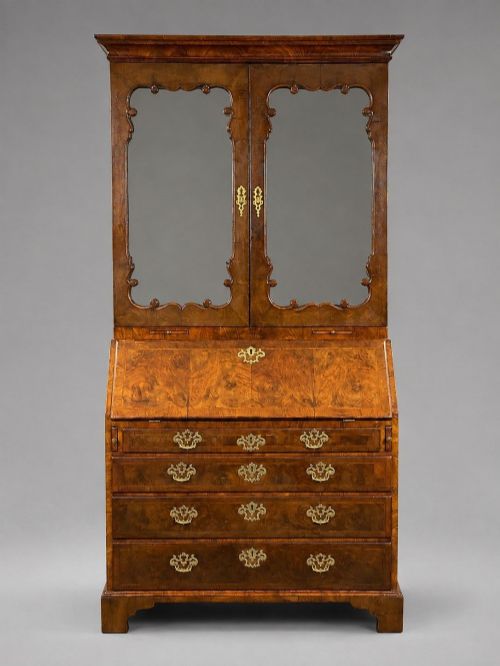
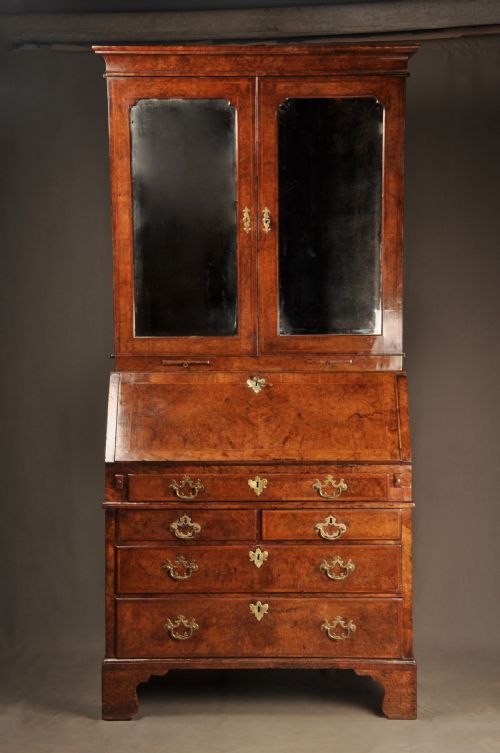
A george i walnut bookcase brings architectural presence and figured grain into a room, combining a glazed upper cabinet with a fitted writing desk below.
George I Walnut Bookcase
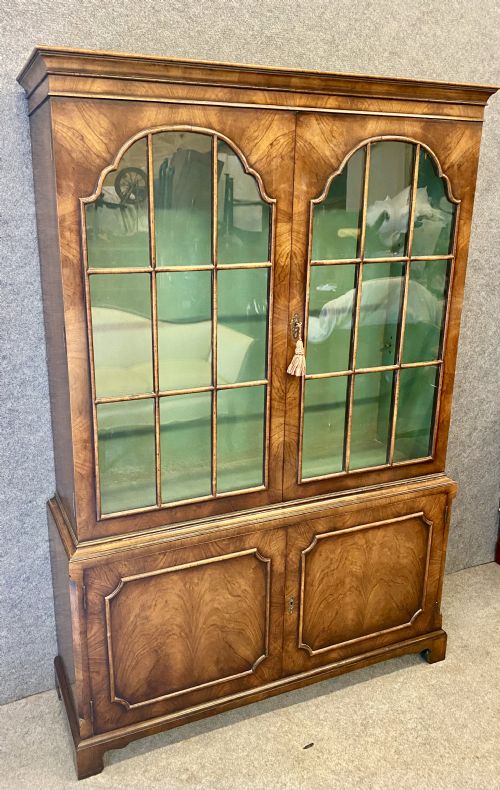
When you search for a george i walnut bookcase, you encounter tall architectural furniture designed for storing volumes and concealing correspondence. The bureau bookcase form dominates the records, alongside secretaire cabinets and corner cupboards.
Most examples date from the eighteenth century, with periods spanning the seventeenth century through to George III, alongside later revival pieces from the late nineteenth and early twentieth centuries.
Materials and Construction
Cabinetmakers constructed these pieces using solid oak and pine carcases faced with walnut veneers, frequently selecting burr walnut for its swirling grain patterns.
Makers utilised contrasting timbers and decorative techniques such as herringbone banding to frame the drawer fronts and door panels.
Fittings include brass drop handles, escutcheons, and mirror glass or plain glazed upper doors, sometimes accompanied by pull-out candle slides.
George I Walnut Bookcase Retail Price Guide 2026
Typical asking prices for george i walnut bookcase among the pieces listed under this phrase on Sellingantiques today, from the lower quarter to the upper quarter. They describe what is for sale here now, not the wider market.
Listings demonstrate materials including solid walnut, burr walnut, red walnut, mulberry, oak, and brass, spanning the eighteenth century to the 1920s.
Grading Quality
The visual strength of a george i walnut bookcase rests upon the selection and matching of the veneer figures across the fall-front and doors.
Proportion dictates the standing of a piece, with smaller scale cabinets and those retaining their original three-section construction commanding particular attention.
The complexity of the internal fitments, such as secret compartments within the bureau section, separates standard production from superior examples.
Maple and Co
The George I Walnut Bookcase Glossary
- Burr walnut
- A prized veneer taken from the gnarled growths of the walnut tree, yielding complex, swirling grain patterns. It forms the primary decorative surface on higher grade eighteenth-century furniture.
- Bureau bookcase
- A cabinet combining a sloping writing flap with shelving enclosed by upper doors. This hybrid form provides both workspace and display capacity.
- Herringbone banding
- A narrow strip of veneer laid in alternating diagonal patterns to frame drawer fronts and panels. It creates a subtle border that highlights the central grain.
- Candle slide
- A pull-out wooden board mounted beneath the upper doors to hold lighting for the writing surface. These emerge from the waist moulding of early desks.
- Secretaire cabinet
- A piece of furniture featuring a dedicated writing drawer or pull-out compartment rather than a sloping fall-front. They offer enclosed desk facilities within a chest or bookcase frame.
George I Walnut Bookcase: Frequently Asked Questions
What is inside a bureau bookcase?
The upper section contains adjustable shelves behind glazed doors for housing books and display items. The lower bureau portion opens to reveal a writing surface above an arrangement of pigeonholes and small drawers.
Many interiors include concealed compartments or document wells tucked behind the central door. This fitted architecture kept correspondence and valuables secure.
How do I distinguish walnut from mahogany?
Walnut displays a warmer, golden-brown hue with varied grain patterns ranging from straight figuring to dense burr swirls. It absorbs light differently than the deeper, reddish tones typical of later timbers.
Early eighteenth-century pieces often feature cross-banding and decorative stringing that accentuate the lighter walnut background.
Where were these bookcases placed?
These tall cabinets stood in principal rooms such as libraries, withdrawing rooms, and studies where owners managed correspondence and displayed valued libraries. Their imposing height demanded prominent wall placement.
Smaller proportioned examples and corner cupboards accommodated more compact domestic spaces while maintaining functional storage.
Are later revival bookcases authentic antiques?
Pieces produced during the late nineteenth and early twentieth centuries follow earlier eighteenth-century forms closely. They utilise period styles but reflect the manufacturing methods and timber availability of their own decades.
Examining internal construction methods and timber ageing helps differentiate these revival pieces from original eighteenth-century items.