
George I Dining Table
A george i dining table carries the quiet domestic weight of early eighteenth century craftsmanship into contemporary spaces.
George I Dining Table
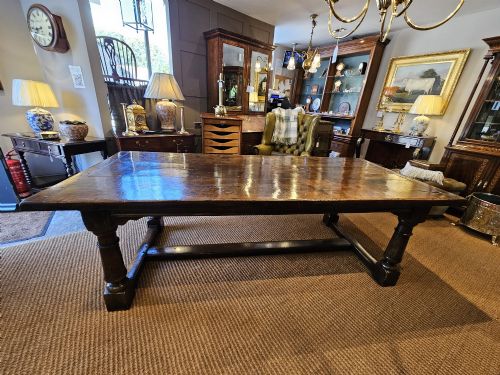
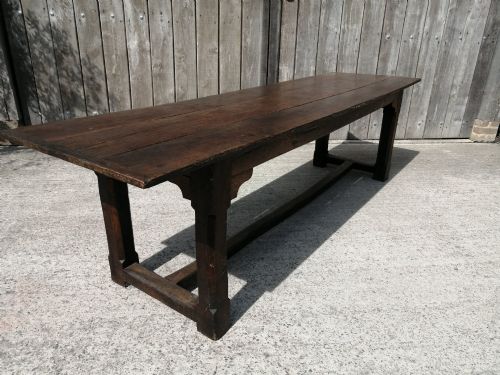
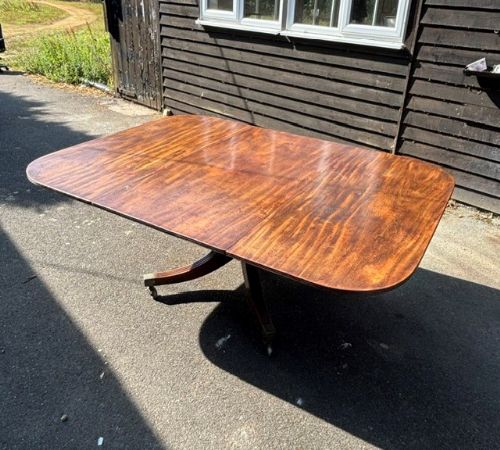
A george i dining table search uncovers early timber furniture alongside later pieces spanning the georgian eras and subsequent revivals. The surviving examples frequently take the form of drop leaf tables or solid refectory boards constructed from native woods.
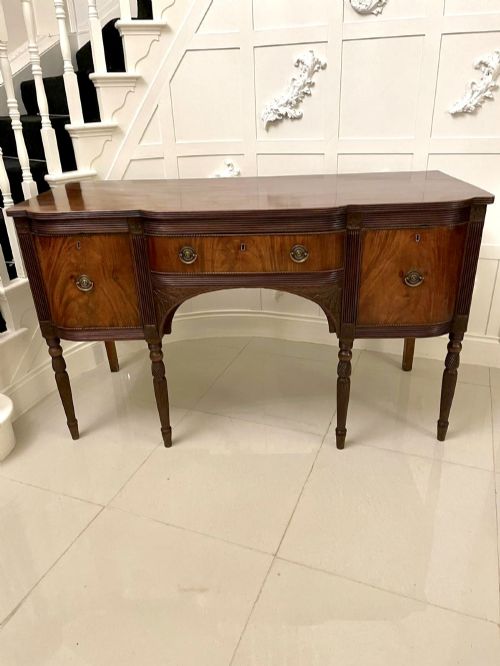
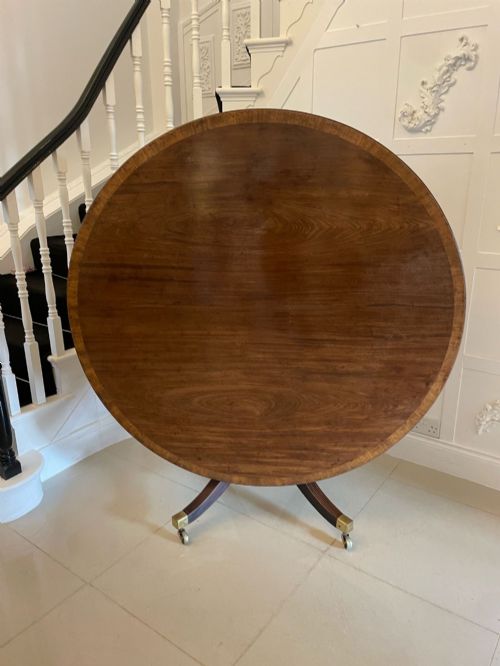
Buyers encountering these forms will notice substantial oak, elm or dense mahogany timbers shaped with understated legs and traditional feet. While the search specifies an early eighteenth century monarch, the inventory naturally includes related dining furniture from adjacent decades.
Construction and timber
Cabinetmakers built these tables using solid native hardwoods like oak and elm, later shifting towards imported mahogany for larger formal dining surfaces. Joints relied on pegged mortise and tenon construction or sturdy gateleg actions designed to support dropping leaves.
Surfaces were hand finished and polished to reveal the natural grain of the wood without heavy synthetic lacquers. Brass fittings and hinges appeared on operable leaves and pull out mechanisms where extension was required.
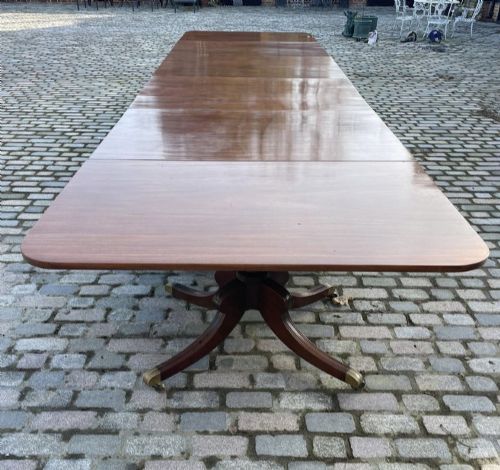
Listings combine early eighteenth century oak and elm examples with substantial mahogany dining furniture from subsequent georgian decades.
Judging build and survival
The standard of a table rests upon the thickness of the primary timber top and the original integrity of its underframe and leg joints. Pieces that retain their genuine surface patination and untouched structural framing sit at the upper end of the scale.
Lower quality or heavily restored examples suffer from replaced sections of timber, unstable gateleg hinges or shaved legs that alter the original height. The crispness of carved details on cabriole legs or pad feet further separates standard workshop output from finer cabinetmaking.
The George I Dining Table Glossary
- Refectory table
- A long narrow dining table traditionally used for communal dining in large halls. These sturdy items utilise heavy wooden beams and fixed stretchers for stability.
- Drop leaf table
- A table with a fixed central section and hinged flaps that fold down on either side. Supporting swing legs pull out to hold the extended leaves.
- Cabriole leg
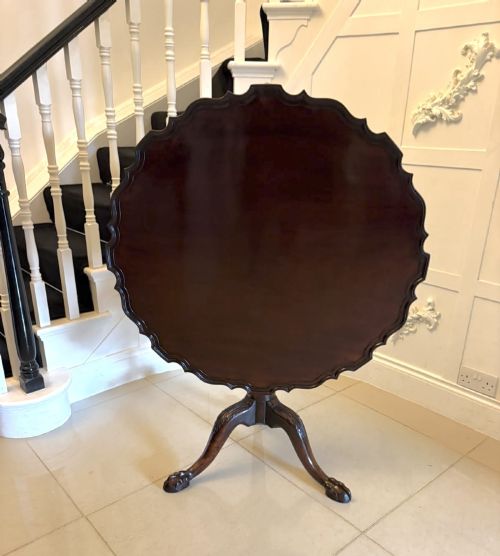
- A furniture leg that curves outward in a convex arc and then bends inward in a concave arc, mimicking animal limbs. It frequently terminates in a pad or claw and ball foot.
- Gateleg table
- A table featuring swinging legs that pivot outward like a gate to support folding leaves. This mechanism allows a compact surface to expand significantly.
- Patina
- The deep gloss and mellow surface texture developed by wood over centuries of use and polishing. This quality indicates age and careful handling.
George I Dining Table: Frequently Asked Questions
How do I seat guests comfortably?
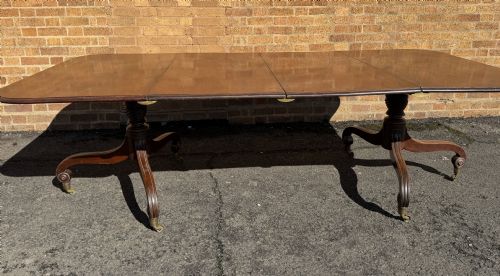
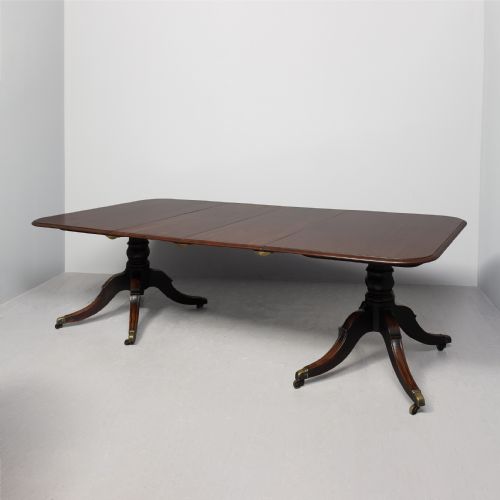
Many of these period tables accommodate multiple diners through drop leaves or modular pillar extensions. Selecting the right scale depends on measuring your available dining room clearance.
Larger refectory and multi pillar formats easily host eight or more people. Checking the leg clearance beneath the apron ensures chairs tuck away properly.
Are these tables suitable for daily use?
Hardwood dining furniture from these centuries was built for robust domestic service. Daily meals require sensible precautions like using heat mats and avoiding harsh chemical cleaners.
Applying natural beeswax preserves the historic timber finish against minor moisture marks. Regular gentle polishing maintains the protective surface layer without stripping the old wood.
How do I identify early oak pieces?
Early oak furniture displays characteristic medullary rays which appear as small silvery flecks across the grain. The timber weight is substantial and joinery employs visible wooden pegs rather than modern steel screws.
Colouration on genuine early pieces ranges from deep honey tones to dark chocolate brown. Examining the underside reveals tool marks and hand planed surfaces consistent with period hand manufacture.
What is the difference between drop leaf and pillar tables?
Drop leaf variants rely on folding flaps supported by pivoting wooden gates to vary table width. Pillar tables utilise central wooden columns resting on stable feet to hold single solid tops.
Pillar designs often allow more unhindered legroom around the perimeter of the seating area. Drop leaf versions fold down flat for compact storage against a wall when not hosting meals.