



George I Cabriole Stool
A george i cabriole stool brings sculptural grace and enduring structural integrity to a room, offering versatile seating rooted in eighteenth-century design.
George I Cabriole Stool
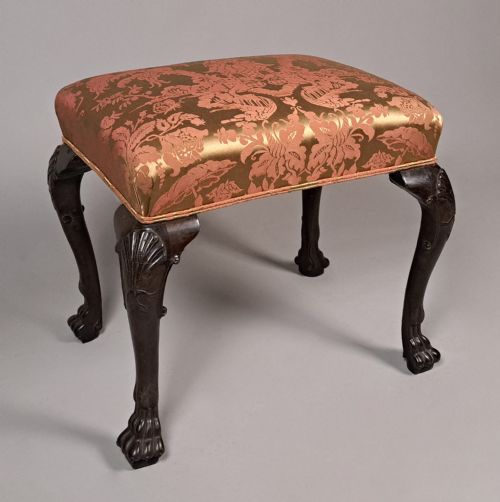
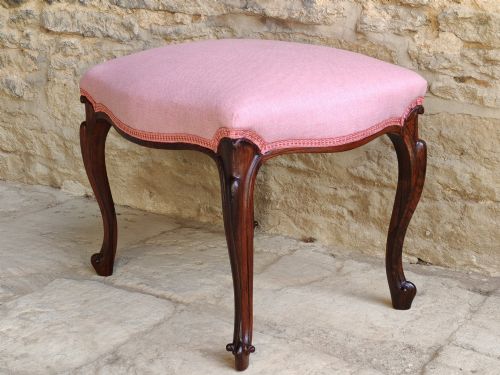
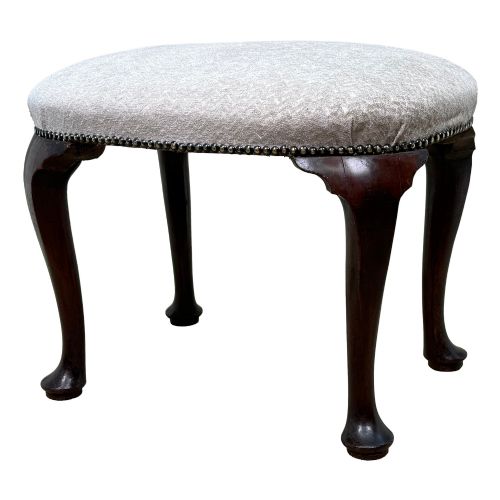
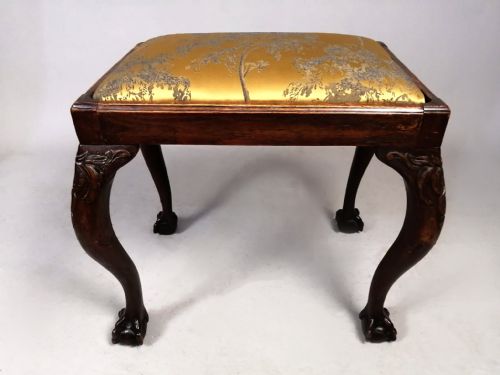
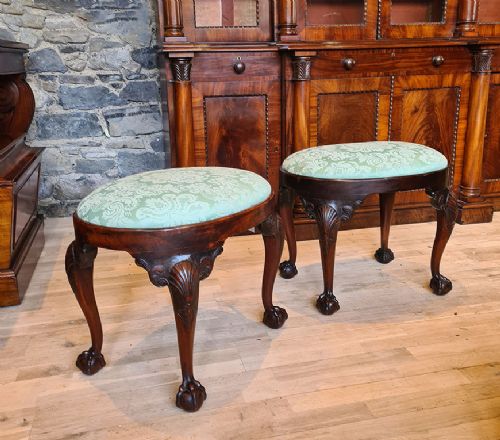
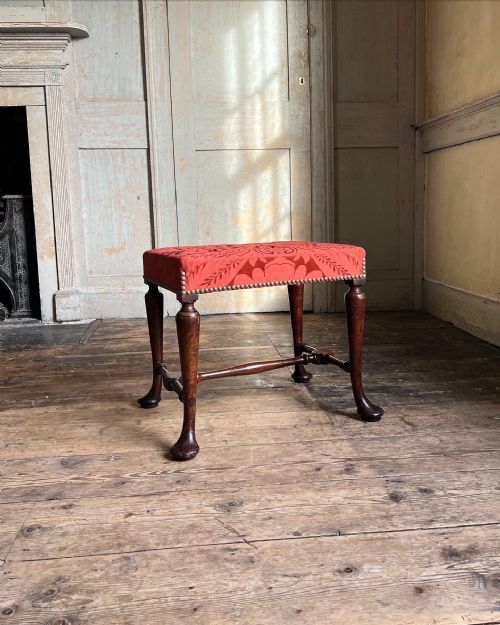
A george i cabriole stool is a low seating form defined by curving legs that sweep outward at the knee and taper inward toward the foot. The pieces gathered here span genuine eighteenth-century examples from the George I and subsequent Georgian periods, alongside later nineteenth-century revivals.
The most common formats on this page include walnut and mahogany frames supporting upholstered seats covered in fabric, velvet, silk, or tapestry. Forms range from compact oval and rectangular shapes to larger ottomans and serpentine designs.
Buyers encounter both period originals and later nineteenth-century revival pieces from the Victorian and Edwardian eras. These later interpretations adopt the classic cabriole leg configuration and timber palette of the earlier Georgian centuries.
Materials and Construction
Cabinetmakers constructed these stools primarily using dense hardwoods such as walnut and mahogany, with occasional examples in elm and oak. Timber selection dictated the strength required for the curving leg profile.
Frames incorporate traditional joinery to support the downward pressure on the curved legs, frequently terminating in hoof feet or pad feet. Seat bases receive textile coverings including silk, brass-accented velvet, and embroidered tapestry.
George I Cabriole Stool Retail Price Guide 2026
Typical asking prices for george i cabriole stool among the pieces listed under this phrase on Sellingantiques today, from the lower quarter to the upper quarter. They describe what is for sale here now, not the wider market.
Several stools sit upon six cabriole legs instead of the usual four, creating an unusually stable platform for eighteenth-century lounging.
Distinctions in Quality
Quality rests in the fluidity of the leg curvature and the crispness of any carved ornamentation on the knees and frame. Superior examples display harmonious proportions where the sweep of the leg balances the mass of the seat.
The choice of primary timber and the execution of the joinery mark the division between standard production and finer cabinet work. Original period surfaces and untouched timber patination elevate an individual piece above later revivals.
The George I Cabriole Stool Glossary
- Cabriole leg
- A furniture leg that curves outward at the knee and inward at the ankle, mimicking animal limbs. This form became a defining characteristic of early eighteenth-century seating design.
- Hoof foot
- A carved terminal at the base of a cabriole leg shaped to resemble an animal hoof. It provides a solid point of contact with the floor.
- Serpentine shape
- A line or edge that curves outward then inward in a continuous wave. This contour appears on the seat rails of more elaborate eighteenth-century forms.
- Tapestry
- A heavy hand-woven or embroidered textile used historically for upholstery. These decorative coverings often feature pictorial or floral motifs.
George I Cabriole Stool: Frequently Asked Questions
Where do people use these stools?
These stools function as movable seats near fireplaces or beneath windows in traditional living spaces.
Owners also utilise them as footstools alongside armchairs or as low accent tables carrying trays.
How do I spot a revival piece?
Revival pieces dating from the nineteenth or early twentieth century often display machine-sawn timber grain and standardised turning.
Period pieces from the eighteenth century show hand-tool marks and timber shrinkage consistent with age.
What woods were used?
Walnut and mahogany dominate the construction of these stools across both original and revival periods.
Cabinetmakers also selected elm, oak, and rosewood for specific regional or later nineteenth-century commissions.
How should I clean the fabric?
Textile and velvet upholstery requires gentle surface dusting with a soft brush to remove accumulated particles.
Historical silk and tapestry components benefit from professional textile conservation rather than domestic washing.