
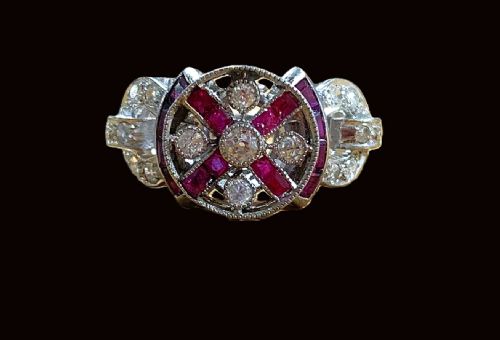


Geometric Ruby Cocktail Ring
A geometric ruby cocktail ring is a striking statement jewel, most commonly found in bold Art Deco designs featuring vibrant gemstones.
Geometric Ruby Cocktail Ring
A geometric ruby cocktail ring is a bold hand ornament designed to command attention during social gatherings. Buyers seeking this style will mostly encounter pieces created during the Art Deco period, alongside occasional Retro Modern examples.
The selections on this page centre on dress rings and cluster rings shaped by strong architectural lines and contrasting colour. Origins span from the Edwardian era through the nineteen twenties, nineteen thirties, nineteen forties, and into the nineteen fifties.
Materials and construction methods
These rings are constructed using durable precious metals such as platinum, eighteen carat white gold, standard eighteen carat gold, and fourteen carat yellow gold. Platinum and white gold provide a crisp, industrial backdrop favoured for setting stones flush.
Vibrant rubies are paired with diamonds, including rose cut stones, to build high contrast patterns. Master jewellers set these gems into cluster configurations, checkerboard layouts, and heavy tank styles that define the period look.
Assessing quality and craftsmanship
Quality in these jewels rests on the precision of the stone setting and the architectural balance of the metalwork. Superior examples display meticulously matched diamond and ruby carat weights that enhance the overall geometric impact.
The distinction between standard and finer pieces lies in the complexity of the cluster layout, such as elongated profiles and intricate metal milling. Robust shank construction and clean lines separate top tier cocktail rings from ordinary dress pieces.
The Geometric Ruby Cocktail Ring Glossary
- Cluster ring
- A ring featuring a central gemstone surrounded by a cluster of smaller stones, typically diamonds encircling a ruby. This layout maximises visual presence on the hand.
- Art Deco
- A design style spanning the nineteen twenties and thirties characterised by sleek geometric shapes, stylised symmetry, and industrial influences. It remains the defining aesthetic for these rings.
- Retro Modern
- A bold jewellery style from the nineteen forties and fifties featuring heavy gold work and tank style designs. Pieces from this era lean into volumetric shapes.
- Rose cut
- An antique diamond cut featuring a flat base and a faceted dome that resembles an opening rosebud. This cut imparts a soft, romantic glow compared to modern brilliant facets.
Geometric Ruby Cocktail Ring: Frequently Asked Questions
What is a geometric ruby cocktail ring?
A geometric ruby cocktail ring is a statement hand ornament defined by angular lines, sharp symmetry, and vibrant red stones. These jewels were originally worn to evening parties during the twentieth century.
Today, they function as bold dress rings that showcase the architectural design preferences of the periods in which they were made.
How do I wear a cocktail ring daily?
Wearing a cocktail ring daily requires mindful care due to the prominence of the central stone cluster and delicate metalwork. Pair your ring with simple attire to let the geometric design stand out without snagging on clothing.
Remove the piece during heavy manual tasks to protect the platinum or gold setting and keep the rubies secure.
How can I tell Art Deco from Retro rings?
Art Deco rings from the nineteen twenties and thirties rely on platinum and white gold with flat, linear geometries and openwork frames. They prioritise sharp contrasts and delicate stone arrangements.
Retro rings from the nineteen forties and fifties shift towards yellow gold and heavy volumetric forms like the tank style, trading linear restraint for robust curves.
What metals were used for vintage cocktail rings?
Vintage cocktail rings primarily utilise platinum, eighteen carat white gold, standard eighteen carat gold, and fourteen carat yellow gold. Platinum was heavily favoured during the Art Deco era for its strength and bright finish.
Later periods introduced warmer yellow gold tones, particularly in heavier dress and tank designs.