
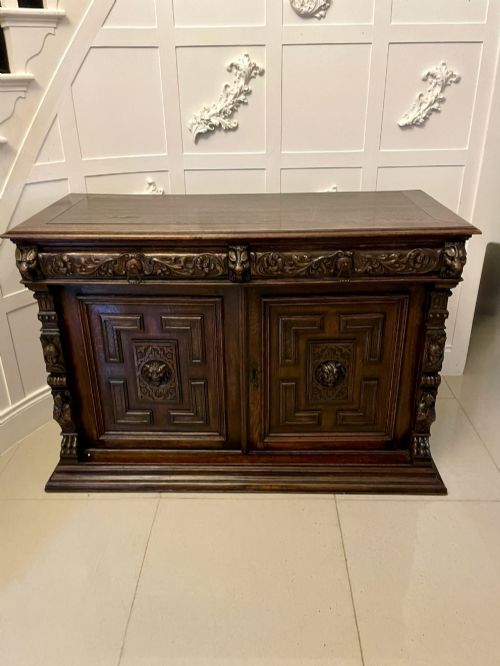
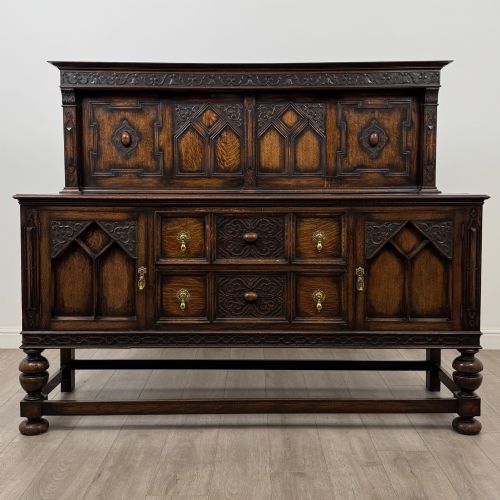
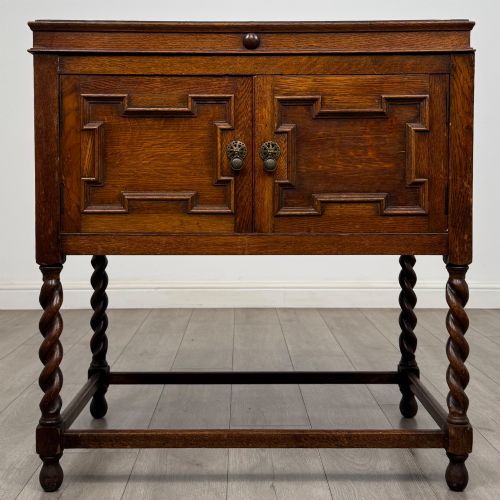
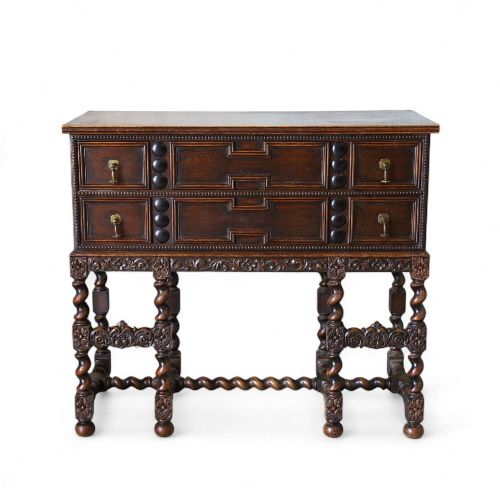


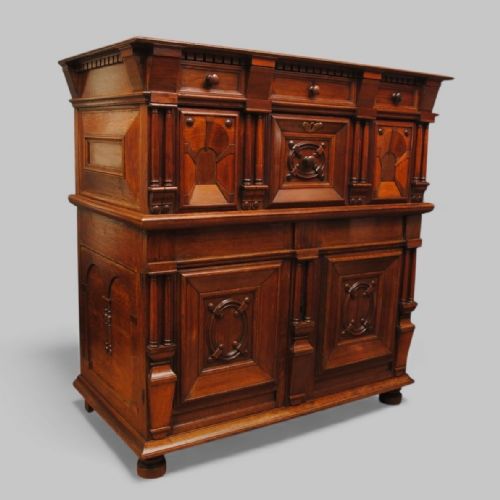
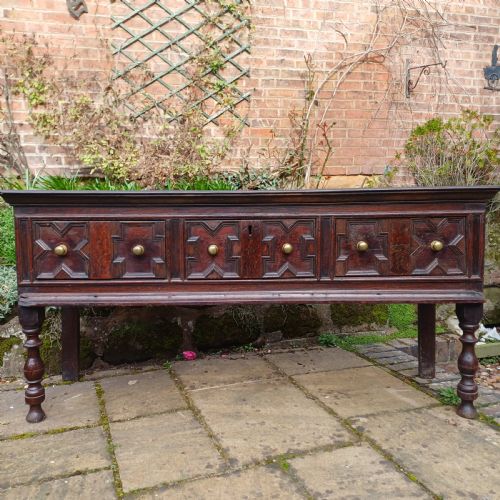


Geometric Panelled Sideboard
These geometric panelled sideboards bring robust timber framing and sharp geometric mouldings straight into a room.
Geometric Panelled Sideboard
A geometric panelled sideboard combines heavy timber construction with striking relief work across the front elevations and doors. You will find these pieces spanning the seventeenth century through to the revival periods of the nineteenth and twentieth centuries.
The versions most commonly met on this page include seventeenth-century English dresser bases alongside Edwardian and 1930s revivals. These forms serve as practical storage units while displaying prominent moulding and panel detailing.
Makers drew on Jacobean, Carolean, and Georgian traditions to produce servers, low dressers, and cupboards. Oak remains the predominant structural timber across these diverse periods and styles.
Distinguishing quality
Quality rests upon the crispness of the geometric mouldings and the integrity of the primary timber. Pieces featuring intricate carved detail, well-figured oak, and harmonious proportions stand apart from simpler utilitarian builds.
The integration of period-appropriate hardware and the stability of the original framing dictate the overall standard. Greater refinement shows in the precision of the mitred panels and the preservation of early surfaces.
Oak is the dominant material recorded across the inventory, accompanied by walnut, fruitwood, and iron.
The Geometric Panelled Sideboard Glossary
- Geometric moulding
- Raised wooden strips applied in repeating angular patterns to flat surfaces. This technique defines the visual character of the drawer and door fronts.
- Dresser base
- A low utilitarian table fitted with drawers and occasionally cupboards beneath. These items provided essential storage in early domestic kitchens and dining spaces.
- Jacobean revival
- A nineteenth and twentieth-century design movement copying seventeenth-century English styles. It utilises dark oak, heavy turnings, and rectangular panelling.
- Barley-twist
- A turned wooden column resembling a spiralling rope. This decorative support appears frequently on revival furniture from the nineteenth and twentieth centuries.
Geometric Panelled Sideboard: Frequently Asked Questions
What is a geometric panelled sideboard?
It is a heavy timber storage unit characterised by angular wooden mouldings arranged in decorative patterns across the doors and drawers.
These items range from genuine seventeenth-century examples to later revival pieces produced in the nineteenth and twentieth centuries.
Where were these sideboards used?
They originated in domestic dining spaces, halls, and kitchens to store serving dishes, cutlery, and provisions.
Today they function equally well in modern interiors as principal sideboards or serving tables.
How do I date a sideboard?
Dating relies on examining the timber species, joinery techniques, and the style of the hardware and mouldings.
Seventeenth-century pieces display hand-riven boards and pegged joints, whereas revival items often incorporate machine-cut elements and twentieth-century fasteners.
Are these pieces made of solid oak?
The majority of the listings feature solid oak construction, sometimes accented with fruitwood, walnut, or painted surfaces.
Secondary timbers may appear in secondary areas like drawer linings and backboards.