


Geometric Marquetry Side Table
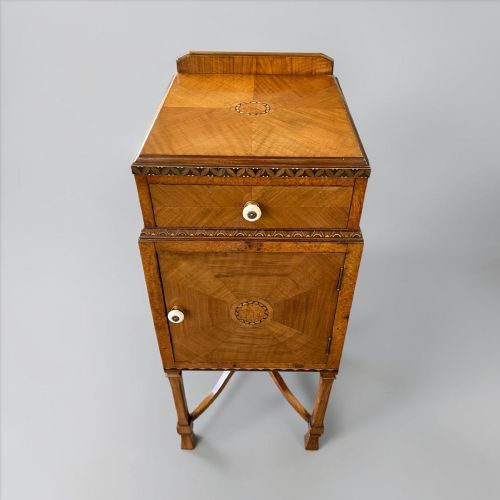
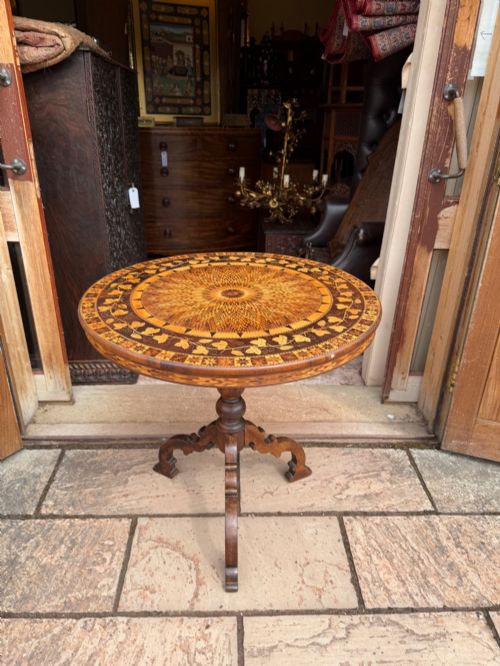
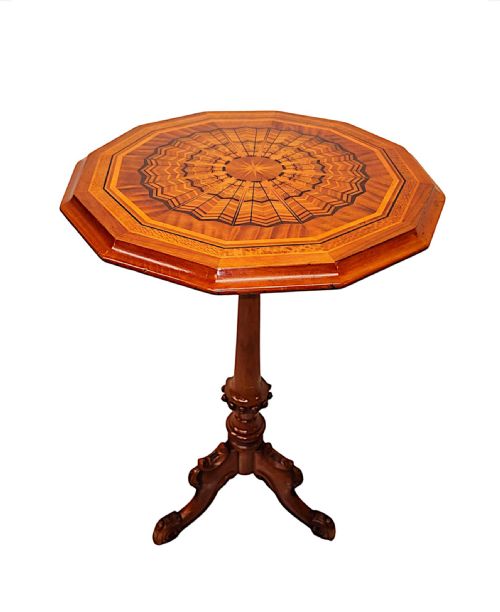
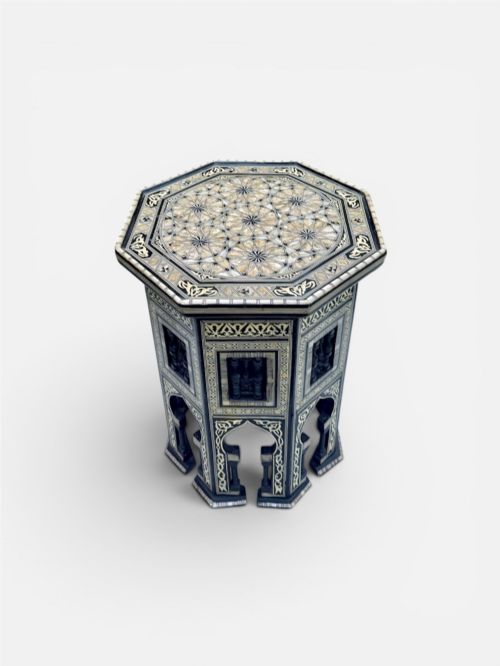
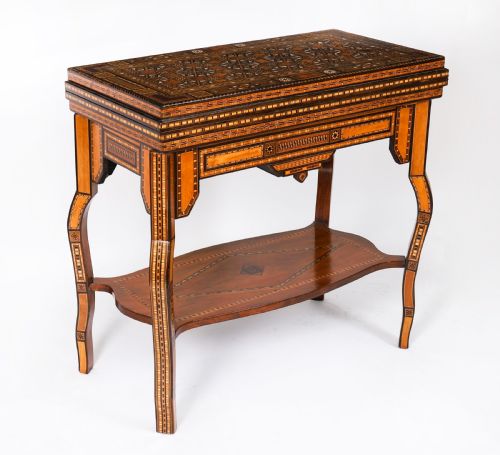
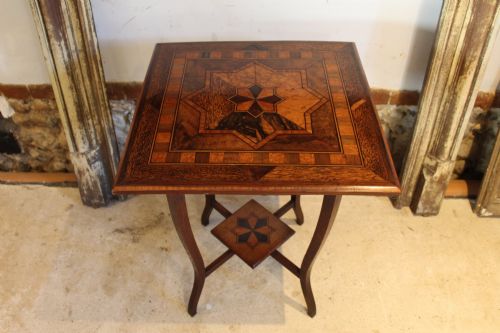
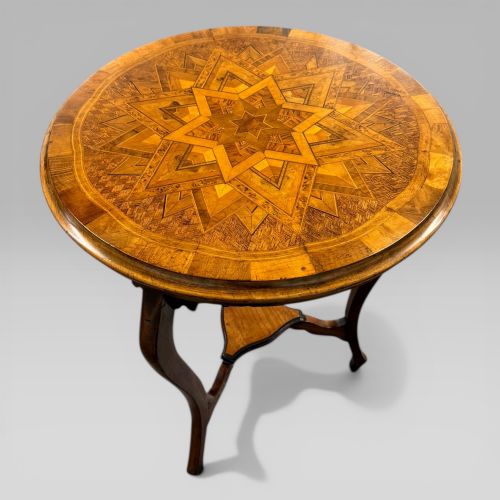
These geometric marquetry side tables are fitted timber pieces combining patterned veneer tops with compact frames, selected for surface detail.
Geometric Marquetry Side Table
A geometric marquetry side table brings together patterned timber veneers and compact proportions intended for domestic placement. When you browse this selection, you encounter forms ranging from circular pedestal tables to octagonal occasional pieces and nests of tables. These surfaces serve multiple functions as lamp tables, games tables, or bedside stands.
The objects span several centuries and regions, showing Victorian, Edwardian, and Art Deco influences alongside Italian Sorrento, Moorish Revival, and New Zealand specimen wood traditions. Walnut, rosewood, oak, and satinwood form the primary foundations for these designs. Walnut and satinwood appear frequently among the 19th-century and early 20th-century items.
You will notice variations in shape, including hexagonal and octagonal tops, tripod bases, and folding card tables. Many examples originate from European workshops, while others reflect colonial production in New Zealand or Middle Eastern mother-of-pearl inlay work. Each format adapts the patterned top to a specific functional role within a room.
How they were made
Cabinet makers constructed these tables using a solid secondary timber frame, such as oak, mahogany, or walnut, which provided structural stability. Onto this base, artisans applied thin veneers of contrasting woods like fruitwood, rosewood, and satinwood to create precise geometric patterns.
Inlay techniques combined timber with bone or mother-of-pearl, particularly in Italian Sorrento and Middle Eastern pieces. Specimen wood tables utilised numerous native and exotic timbers cut and fitted together to display natural colour variations without added stain.
Tables occasionally double as smokers’ cabinets, combining geometric veneer tops with hidden storage for tobacco.
What varies in quality
Quality rests upon the precision of the veneer work and the complexity of the timber selection. Tables utilising a broad palette of specimen woods or intricate bone and mother-of-pearl detailing demonstrate higher levels of workshop skill.
The structural integrity of the base, whether a tripod, pedestal, or four-legged frame, defines the caliber of the piece. Superior examples maintain tight joints and flush veneer surfaces where different wood grains meet.
Gillows·Anton Seuffert
The Geometric Marquetry Side Table Glossary
- Marquetry
- The art of applying decorative pieces of veneer to a structural structure to form pictorial or geometric designs. This technique relies on contrasting wood colours and grains.
- Parquetry
- Geometric mosaic woodwork used for floors and tabletops, formed by fitting small blocks or veneers together. It creates repeating angular patterns across the surface.
- Specimen wood
- Furniture constructed from or decorated with a wide variety of distinct native and exotic timbers. Makers often catalogued the different woods used in the composition.
- Sorrento ware
- Inlaid woodwork produced in the Italian town of Sorrento, typically featuring geometric motifs or local scenes. Walnut and olive woods feature prominently in these items.
- Pedestal table
- A table supported by a single central column rising from a weighted base or feet. This form allows maximum legroom around the surface.
Geometric Marquetry Side Table: Frequently Asked Questions
What woods were used for these tables?
Makers utilised walnut, rosewood, oak, mahogany, fruitwood, and satinwood for the primary frames and veneer work. Specimen wood examples incorporate numerous additional native and exotic timbers.
Bone and mother-of-pearl also appear as contrasting inlay materials on specific Italian and Middle Eastern pieces.
How do I identify Sorrento work?
Sorrento tables typically display precise geometric parquetry or marquetry executed in walnut or olive wood. These Italian pieces often originate from the nineteenth century.
The inlay work focuses on strict repeating geometric patterns rather than pictorial scenes.
Where were these tables placed?
These pieces functioned as occasional tables, bedside stands, lamp tables, or centre tables in Victorian and Edwardian interiors. Games tables served specific rooms for card play and chess.
Their compact sizes allowed placement beside seating or against walls as decorative display surfaces.
What is specimen wood furniture?
Specimen wood furniture incorporates many different varieties of timber to showcase natural colour and grain variations. New Zealand and European makers utilised local and imported species for these decorative tops.
The resulting surfaces display distinct geometric arrangements of contrasting woods.