
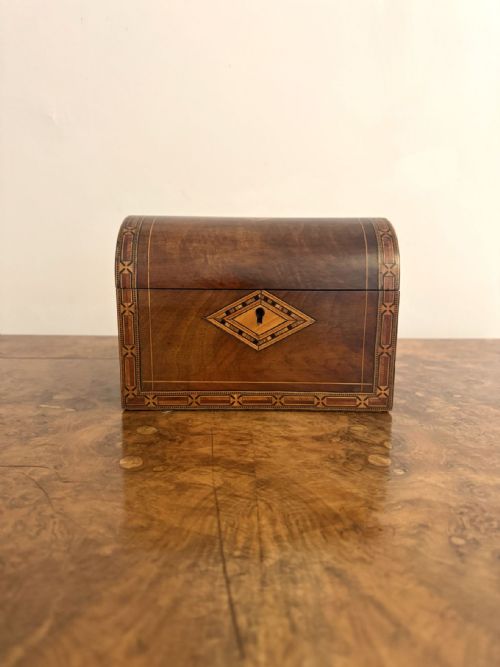
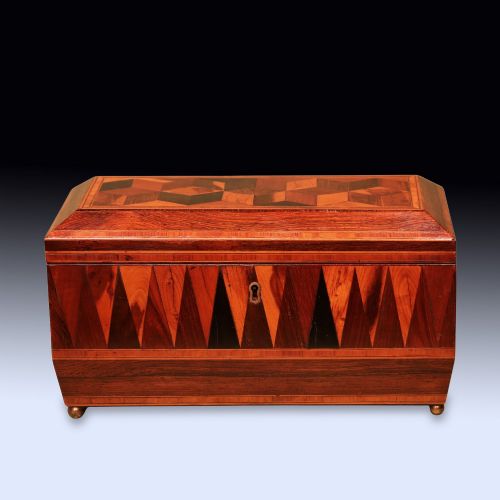
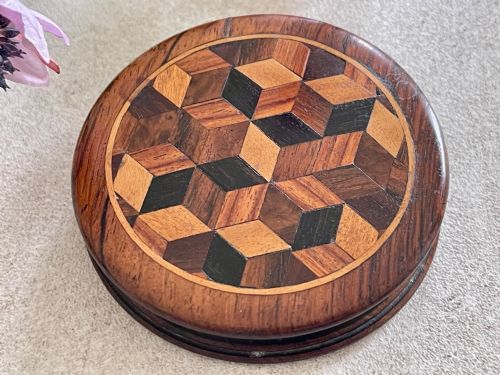


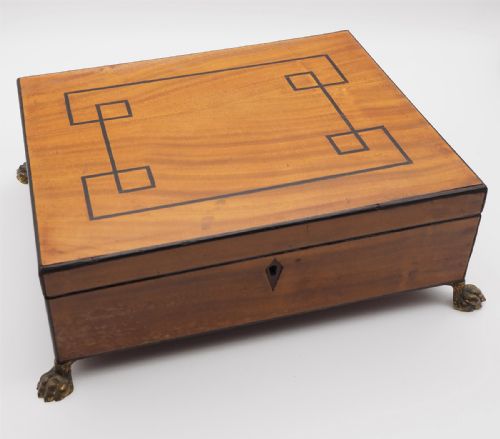


Geometric Inlay Wooden Box
A geometric inlay wooden box brings intricate mosaic patterns and rich timbers to a desk, holding tea, letters or small treasures.
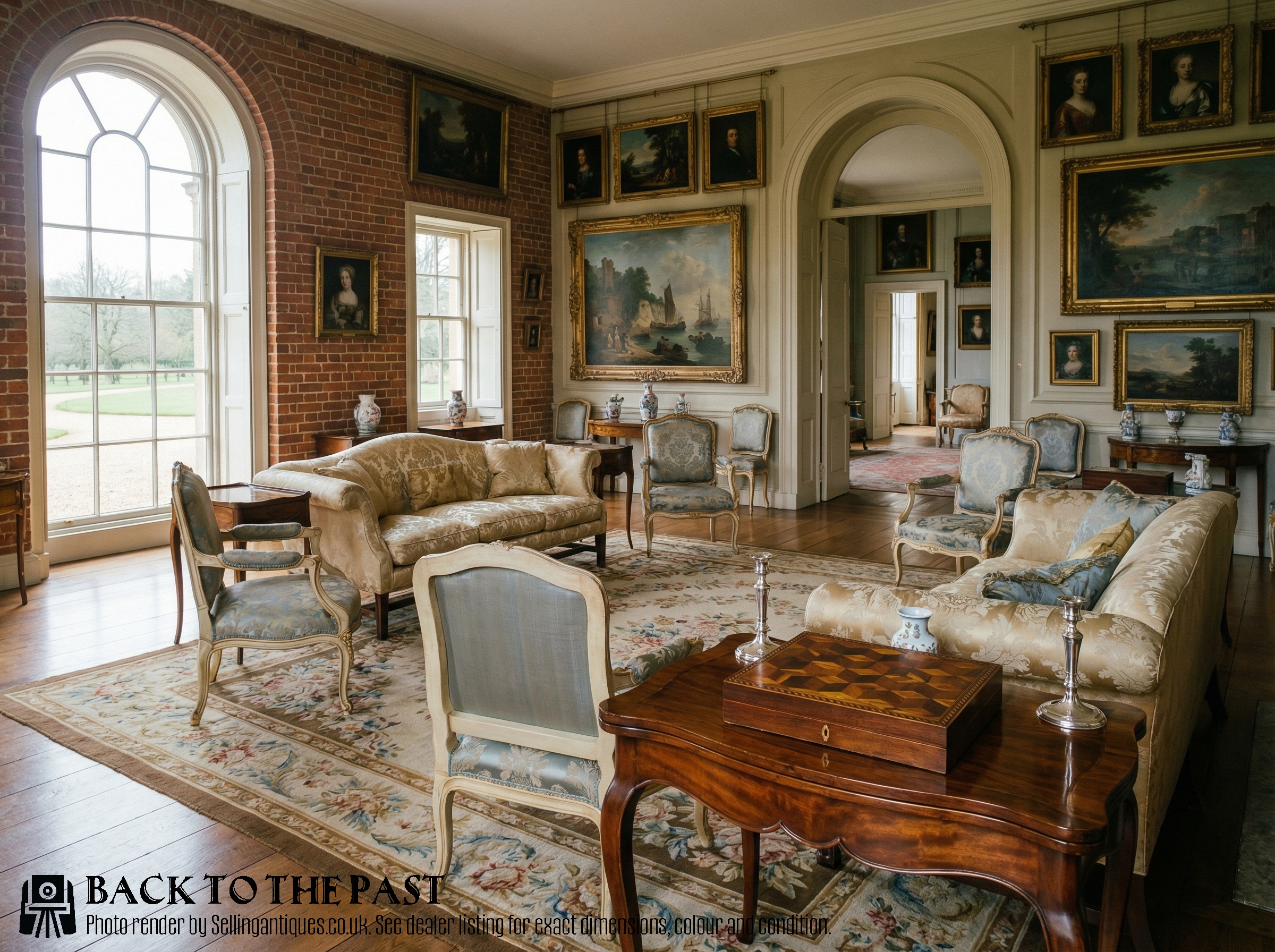
Geometric Inlay Wooden Box
A geometric inlay wooden box encompasses a variety of desktop and table containers designed for practical storage, from tea caddies and correspondence boxes to sewing caskets and snuff boxes. These pieces emerge predominantly from the nineteenth century, including Victorian and Regency examples alongside Georgian and later twentieth-century creations.
Rosewood, walnut, fruitwood, mahogany, satinwood, and kingwood form the primary bodies of these containers. Artisans apply intricate wood veneers, parquetry, and mosaic patterns to create the distinctive geometric surfaces characteristic of these pieces.
Materials and construction
Craftsmen construct the carcasses of these boxes from dense timbers such as rosewood, walnut, and mahogany, often applying contrasting veneers of satinwood, boxwood, and fruitwood. These woods provide stable foundations for intricate surface decoration.
Makers utilise specialised techniques like parquetry, mosaic, and chip carving to assemble geometric motifs. Tunbridge Ware pieces rely on thousands of tiny wood blocks glued together to form pictorial and geometric tessellations.
Details frequently incorporate secondary materials including bone and brass for escutcheons, stringing, and interior fittings, enhancing both the structural integrity and the decorative contrast of the box.
Listings feature nineteenth-century decorative boxes incorporating walnut, rosewood, mahogany, and boxwood alongside bone and brass details.
Assessing quality
The precision and complexity of the mosaic or parquetry work dictate the standard of execution, with tightly fitted tesserae demonstrating superior craftsmanship. Simpler linear stringing contrasts with elaborate multi-wood pictorial and geometric designs.
The choice of primary and secondary timbers influences the desirability of the object, as richly grained rosewood or walnut elevates a piece above standard hardwoods. Original interior fittings and functional compartments also distinguish finer examples from altered ones.
Edmund Nye
The Geometric Inlay Wooden Box Glossary
- Tunbridge Ware
- A form of woodwork originating from Tunbridge Wells, characterised by mosaic designs created from many different coloured woods. These pieces often depict local landmarks or intricate geometric bands.
- Parquetry
- A geometric mosaic of wood pieces used for ornamentation on floors or furniture surfaces. On these boxes, it forms repeating patterns across the lid and sides.
- Tea Caddy
- A container designed originally to store loose tea leaves securely. They frequently feature internal compartments and locking lids.
- Writing Slope
- A portable desk with a slanted writing surface that folds open to reveal storage for paper and writing implements. Many include embedded geometric inlay or secret compartments.
- Khatamkari
- A Persian technique of marquetry where delicate geometric patterns are formed using bone, metal wire, and various woods. This craft creates intricate mosaic surfaces on boxes and decorative objects.
Geometric Inlay Wooden Box: Frequently Asked Questions
What were tea caddies used for?
Tea caddies served to store expensive tea leaves securely under lock and key in the Victorian or Regency household. Servants kept the tea locked away because of its high value.
Today, these lidded boxes function well on side tables or desks to hold modern trinkets while displaying period woodwork.
How do I care for rosewood and walnut boxes?
Keep wooden boxes out of direct sunlight and away from radiators to prevent the dry air from cracking the delicate veneers. Consistent indoor humidity protects the original polish and the tiny inlaid wooden blocks.
Apply a microcrystalline wax occasionally to nourish the timber without building up heavy residues on the geometric patterns.
What is the difference between marquetry and parquetry?
Marquetry involves cutting and assembling various veneers to create pictorial scenes, florals, or flowing scrolls. Artisans apply these veneers to the surface of a box for decorative effect.
Parquetry uses geometric blocks of wood arranged in repeating mathematical patterns like cubes, triangles, or chequered grids. Both techniques appear frequently on nineteenth-century decorative containers.
How can I tell a Victorian box from a Regency one?
Regency boxes often lean towards cleaner architectural lines, brass stringing, and lighter satinwood or mahogany timbers. They reflect a classical influence popular in the early nineteenth century.
Victorian pieces frequently embrace denser rosewood or walnut foundations loaded with elaborate Tunbridge mosaics and heavier ornamentation. Examining the interior paper linings and lock mechanisms also helps establish the correct decade.