



Geometric Inlay Desk
A geometric inlay desk brings intricate patterned woodwork into your study, offering a tactile surface built from contrasting timbers.
Geometric Inlay Desk
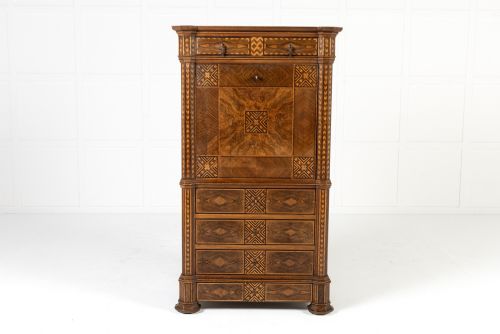
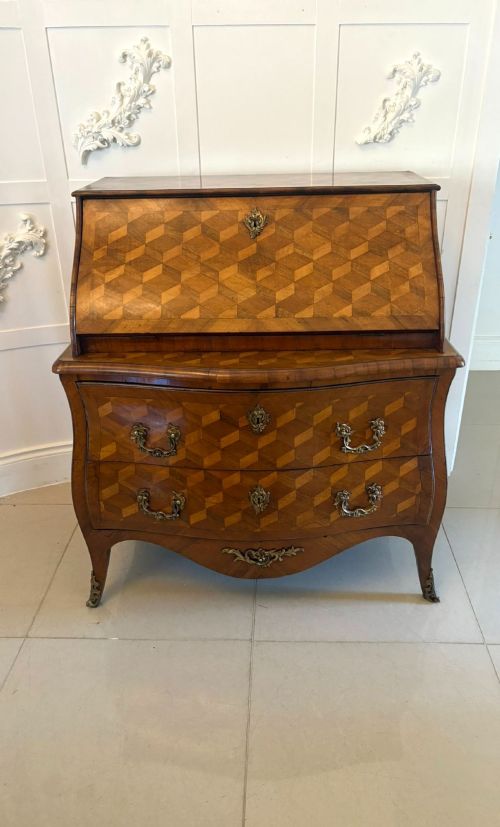
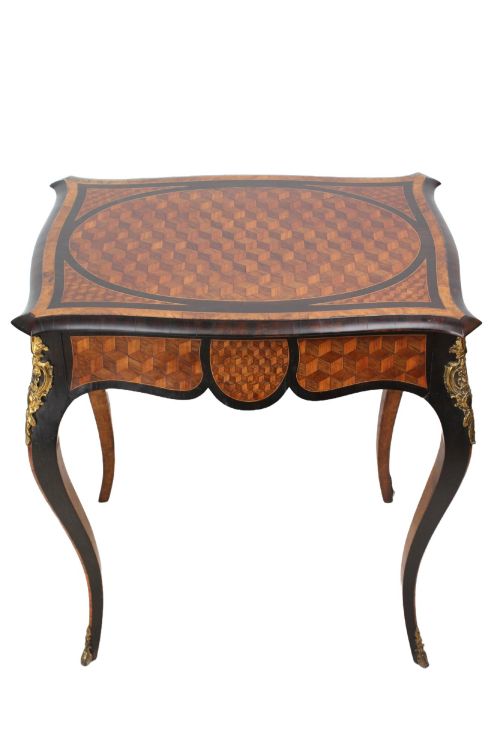
A geometric inlay desk combines functional writing furniture with complex mosaic woodwork, spanning Victorian, seventeenth century, and art deco periods. These pieces include morning room desks, writing tables, and occasional work tables featuring patterned surfaces.
The version most commonly met on this page is the nineteenth century writing table or desk, often exhibiting parquetry or Tunbridge ware motifs. Makers such as Edmund Nye and JAS Shoolbred demonstrate the detailed craftsmanship typical of these forms.
How they were made
Construction relies on precise veneer work applied to a primary timber substrate, utilising walnut, rosewood, and ebonised wood. Artisans assemble tiny wooden blocks and geometric segments by hand to create intricate surface patterns.
Metal and fabric elements occasionally supplement the woodwork, with brass mounts, ormolu details, and fabric inserts appearing on select writing tables and boxes.
Geometric Inlay Desk Retail Price Guide 2026
Typical asking prices for geometric inlay desk among the pieces listed under this phrase on Sellingantiques today, from the lower quarter to the upper quarter. They describe what is for sale here now, not the wider market.
Listings feature walnut, rosewood, and ebonised wood across Victorian and seventeenth century periods.
What varies in quality
Quality rests upon the precision of the timber alignment and the complexity of the parquetry patterns. Finer examples display seamless integration of diverse wood species without visible gaps in the geometric arrangement.
The distinction between standard pieces and superior work lies in the depth of the design and the preservation of the original surface materials, such as rosewood veneer and brass mounts.
JAS Shoolbred·Edmund Nye
The Geometric Inlay Desk Glossary
- Parquetry
- Geometric wood mosaic work used for decorative surfaces on tables and boxes. Small timber tiles form repeating patterns across the top.
- Veneer
- A thin layer of fine wood applied to a base timber to provide a decorative exterior. Walnut and rosewood frequently serve this purpose.
- Ormolu
- Gilded bronze used for decorative mounts and trimmings on nineteenth century furniture. It adds metallic contrast to the timber surface.
- Tunbridge ware
- Woodware decorated with tiny mosaic pieces forming pictorial or geometric designs. Edmund Nye represents a notable maker of this craft.
Geometric Inlay Desk: Frequently Asked Questions
How do I care for a geometric inlay desk?
Keep the timber away from direct sunlight and steady humidity levels to prevent the veneer from lifting or cracking.
Apply a traditional wax polish occasionally to nourish the walnut or rosewood surface without damaging the fine parquetry.
What periods do these desks come from?
The pieces span multiple eras, including the seventeenth century, the Victorian period, and nineteen thirty.
Victorian interpretations and art deco examples show how geometric woodwork evolved across different centuries.
What materials are used in the inlay?
Craftsmen utilised mixed woods, rosewood, walnut, and ebonised wood to build the contrasting geometric patterns.
Additional elements like brass and ormolu sometimes accent the primary wooden structures.
Are these tables suitable for daily writing?
Many of these pieces function as writing tables, morning room desks, or writing slopes designed specifically for correspondence.
Consider the writing height and surface area to ensure the antique matches your everyday study requirements.