


Geometric Inlaid Wood Table
A geometric inlaid wood table brings intricate pattern and rich natural timbers into a room, spanning centuries of craftsmanship.
Geometric Inlaid Wood Table
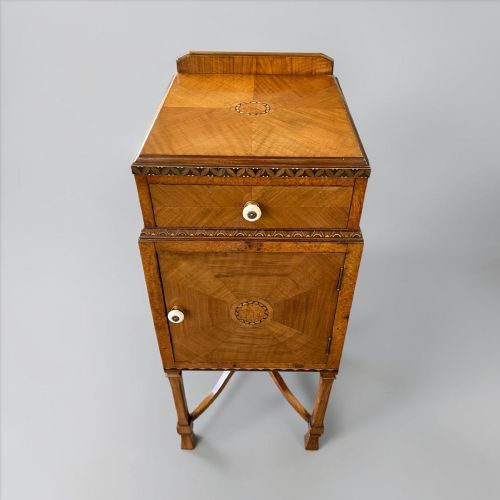
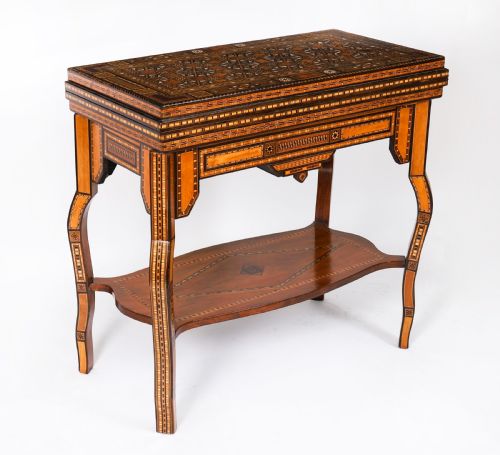
A geometric inlaid wood table encompasses occasional, side, games, and centre tables decorated with precise patterns of timber, bone, and shell. These pieces range from compact bedside stands to substantial pedestal and hall tables created across Europe, the Middle East, and the wider world.
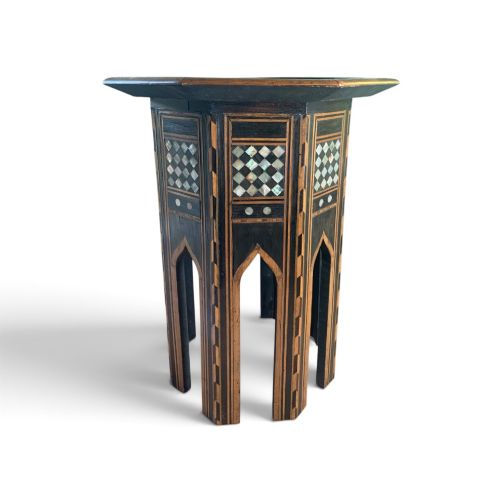
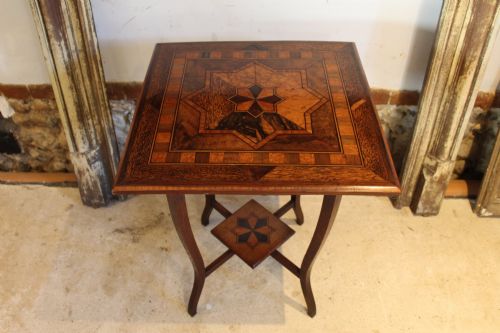
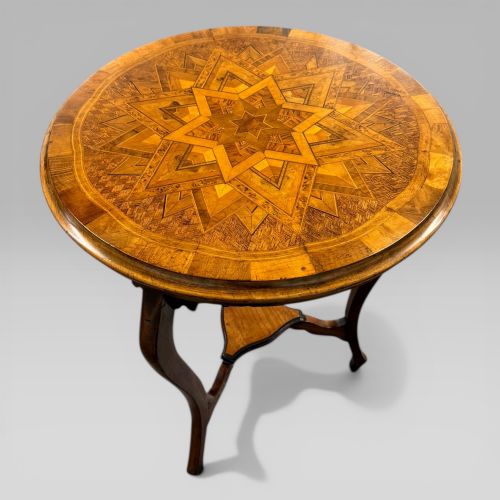
Buyers encounter Victorian parquetry, Moorish Revival octagonal designs, Italian Sorrento ware, and Art Deco works. The selection draws heavily on nineteenth-century craftsmanship alongside seventeenth-century parquetry and early twentieth-century geometric creations.
Materials and Technique
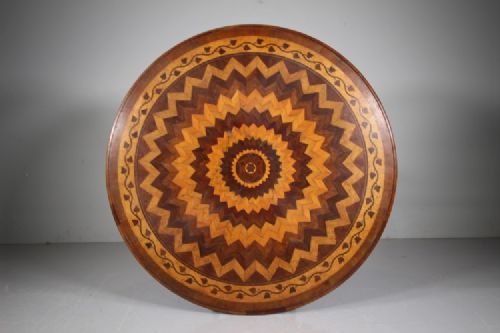
The construction relies on solid bases of walnut, oak, fruitwood, and rosewood combined with intricate surface marquetry and parquetry. Craftsmen cut contrasting timbers to form geometric tessellations, geometric borders, and pictorial motifs.
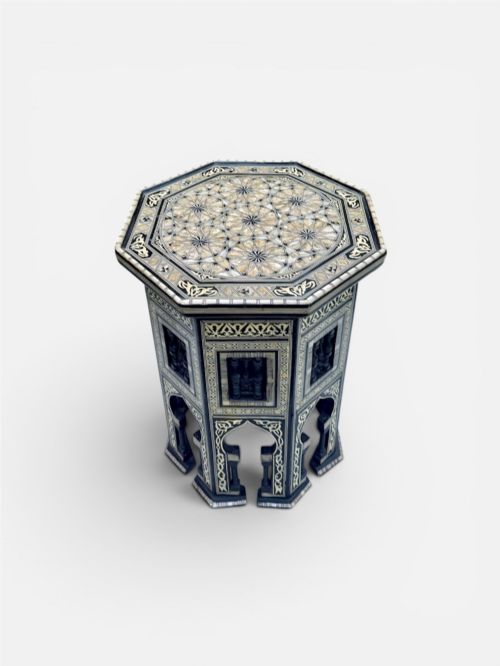
Many examples incorporate mother-of-pearl, bone, and specialised specimen woods to add luminosity and depth to the surface patterns. Artisans fitted these tiny tesserae meticulously into carved recesses, securing them with traditional animal glues.
The selection spans from seventeenth-century parquetry to Art Deco bedside designs.
Variations in Quality
Quality rests upon the precision of the geometric tiling and the variety of timbers utilised within the design. Tighter joints between individual wooden tesserae and sharper symmetry define superior examples.
Anton Seuffert
The Geometric Inlaid Wood Table Glossary
- Parquetry
- Geometric mosaic woodwork arranged in regular patterns like cubes, triangles, or chequers. It forms the primary decorative surface on many tops.
- Marquetry
- The art of applying pieces of veneer to a structure to form decorative patterns and pictures. It uses diverse timbers and organic materials.
- Specimen wood
- Timber collected for its distinct natural colour and grain rather than structural utility. Tables utilise these for botanical variety.
- Moorish style
- Design influenced by Islamic architecture and decorative arts. It often manifests in octagonal tables inlaid with mother-of-pearl and bone.
Geometric Inlaid Wood Table: Frequently Asked Questions
How do I care for my inlaid table?
Keep wooden inlaid surfaces away from direct sunlight and extreme humidity changes to prevent timber shrinkage and veneer lifting. Regular dusting with a dry, soft cloth preserves the polish without harming delicate edges.
Avoid placing damp glasses or hot dishes directly onto the antique timber surface. Use coasters and mats to protect the delicate parquetry and mother-of-pearl elements from staining.
Were these tables used for games?
Many geometric inlaid tables served a dual purpose as games surfaces for chess, checkers, and backgammon. The patterned tops doubled as playing boards alongside their role as occasional furniture.
Some examples feature hidden compartments or folding leaves to store gaming pieces safely. They sat in parlours and drawing rooms for evening entertainment.
How do I distinguish regional styles?
Italian Sorrento and Tunbridge wares rely on precise geometric wooden tesserae depicting local motifs and architectural views. They display lighter fruitwoods and structured borders.
Middle Eastern and Moorish pieces incorporate dense mother-of-pearl and bone inlay across dark walnut or hardwood frames. Their geometry often follows complex Islamic star polygons and multi-sided octagonal forms.
What rooms suit an octagonal table?
Octagonal side tables fit neatly into corners or beside seating where square tables might obstruct movement. Their faceted shapes break up straight lines in contemporary and traditional interiors alike.
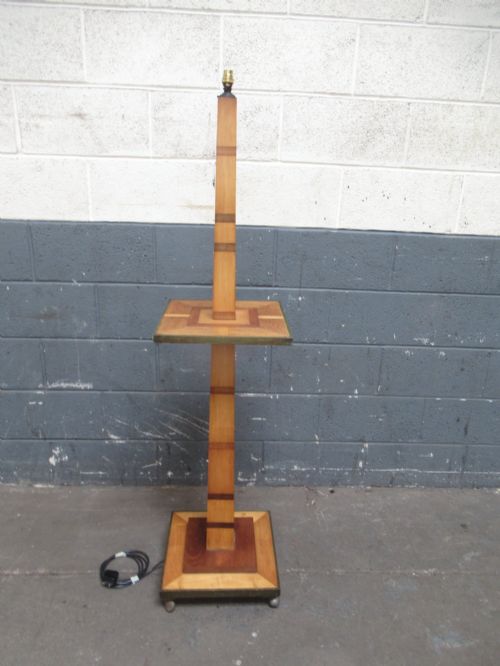
These pieces work well as lamp stands, bedside tables, or central display surfaces for lamps and decorative objects. Their intricate geometric tops provide visual interest from every angle.