
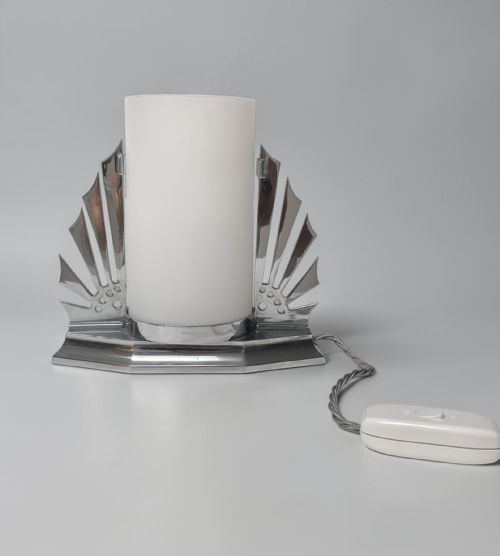


Geometric Glass Table Lamp
A geometric glass table lamp delivers striking architectural form and warm illumination, making it a focal point in any room.
Geometric Glass Table Lamp
A geometric glass table lamp brings angular clarity and modernist design to interior spaces, predominantly appearing in styles from the early to mid-twentieth century. Buyers searching for a geometric glass table lamp typically encounter Art Deco pieces characterised by sharp lines, stepped forms, and stylised motifs.
The selections span from the 1910s through to the 1940s, capturing the transition from Arts and Crafts influences to full-blown modernist abstraction. Alongside standard table lamps and desk lamps, the category includes variations paired with side tables and clocks.
Moulded glass shades dominate the form, frequently incorporating frosted or peach-tinted finishes that soften the output of the bulb. These lamps serve as both functional lighting and sculptural objects of utility.
Materials and construction methods
Construction relies heavily on thick, pressed or moulded glass combined with metal elements such as chrome, brass, and patinated metal. These materials are frequently mounted on wooden bases made from walnut, satinwood, or mahogany.
Makers utilised advanced glass moulding techniques to achieve complex three-dimensional shapes like zig-zags, cubic blocks, and figural silhouettes. Metal components like nickel-plated brass and dark bakelite provide structural contrast and industrial durability.
Some lamps double as clocks or feature lightning flash motifs, proving that practical desk equipment once possessed a dramatic sense of theatre.
Assessing quality in construction and design
Quality rests upon the crispness of the glass moulding and the weight of the underlying metal chassis. Superior pieces display sharp geometric facets and substantial materials that anchor the lamp securely.
The integration of specific named maker shades or distinct multi-material bases separates standard production items from exceptional examples. Fine engineering in the chrome or brass fittings indicates higher workshop standards.
Muller Bros·Karl Palda·Walther and Sohne
The Geometric Glass Table Lamp Glossary
- Art Deco
- A design style spanning the 1920s and 1930s characterised by sleek geometric shapes, streamlined forms, and modern industrial materials. It replaced the organic curves of Art Nouveau with sharp angles and symmetry.
- Bakelite
- An early synthetic thermosetting plastic introduced in the early twentieth century. It was frequently utilised for electrical components and decorative bases due to its heat-resistant and insulating properties.
- Frosted glass
- Glass treated by acid-etching or sandblasting to create a textured, opaque surface that diffuses light evenly. It reduces glare while maintaining a soft ambient glow.
- Patinated metal
- Metal surfaces showing a natural or chemically induced ageing effect that alters the original sheen and colour. This finish often adds depth and character to brass and bronze components.
- Satinwood
- A durable hardwood known for its golden lustre and fine grain, often used for veneering or decorative bases. It provides a warm contrast to cold glass and chrome elements.
Geometric Glass Table Lamp: Frequently Asked Questions
What periods do these lamps come from?
The available pieces primarily originate from the 1920s and 1930s, capturing the height of the Art Deco movement. Earlier examples stretch back to the 1910s, while later modernist designs extend into the 1940s.
This broad timeline demonstrates the evolution of industrial design and domestic lighting tastes across four decades.
How do I style a geometric glass table lamp?
These lamps function effectively as statement pieces on side tables, desks, or credenzas. Their strong silhouettes allow them to complement both period interiors and modern minimalist settings.
Pairing them with wooden furniture highlights the contrast between the cold glass and warm timber bases.
Are these lamps functional for daily use?
Most pieces provide atmospheric or task lighting suited to modern electrical standards, though professional rewiring is recommended for older wiring. The thick glass shades diffuse light pleasantly for practical room illumination.
Care should be taken to use appropriate bulb wattages that respect the age and material limits of the vintage shades.