


Geometric Glass Light
A geometric glass light brings crisp twentieth-century angles and diffuse illumination into a room.
Geometric Glass Light
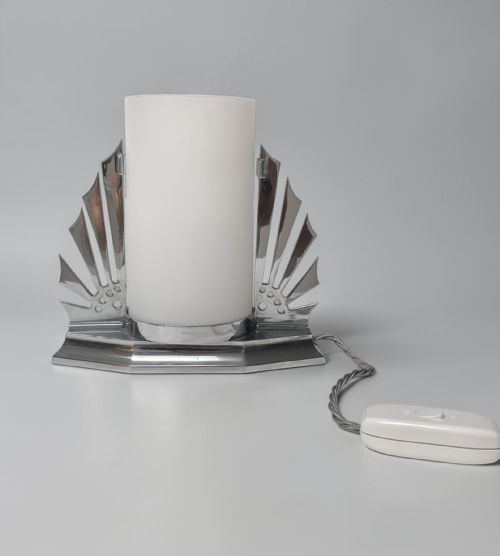
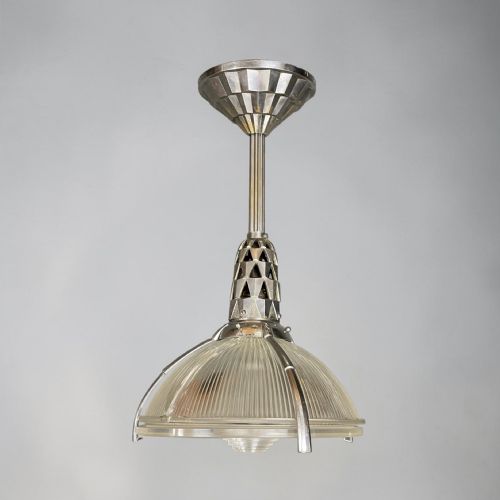
A geometric glass light is typically encountered in the form of Art Deco pendant lights, wall lights, and table lamps from the early decades of the twentieth century. These fixtures combine structured glass panels with metal frames to create repeating angles and symmetrical forms.
The selection ranges from stepped skyscraper wall lights and frosted glass plafonniers to hanging brass lanterns and moulded glass table lamps. Many pieces date from the nineteen-twenties and nineteen-thirties, reflecting the prevalent design language of the period.
Buyers also encounter related lighting and furnishing forms, including nickel table lamps, bronze wall lights, and occasional items sharing the same period aesthetic.
How they were made
Makers constructed these fixtures using combinations of glass and structural metals such as chrome, brass, copper, nickel, and bronze. Frosted, bevelled, or moulded glass panels were fitted into metal armatures to achieve sharp architectural profiles.
Detailing often incorporated period materials like bakelite for switches or bases, alongside leaded or patinated metalwork. The assembly relied on mechanical fixings to secure heavy glass shades within structural frames.
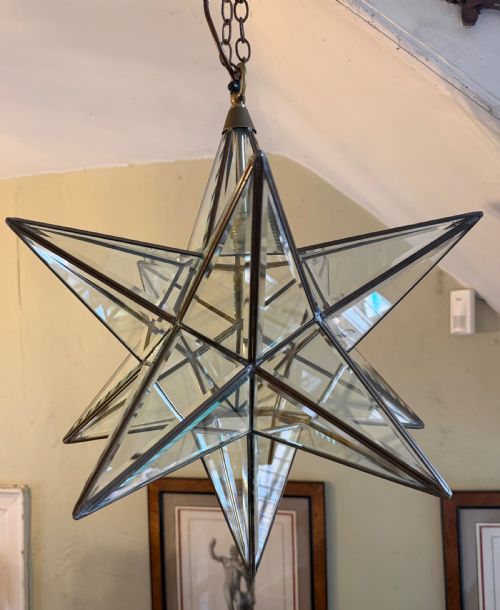
Lighting up a room with a glass star hanging lantern offers an instant celestial upgrade without the weather.
What varies in quality
Quality in a geometric glass light lies in the weight and clarity of the glass and the precision of the metal framing. Heavier moulded or frosted shades with crisp angles distinguish finer pieces from simpler commercial productions.
The integrity of the metalwork, whether patinated brass, polished chrome, or wrought iron, dictates the overall refinement of the fixture. Original fittings and named maker involvement elevate the standing of an individual piece.
Émile-Jacques Ruhlmann·Muller Bros·Karl Palda·Walther and Sohne
The Geometric Glass Light Glossary
- Plafonnier
- A ceiling-mounted light fixture where the shade sits flush or close to the ceiling surface. This form was widely used in hallways and smaller rooms during the Art Deco era.
- Frosted glass
- Glass treated to diffuse light evenly and soften illumination while hiding the bulb. It appears frequently in twentieth-century ceiling and wall lights.
- Skyscraper style
- An architectural design motif characterised by stepped setbacks and vertical emphasis. It heavily influenced light shades and wall fixtures of the nineteen-thirties.
- Bevelled glass
- Glass panes with cut and polished angled edges that catch and refract light. This technique is often seen in hanging star lanterns and early twentieth-century lanterns.
Geometric Glass Light: Frequently Asked Questions
How do I install a vintage glass light?
Most vintage fixtures require standard electrical wiring compatible with modern domestic standards. It is advisable to have a qualified electrician handle the mounting and connection to ensure safety.
Weight distribution is another consideration, particularly with heavier brass and glass lanterns or multi-point star lights. Ensure the ceiling or wall substrate can support the fixture securely.
What rooms suit an Art Deco ceiling light?
Plafonniers and pendant lights work well in hallways, living rooms, and bedrooms where ceiling height allows for flush or suspended fixtures. Their structured shapes complement both period interiors and modern minimalist spaces.
Wall lights and smaller table lamps provide task or ambient lighting in compact areas, echoing the geometric themes of the overhead fixtures.
How can I date a glass light?
Dating relies on stylistic markers such as stepped skyscraper profiles, moulded motifs, and the combination of materials like chrome and frosted glass. Pieces from the nineteen-twenties and nineteen-thirties typically display distinct machine-age influences.
Hardware details, including bakelite components and patinated brass frames, also point towards specific manufacturing periods within the early twentieth century.
Are replacement shades available for old fixtures?
Finding exact period replacement shades can be challenging due to the specific moulds and glass techniques used by individual makers. Many collectors prefer to acquire complete original pieces to maintain authenticity.
When parts are missing or broken, matching the specific glass type, such as frosted or peach glass, requires patience and specialised dealer searches.