

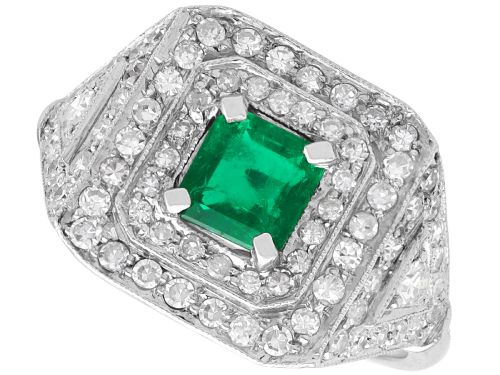
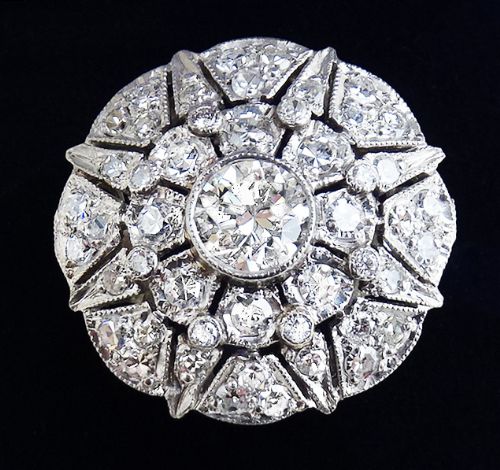
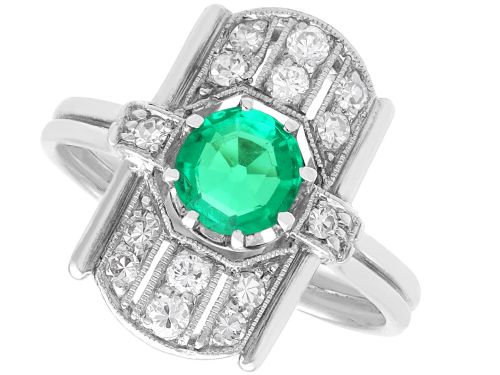
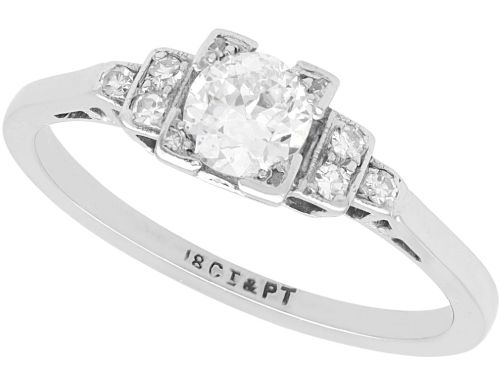
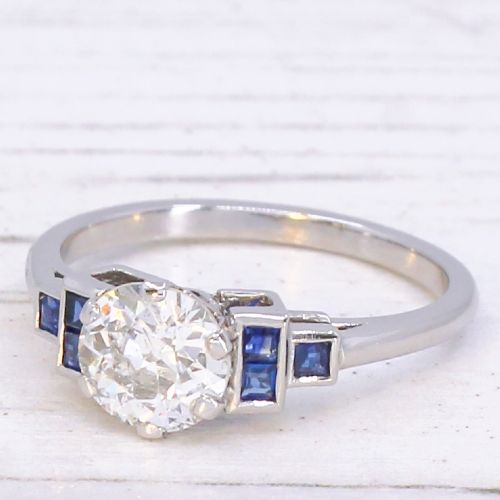
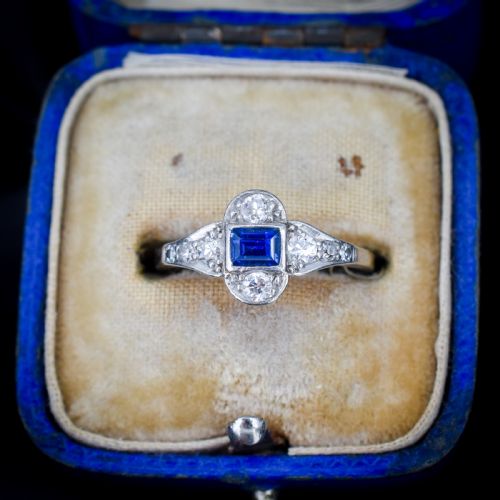


Geometric Engagement Ring
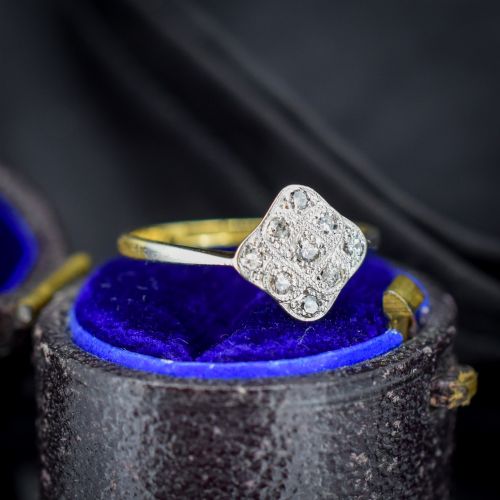
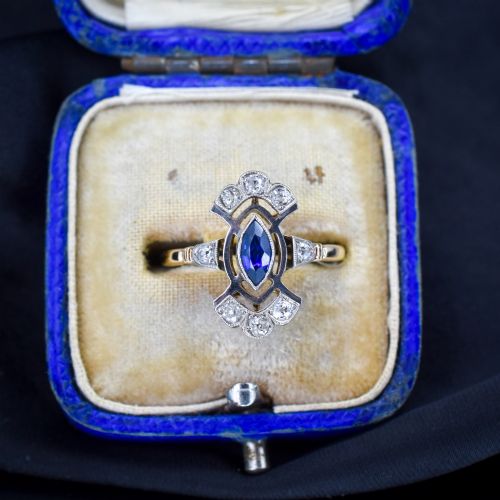
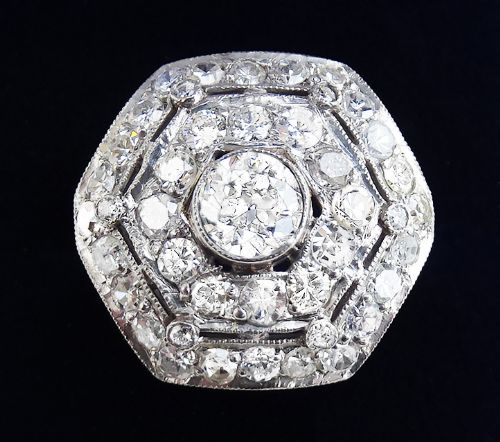
A geometric engagement ring brings architectural lines and sharp symmetry to the hand, drawing on early twentieth-century design.
Geometric Engagement Ring
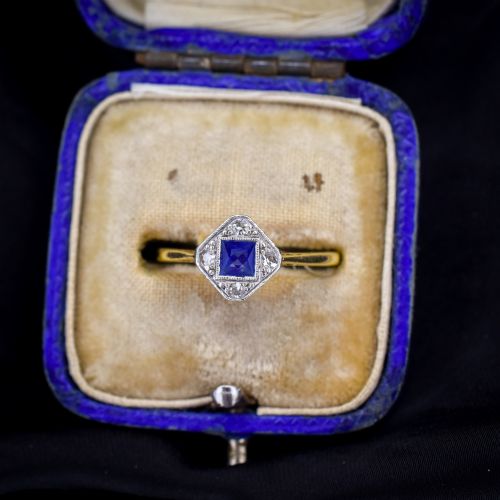
A geometric engagement ring relies on clean angles, straight lines, and structured symmetry rather than soft floral curves. These pieces frequently emerge from the Art Deco period, alongside later mid-century revivals that echo the same linear discipline.
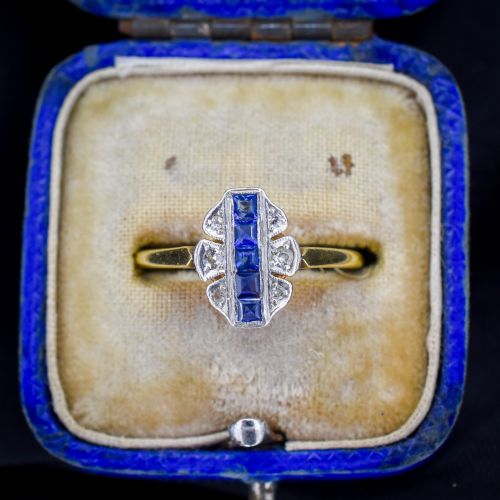
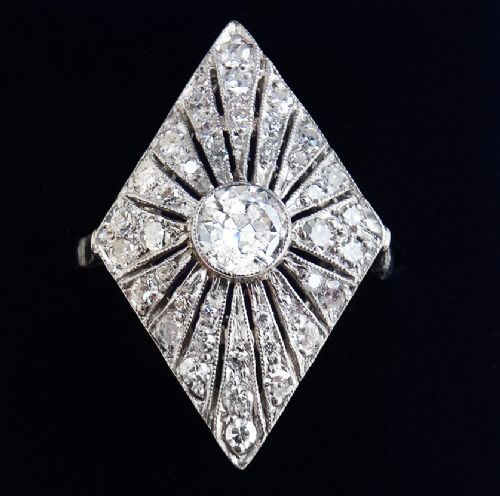
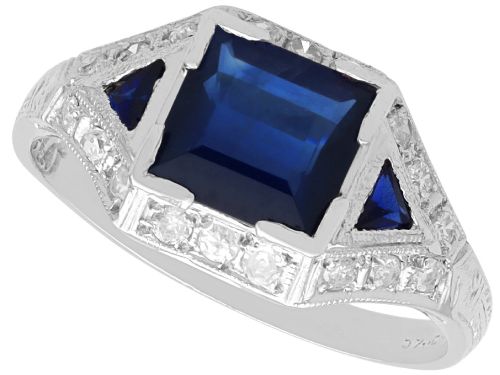
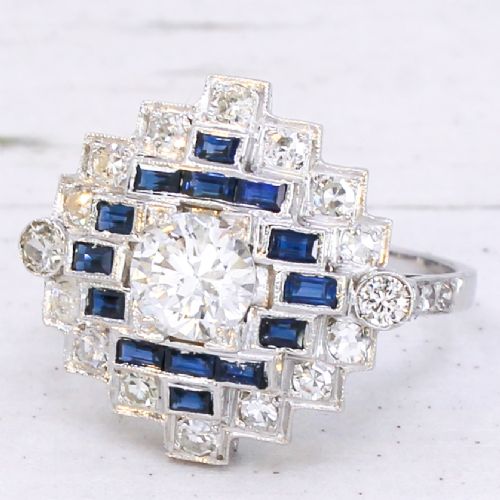
The most common examples on this page combine platinum or white gold with channel-set side stones and centrally mounted diamonds. Designs range from stepped plaque rings to precise target configurations and minimalist solitaires.
Originating largely from the 1920s and 1930s, these rings reflect a broader cultural shift towards modern industrial forms. Makers utilised repeated shapes like squares, triangles, and baguettes to frame the main stones with architectural precision.
Materials and construction
Platnum and 18ct white gold provide the robust structural framework required for crisp, angular bezel and channel settings. These bright white metals complement the cool fire of old cut diamonds and the deep hues of calibrated sapphires and emeralds.
Goldsmiths employed intricate piercing, mille-grain edging, and precise stone-cutting techniques such as calibre cutting to fit coloured gems tightly into geometric channels. The integration of platinum with yellow gold also appears frequently, offering tonal contrast within the linear mounts.
Geometric Engagement Ring Retail Price Guide 2026
Typical asking prices for geometric engagement ring among the pieces listed under this phrase on Sellingantiques today, from the lower quarter to the upper quarter. They describe what is for sale here now, not the wider market.
Listings feature geometric engagement rings spanning the 1920s to the 1960s, utilising platinum, white gold, and yellow gold.
Assessing craftsmanship and design
Quality in a geometric engagement ring rests upon the crispness of its lines and the precision with which the side stones match the angles of the mount. Superior examples maintain strict symmetry and secure, flush stone settings without gaps in the metalwork.
The choice of centre stone and the integration of contrasting accent gems, such as onyx or calibre-cut rubies and sapphires, define the upper tier of execution. Finer pieces demonstrate hand-finished detail in the piercing and milling that supports the architectural geometry.
The Geometric Engagement Ring Glossary
- Art Deco
- A design style spanning the 1920s and 1930s characterised by streamlined geometric shapes, symmetry, and modern industrial motifs. It forms the foundation of most linear ring designs.
- Calibre cut
- Gemstones specifically shaped and cut by hand to fit tightly into a designated channel or geometric pattern within the mounting.
- Plaque ring
- A ring featuring a flat, wide, and often pierced face that sits low on the finger, heavily ornamented with small diamonds and geometric metalwork.
- Target ring
- A circular or polygonal ring design featuring a central stone encircled by one or more concentric rows of contrasting coloured gemstones or diamonds.
- Old cut diamond
- A hand-faceted diamond cut prior to the standardisation of the modern brilliant, typically featuring a smaller table, higher crown, and distinct open culet.
Geometric Engagement Ring: Frequently Asked Questions
What defines a geometric engagement ring?
These rings are defined by straight lines, sharp angles, and structured patterns such as squares, hexagons, and concentric bands. They draw heavily on 1920s and 1930s aesthetics, prioritizing architectural symmetry over organic curves.
The use of channel-set calibré stones and stepped plaque designs further emphasises this distinct linear geometry.
How do I wear an antique ring daily?
Living with an antique ring requires understanding that older settings, particularly delicate platinum and white gold claws, benefit from gentle care. Removing the ring during heavy physical tasks protects the intricate metalwork and side stones from impact.
Regular checks by a jeweler ensure that channel and bezel settings remain secure over time.
What periods do these rings come from?
The majority of pieces originate from the Art Deco era of the 1920s and 1930s, when geometric design dominated jewellery manufacturing. Edwardian precursors and later 1950s or 1960s mid-century revivals also appear among the selections.
Each period brings slight shifts in how white metals and contrasting coloured gems are deployed.
Are these rings suitable for modern bands?
Many plaque and target configurations feature wide geometric faces that sit low to the finger, which may require a contoured wedding band to sit flush. Straight wedding bands pair easily with solitaire or three-stone geometric layouts that have raised settings.
Consulting the profile height of the ring helps determine the best matching band.