





Geometric Enamel Scent Bottle
A geometric enamel scent bottle brings tactile Art Deco design to a dressing table through precision glasswork and coloured decoration.
Geometric Enamel Scent Bottle
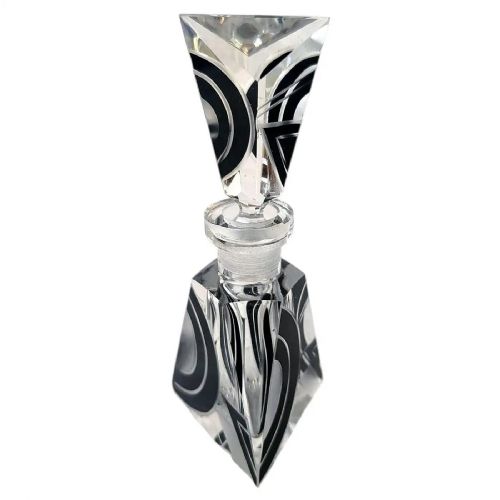
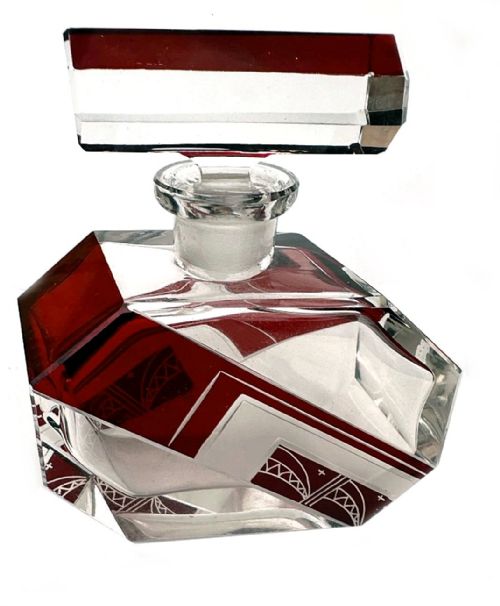
When you search for a geometric enamel scent bottle, you are looking at small dressing table vessels designed in the Art Deco style around 1930. These portable containers held perfume and were made to sit visibly on vanity trays.
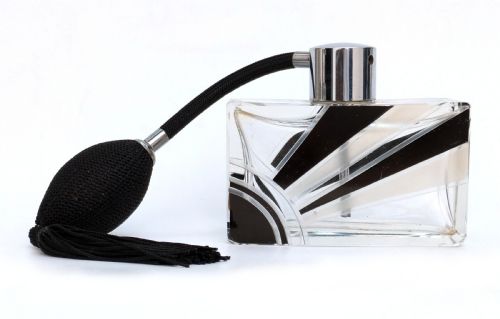
The versions you meet on this page originate predominantly from the Czech Republic and include work by maker Karl Palda. Forms span perfume bottles, matching globe sets, and lady's atomisers.
Most examples combine moulded or cut glass with contrasting enamel details. They represent a specific modernist shift away from ornate floral motifs toward clean, angular lines.
How they were made
Maker Karl Palda and other workshops utilised glass, crystal, and cut glass as the primary body materials. Workers shaped these vessels using moulding and heavy cutting techniques to achieve sharp, geometric facets.
Makers applied enamel, black enamel, silver, and gold leaf onto the glass surfaces to create graphic patterns. Atomiser mechanisms and perfume stoppers incorporated chrome hardware to complete the assembly.
Geometric Enamel Scent Bottle Retail Price Guide 2026
Typical asking prices for geometric enamel scent bottle among the pieces listed under this phrase on Sellingantiques today, from the lower quarter to the upper quarter. They describe what is for sale here now, not the wider market.
Materials across these listings span glass, cut glass, crystal, chrome, silver, gold leaf, and enamel.
What varies in quality
The sophistication of the glass cutting dictates the visual weight of the piece, with deeper facets creating sharper refraction. Simpler moulded vessels sit at the accessible end of the scale, while deeply cut crystal demands greater skill.
The application of enamel and gold leaf introduces another tier of distinction. Precise, crisp enamelling requires steady execution by hand, whereas simpler monochrome glass bodies rely entirely on their form.
Karl Palda
The Geometric Enamel Scent Bottle Glossary
- Art Deco
- A design style dominant in the 1930s characterised by geometric shapes, stylised motifs, and modern industrial materials. It replaced the flowing curves of earlier periods with clean angularity.
- Enamel
- A decorative fused glass coating applied to metal or glass surfaces for colour and pattern. It provides durable flat fields of pigment.
- Atomiser
- A spray bottle mechanism utilising a bulb and tube to disperse liquid perfume in a fine mist. These fittings often incorporated chrome metal components.
- Cut glass
- Glassware shaped and patterned by holding the blank against a rotating abrasive wheel. This technique produces sharp geometric facets.
- Gold leaf
- Extremely thin beaten gold applied to surfaces for ornamentation. It adds reflective metallic highlights to glass and enamel designs.
Geometric Enamel Scent Bottle: Frequently Asked Questions
What is a geometric enamel scent bottle?
It is a small Art Deco container designed for holding perfume on a dressing table. These vessels combine cut or moulded glass with sharp angular patterns.
Most examples date from around 1930 and reflect the modernist design sensibilities of that decade.
Where were these scent bottles made?
The pieces available here originate primarily from the Czech Republic. Workshops in this region produced sophisticated cut glass and enamel dressing table wares.
Maker Karl Palda is particularly associated with these distinctively patterned vessels.
How do atomisers differ from standard bottles?
Atomisers feature a mechanical spray fitting designed to disperse liquid in a mist rather than a stopper for dabbing. These fittings often use chrome hardware.
Standard bottles rely on a matching glass stopper to seal the contents.
What materials make up these bottles?
Makers utilised glass, crystal, and cut glass for the main bodies. Decorations include enamel, black enamel, silver, and gold leaf.
Metal components such as chrome appear on atomiser hardware and mounts.
How do I date a geometric enamel scent bottle?
Dating relies on the stylistic markers of the Art Deco period, specifically around 1930. The combination of geometric cutting, black enamel, and chrome points firmly to this era.
Attributions to known makers like Karl Palda further anchor the production window.