
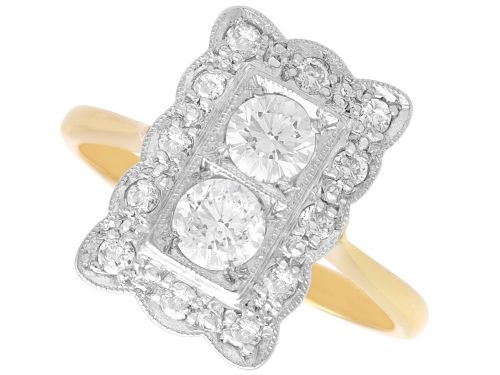


Geometric Diamond Statement Ring
These geometric diamond statement ring selections offer bold architectural presence, combining period gemstones with striking metalwork that commands attention.
Geometric Diamond Statement Ring
A geometric diamond statement ring is a bold finger ornament designed to command visual attention through strong angular lines and prominent centre stones. When you search for this phrase, you encounter striking designs originating primarily from the Art Deco period, alongside later Mid-Century and Retro Modern variations.
The most common versions on this page are Art Deco platinum and white gold dress or cocktail rings featuring symmetrical diamond clusters, target motifs, and bombe silhouettes. These pieces frequently incorporate contrasting dark accents such as black onyx or rich coloured gems like rubies, sapphires, and emeralds.
Spanning decades from the 1920s through the 1960s, these rings reflect a continuous shift from rigid geometric symmetry towards more sculptural mid-century forms. Buyers select these pieces for their strong historical character and undeniable visual impact on the hand.
How they were made
The construction of these rings relies heavily on durable precious metals such as platinum and various carats of gold, including 18ct yellow, 18ct white, and 14K white gold. Platinum provides the structural strength needed for intricate pierced galleries and secure prong settings that hold multiple small stones.
Goldsmiths and lapidaries shaped diamonds into old cuts, transitional cuts, and geometric facets to catch the light within strict linear frameworks. Enamel and carved onyx elements were precisely fitted alongside the metalwork to create sharp colour contrasts and crisp silhouettes.
Some cocktail rings are so wide they practically demand you hold your champagne glass with a very deliberate, theatrical tilt.
What varies in quality
The distinction between tiers of these rings lies in the precision of the metal fabrication and the architectural harmony of the design. Superior examples display seamless integration of calibre-cut accent stones, such as onyx or rubies, fitted flush into the metal framework without gaps.
Finishing touches on the gallery and the crispness of millegrain edging separate ordinary production from exceptional craftsmanship. The overall presence relies on how well the central diamond integrates with the surrounding geometric patterns to create a balanced, unified statement.
The Geometric Diamond Statement Ring Glossary
- Art Deco
- A design style spanning the 1920s and 1930s characterised by symmetrical geometric shapes, clean lines, and stark contrasts. This aesthetic forms the foundation of most pieces found in this category.
- Cocktail Ring
- A large, showy ring worn to draw attention, often featuring substantial central gemstones surrounded by smaller accent stones. These rings originated during prohibition-era evening gatherings.
- Target Ring
- A specific cluster design featuring a central stone encircled by concentric rings of contrasting coloured gemstones or smaller diamonds. This layout creates an unmistakable bullseye visual effect.
- Bombé Ring
- A rounded, dome-shaped ring style that curves outward prominently from the finger. The domed surface allows for pavé-set diamonds and complex geometric relief work.
- Millegrain
- A decorative technique involving a line of tiny metal beads along the edges of a setting. This subtle texture softens the transition between metal and stone.
Geometric Diamond Statement Ring: Frequently Asked Questions
How do I wear a statement ring daily?
Wear your ring with care during activities involving heavy hand usage to protect delicate platinum settings and softer accent stones like opal.
Pair it with simple attire to let the geometric architecture and diamond sparkle remain the focal point of your outfit.
What periods do these rings come from?
The listings span several decades, starting predominantly from the Art Deco era of the 1920s and 1930s. Later examples extend through the Retro Modern period and into the 1950s and 1960s.
Each decade introduces subtle shifts, moving from crisp linear symmetry to more rounded mid-century sculptural forms.
Are these rings suitable for engagements?
Many buyers choose these striking designs as engagement rings because their unique architectural character stands apart from modern standard solitaires. Their durable platinum and gold foundations support daily wear when properly maintained.
Consider the profile height to ensure compatibility with traditional wedding bands.
What metals are typically used?
Platinum is exceptionally common in Art Deco pieces due to its strength in holding intricate diamond pavé and fine millegrain work. White gold and yellow gold also appear frequently, sometimes combined within the same mounting.
Contrasting metal colours often highlight the geometric facets of the design.