


Edwardian Diamond Plaque Ring
An edwardian diamond plaque ring brings together geometric platinum work and brilliant stones, offering a delicate profile for everyday wear.
Edwardian Diamond Plaque Ring
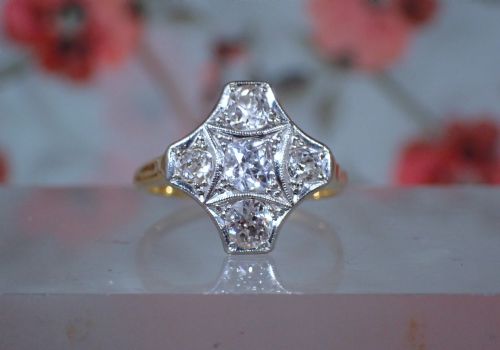
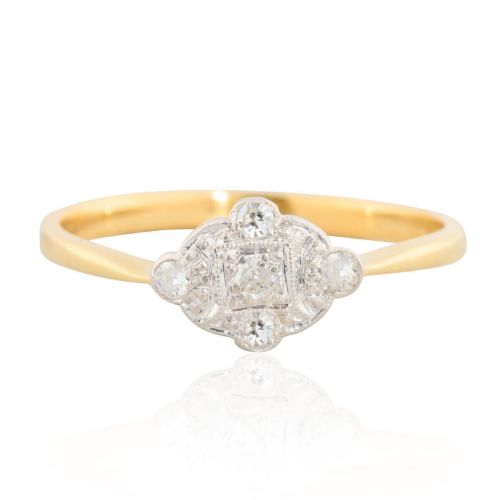
An edwardian diamond plaque ring is a low-profile piece featuring a flat, geometric top panel set with small diamonds. These jewels often incorporate intricate openwork frames that sit flush against the finger.
The versions most common on this page span the Edwardian period and the subsequent Art Deco era. They frequently pair platinum settings with yellow or white gold bands.
Makers shaped these panels into rectangles, navette silhouettes, and elongated clusters. Accents of sapphire, ruby, onyx, and emerald often accompany the central diamonds.
How they were made
Jewellers utilised platinum for the top surfaces to hold delicate millegrain edges and pave-set stones securely. This strong metal allowed for ultra-fine wirework and intricate pierced designs without sacrificing durability.
Shanks were frequently fashioned from 18ct yellow or white gold, soldered directly to the platinum plaque. Old cut, rose cut, and french cut diamonds were hand-set alongside calibrated coloured gemstones.
Edwardian Diamond Plaque Ring Retail Price Guide 2026
Typical asking prices for edwardian diamond plaque ring among the pieces listed under this phrase on Sellingantiques today, from the lower quarter to the upper quarter. They describe what is for sale here now, not the wider market.
Listings feature pieces spanning from the nineteenth century through the 1960s, uniting platinum, 18ct gold, and 9ct yellow gold.
What varies in quality
The fineness of the piercing and the crispness of the millegrain beadwork separate standard examples from superior ones. Hand-cut stones matched precisely to the geometric channels show a higher level of original craftsmanship.
The integrity of the platinum-to-gold joint and the uniformity of the stone settings determine the structural longevity of the piece. Well-preserved metalwork retains sharp angles and crisp symmetry.
The Edwardian Diamond Plaque Ring Glossary
- Plaque ring
- A ring featuring a flat, ornamental top panel that resembles a small decorative plate. These pieces are known for their expansive surface area relative to the band.
- Millegrain
- A decorative technique involving tiny, raised metal beads along the edge of a setting. This border softens the transition between metal and stone.
- Navette
- A boat-shaped or pointed oval silhouette common in antique cluster rings. The design lengthens the appearance of the finger.
- Old cut
- A diamond facet style hand-polished before modern machinery standardised proportions. These stones typically feature smaller tables and larger culets.
- Pave
- A method of setting multiple small diamonds closely together with minimal visible metal. The surface appears paved with stones.
Edwardian Diamond Plaque Ring: Frequently Asked Questions
How do I care for an edwardian diamond plaque ring?
Clean these delicate pieces gently with warm soapy water and a soft brush, avoiding harsh ultrasonic cleaners that can loosen fine millegrain work.
Store them separately in a fabric-lined box to protect the flat platinum plaque and prevent the stones from scratching against other jewellery.
Can an edwardian diamond plaque ring be resized?
Resizing depends entirely on the construction of the shank and whether the decorative shoulder work extends too far down the band. A skilled jeweller must evaluate the piece to ensure adjustments do not distort the central plaque.
Because many examples combine platinum tops with gold shanks, the technician needs experience working with mixed-metal antique rings.
Were these rings worn every day?
Original owners wore these pieces frequently, particularly during the Edwardian and Art Deco periods when flat cluster designs gained immense popularity. The low profile made them practical for daily social engagements.
Modern wearers often continue this tradition, though gentle handling preserves the fragile pierced platinum settings and tiny accent stones.
How do I tell Edwardian from Art Deco styles?
Edwardian designs typically emphasise softer garland motifs, lacy platinum openwork, and flowing organic curves. They lean heavily on delicate floral or ribbon-like inspirations.
Art Deco pieces shift toward rigid symmetry, sharp geometric angles, straight lines, and stark contrasts like onyx paired with white diamonds.