
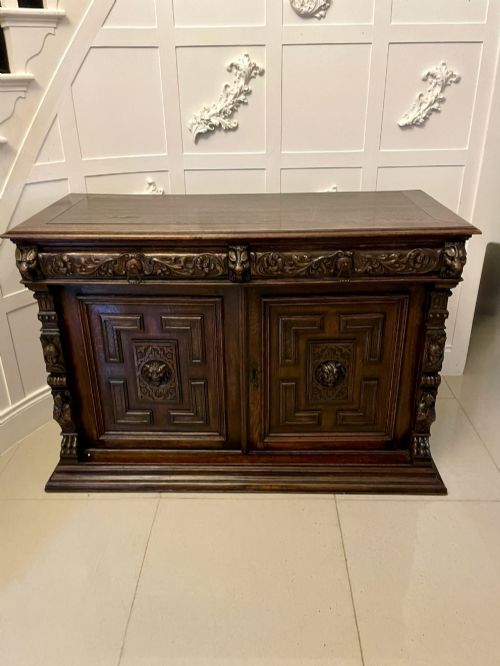
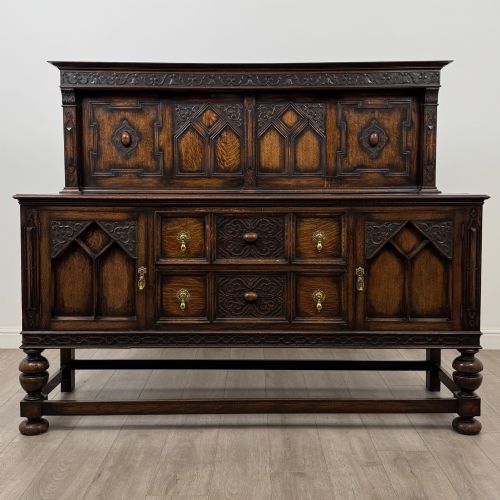
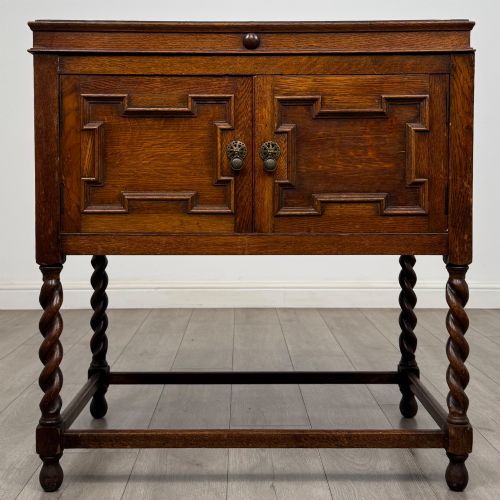
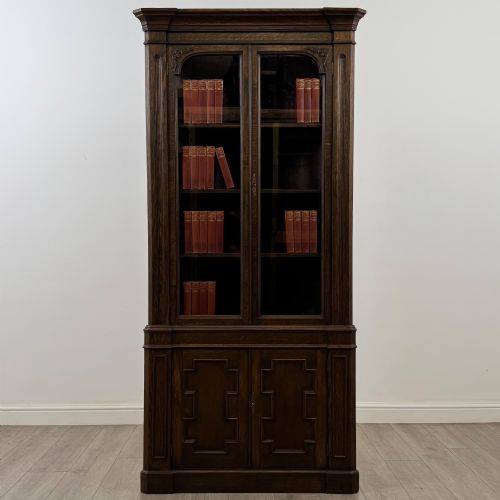
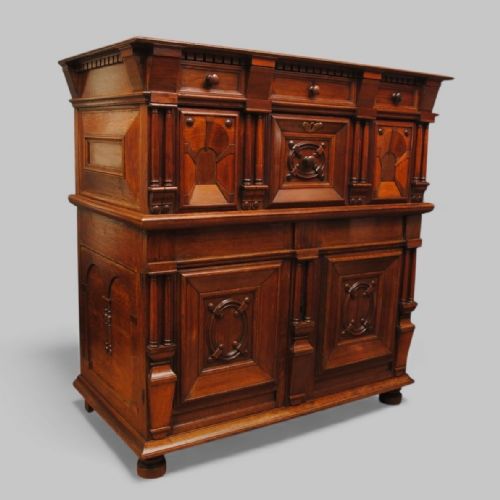


Geometric Carved Oak Cupboard
A geometric carved oak cupboard brings robust construction and tactile, panelled decoration into a room, appealing to collectors of sturdy period furniture.
Geometric Carved Oak Cupboard
A geometric carved oak cupboard encompasses robust storage pieces built from solid timber and embellished with low-relief strapwork, applied mouldings, and panelled facades. These pieces emerge across several centuries, spanning authentic seventeenth-century examples alongside later nineteenth-century and Edwardian revivals.
Buyers browsing this selection frequently encounter revival iterations influenced by Jacobean and Renaissance styles, alongside earlier vernacular forms such as court cupboards and enclosed chests. Sideboards, corner cabinets, and dressers also appear, demonstrating how makers adapted geometric surface patterns across varied domestic storage furniture.
The materials vary from dense primary timbers to secondary woods, occasionally incorporating brass hardware, iron fittings, or glass. Pieces range from straightforward utilitarian cupboards to elaborate multi-tiered dressers featuring distinctive applied geometric decoration upon the doors and drawers.
Judging the standard
Quality separates pieces through the crispness and depth of the carved geometric work, where sharp, deliberate chisel execution distinguishes finer examples from softer, shallower revivals. The choice of timber grain and the integrity of the original joints further dictate the overall merit of a piece.
The balance of proportions and the sophistication of the applied mouldings reveal the maker's hand, particularly on revival items where symmetry and scale are paramount. Authenticity of components, such as hinges, handles, and backboards, also influences how successfully a cabinet maintains its historical character.
Some oak cupboards hide clever little compartments behind their geometric panels, perfect for stashing modern secrets.
The Geometric Carved Oak Cupboard Glossary
- Geometric carving
- Relief ornamentation cut into wood in repeating patterns of squares, lozenges, and strapwork. This technique defined seventeenth-century panels and later revival furniture.
- Jacobean style
- Design aesthetic spanning the early seventeenth century, characterised by heavy proportions, dark timber, and geometric panelling. Revival versions appeared frequently during the Victorian and Edwardian periods.
- Court cupboard
- A formal enclosed storage piece featuring recessed upper sections supported by columns. These items often display elaborate architectural mouldings and geometric panels.
- Oak veneer
- Thin slices of oak applied to a secondary wood substrate to create decorative grain patterns. This technique appears on specific case furniture from the Edwardian era.
- Strapwork
- Ornamentation composed of flat, interlaced bands resembling leather straps. It forms key geometric motifs across many period cabinet doors.
Geometric Carved Oak Cupboard: Frequently Asked Questions
What periods do these cupboards cover?
The selection includes authentic pieces originating from the seventeenth and eighteenth centuries, alongside nineteenth-century examples and Edwardian revivals.
Buyers will find that revival pieces from the late Victorian and Edwardian eras are most common on this page, mimicking earlier Jacobean styles.
How do I identify a revival piece?
Revival pieces often display cleaner interior construction methods and lighter timber finishes typical of the nineteenth and twentieth centuries.
Examining the wear patterns, tool marks, and wood seasoning helps distinguish original seventeenth-century examples from later interpretations.
Where were these cupboards used?
These storage pieces functioned as primary domestic furniture in dining rooms, halls, and parlours for concealing provisions, textiles, and valuables.
Their robust construction made them suitable for everyday family use in Welsh country homes and urban residences alike.
How should I care for dark oak?
Maintain the timber by applying traditional beeswax periodically to nourish the dry surface and preserve the deep finish.
Keep the furniture away from direct heat sources and rapid humidity shifts to prevent the solid oak panels from splitting.